What Commercial Roof Maintenance Actually Costs — and What Skipping It Costs
By Method Roofing Group | July 2026 | 7 min read
Key Takeaways
- Maintenance is the cheapest line item in commercial roofing — a real program typically runs a fraction of one percent of the roof’s replacement value per year.
- The comparison isn’t maintenance versus nothing — it’s maintenance versus the repair, restoration, or replacement that deferred problems become. Replacement in this market runs $8–$20 per square foot installed.
- Your warranty is quietly billing you for skipping it — most commercial manufacturer warranties require documented periodic inspection and maintenance, and undocumented roofs lose coverage exactly when they need it.
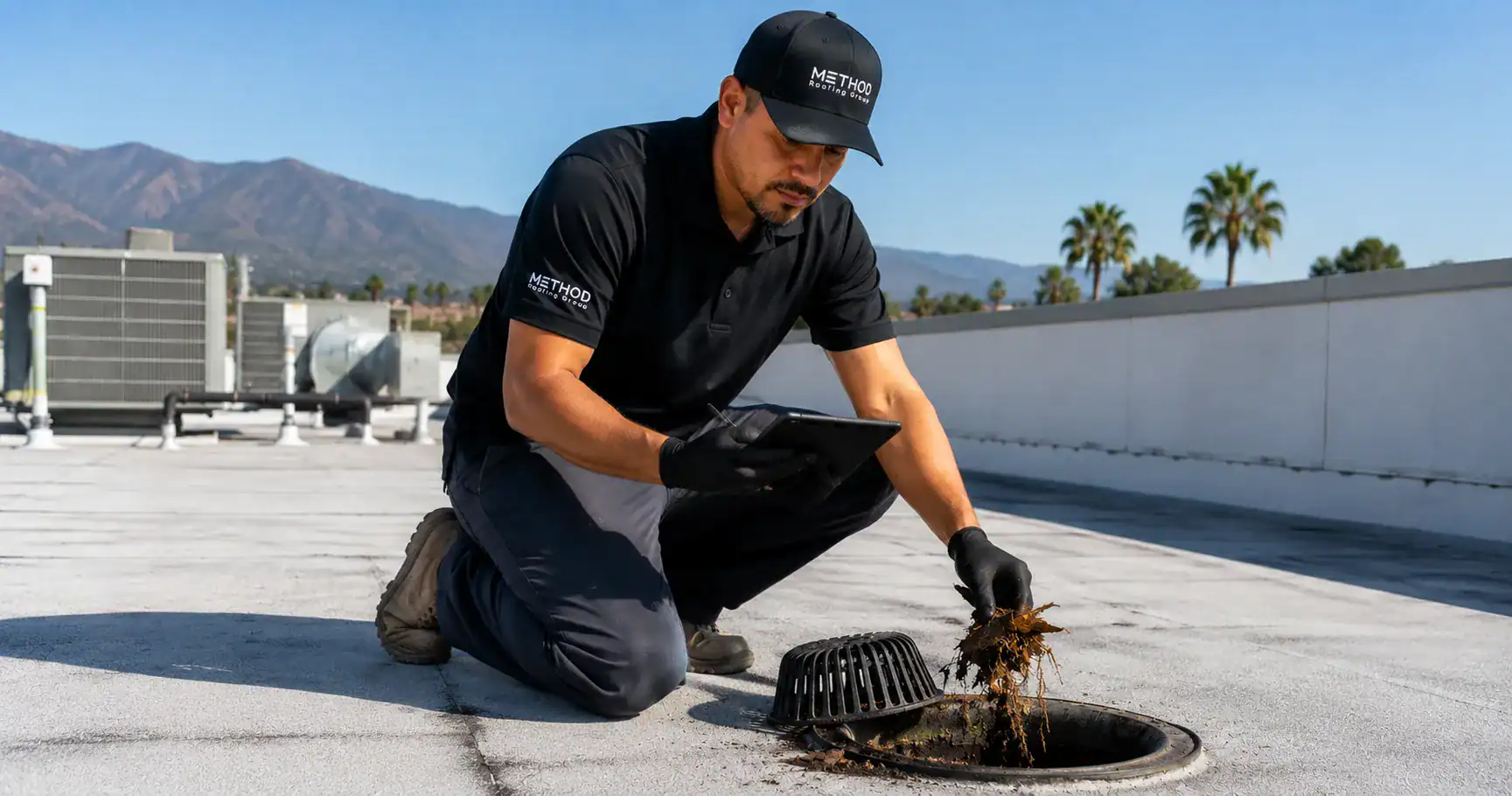
- Deferral has a compounding curve — a blocked drain costs minutes to clear in September and can cost saturated insulation, a failed moisture survey, and a lost restoration option by February.
- Documentation is half the product — the inspection report is what keeps warranties alive, supports insurance files, and turns roof budgeting from guesswork into a schedule.
Every commercial roof budget has three possible line items: maintenance, planned capital work, or emergency. Money always flows to one of them. The entire argument for maintenance is that it’s the only one of the three you get to price in advance — and it’s the smallest number by an order of magnitude.
Here’s what a real program includes, what it costs relative to the alternatives, and the fine print that makes skipping it more expensive than it looks.
What does a commercial roof maintenance program include?
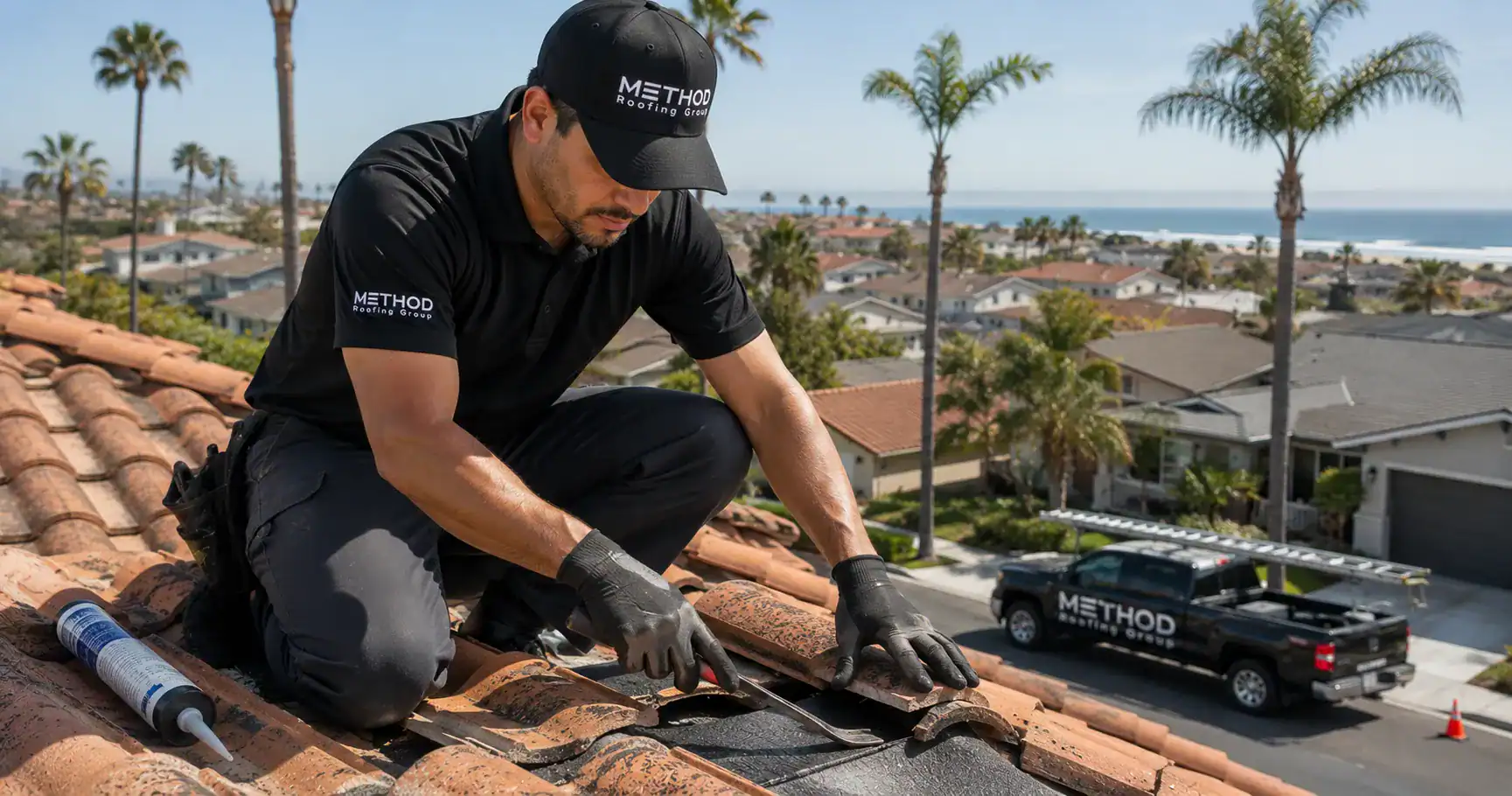
The core is semi-annual documented inspection — spring and fall, plus checks after major wind or storm events. Each visit covers the membrane, seams, penetrations, flashings, and drainage, with moisture readings where conditions warrant. Between the inspections sits the small work: clearing drains and scuppers, resealing penetrations, addressing isolated damage while it’s isolated. Every visit produces a dated, written report with photos — which matters as much as the work, for reasons below. The 12-point inspection checklist covers what a proper visit examines.
What does it cost?
For most buildings, a genuine program runs a fraction of one percent of the roof’s replacement value per year. Put real numbers on that: on a roof that would cost $500,000 to replace, an annual program typically lands in the low four figures — inspection visits, documentation, and routine minor work included. Larger repairs found along the way are priced separately, but they’re found early, when they’re small, in scheduled-work season at scheduled-work prices.
Now the other column. Commercial replacement in Southern California runs $8–$20 per square foot installed. The maintenance program isn’t competing with zero — it’s competing with arriving at that number years early.
The deferred-maintenance curve
Deferral doesn’t add cost linearly; it compounds through thresholds:
| Stage | What it looks like | What it costs |
|---|---|---|
| Maintained | Drains clear, seams tight, small repairs done small | Fraction of 1% of replacement value per year |
| Deferred one season | Blocked drains, open seams, first interior stains | Single-digit % — repairs at emergency-season pricing |
| Deferred past the threshold | Water inside the system, saturated insulation | Failed moisture survey — restoration at ~1/3 of replacement cost is OFF the table |
| End state | Membrane and insulation done together | Full replacement at $8–$20/sq ft, on the building’s schedule, not yours |
That third row is the expensive one, and it’s invisible from the ground. A structurally sound, dry roof qualifies for restoration — 10 to 20 added years at roughly one-third of replacement cost. A wet one doesn’t. Deferred maintenance is how roofs cross that line unnoticed, and it’s the most expensive quiet thing in commercial real estate.
The warranty fine print nobody reads
Most commercial manufacturer warranties — including the NDL coverage on premium systems — require documented periodic inspection and maintenance as a condition of coverage. Not performed maintenance: documented maintenance. When a claim arrives on an undocumented roof, the file is the first thing requested and the fastest way to a denial. A maintenance program’s reports are, among everything else, the paperwork that keeps a six-figure warranty enforceable. The same documentation supports insurance claims, tenant disputes, and capital planning — one file, four jobs.
What about portfolios?
The math scales, and so does the documentation. Multi-property owners get the same program across every building with consistent reporting — which turns portfolio roof budgeting from a surprise generator into a schedule, and makes the capital-planning conversation with ownership a document review instead of a debate. With an El Niño winter in the 2026–27 outlook, this is the season to get every roof in the portfolio onto the maintained side of the table above.
Frequently Asked Questions
How much does commercial roof maintenance cost per year?
Typically a fraction of one percent of the roof’s replacement value — for most buildings, low four figures annually for semi-annual documented inspections plus routine minor work. Repairs discovered are priced separately but caught small.
How often should a commercial roof be maintained?
Inspected twice a year — spring and fall — plus after significant wind or storm events, with drain clearing and minor repairs handled as found. This cadence is also what most manufacturer warranties require.
Is a maintenance program worth it on a newer roof?
Especially on a newer roof — that’s when the warranty is worth the most and the documentation requirement starts. A 5-year-old roof with a clean file has decades of protected life ahead; a 5-year-old roof with no file has a warranty in name only.
What voids a commercial roof warranty?
The common killers: undocumented maintenance, unauthorized repairs or penetrations (a new HVAC unit installed without flashing protocol), and ponding left unaddressed. Documentation prevents the first; a program catches the other two early.
Can maintenance really extend a roof’s life?
It’s the largest single variable. Maintained roofs routinely reach the top of their system’s service range; neglected ones rarely do. The full life-extension sequence — maintenance, repair, restoration — is how 20-year roofs become 35-year roofs.
What happens if my roof already has deferred problems?
Start with a documented assessment including moisture readings — it establishes which side of the restoration threshold the roof is on. If it’s dry and sound, a program plus targeted repairs puts it back on its curve. If water is in the system, better to know now, with options, than in February without them.
Do you offer maintenance programs?
Yes — documented semi-annual programs for single buildings and portfolios across Southern California, with written reports formatted for warranty and insurance files. A free assessment scopes what your roof needs.
What should be in the maintenance file?
Dated inspection reports with photos, moisture readings where taken, repair invoices, and the warranty documents themselves. If a claim, sale, or insurance review ever asks for the roof’s history, that file is the answer.
About This Article
This article was written by the Method Roofing Group team, drawing on founder Jeff Moreno’s combined manufacturer and contractor operations experience across the industry’s largest commercial and residential roofing names. Method Roofing Group provides documented maintenance programs, inspections, repair, restoration, and replacement for commercial and industrial roofs across Southern California. Learn more about Method Roofing Group.
Cost relationships cited reflect typical 2026 Southern California commercial pricing and vary by system, size, access, and condition. Verify with a building-specific assessment. Method Roofing Group operates under CSLB License #1157257.
Price the Program Before the Problem
Find out what maintaining your roof actually costs — and which side of the restoration threshold it’s on today. Free documented assessment: moisture readings, dated photos, written report. Yours to keep either way.
Or call (949) 866-3011 · Serving Orange County, Los Angeles, the Inland Empire, San Diego, and Ventura

