Spray Foam (SPF) Roofing for Commercial Properties in Southern California
The only commercial roof restoration system that delivers waterproofing and insulation R-value in a single application.
For commercial property owners seeking restoration plus measurable insulation improvement, spray polyurethane foam (SPF) roofing delivers a unique combination among commercial coating systems. The foam expands on application, fills voids, seals seams, and creates a seamless monolithic roof surface — while adding usable R-value to the existing roof assembly. Method Roofing Group installs SPF roof systems across Southern California with manufacturer-backed topcoat protection and warranty terms aligned to coating thickness and installation specification.
What Is Spray Foam (SPF) Roofing?
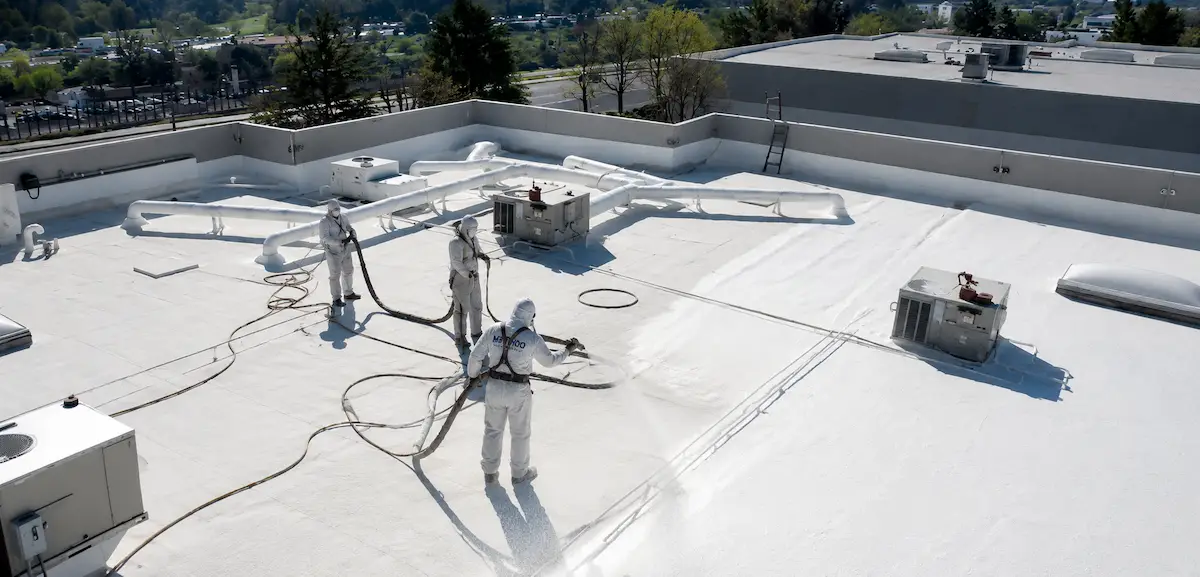
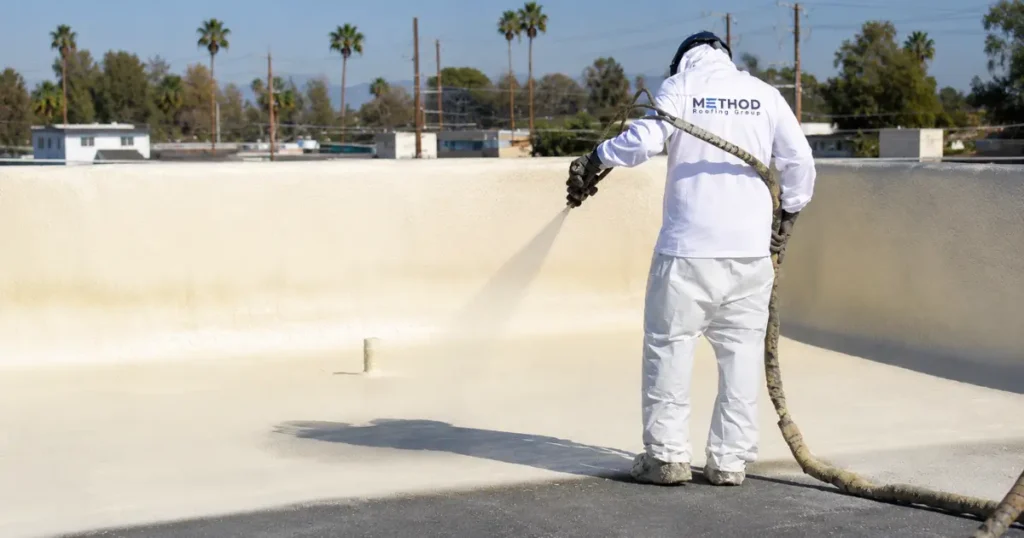
Spray polyurethane foam (SPF) roofing is a commercial roof restoration system where two-component polyurethane foam is sprayed onto an existing roof substrate. The foam expands on contact, creating a seamless waterproof layer that fills voids, seals around penetrations, and adds insulation R-value across the entire roof surface. A protective topcoat — typically silicone or acrylic — then covers the foam to provide UV protection and final waterproofing.
SPF stands apart from other coating chemistries because it adds R-value. Specifically, every inch of SPF thickness contributes roughly R-6.5 to R-7 of insulation. As a result, a typical 1.5-inch SPF roof system adds R-10 or more to the building envelope — measurable energy efficiency improvement no other coating chemistry delivers. For properties with high cooling or heating costs, this dual benefit often justifies SPF over silicone or acrylic restoration on its own.
SPF also creates a seamless, monolithic surface. Furthermore, the expanding foam fills surface irregularities, eliminates ponding water by self-leveling, and bonds to substrates that cause adhesion problems with other coating systems. This page covers what SPF roofing includes, eligible substrates, the application process, topcoat and warranty options, and the financial case. For broader context on coating options, see our commercial roof coatings and restoration pillar page.
Why SPF Delivers Value No Other Coating System Matches
SPF is more expensive than acrylic and comparable to silicone in upfront cost. However, no other commercial coating chemistry delivers SPF’s combination of restoration, insulation, and substrate flexibility. Below are the four areas where SPF is the clear right choice.
Adds Measurable R-Value
SPF is the only commercial coating system that adds usable insulation. Every inch of foam contributes R-6.5 to R-7. Therefore, a typical 1.5 to 2-inch SPF system adds R-10 to R-14 to the existing roof assembly — measurable energy savings that compound over the entire system lifespan.
Seamless, Monolithic Waterproofing
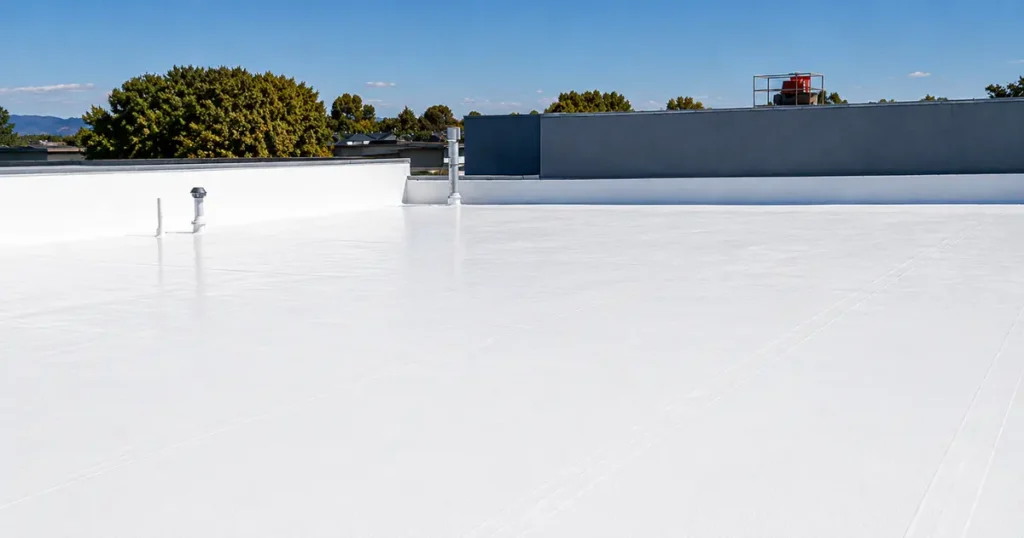
The expanding foam creates a single seamless surface across the entire roof. Unlike single-ply membranes with seams, SPF has no field-installed seams that can fail over time. Consequently, the most common commercial roof failure point — seam separation — simply doesn’t exist on SPF systems.
Self-Leveling for Drainage Improvement
SPF self-levels on application, which means it builds up in low-lying areas and eliminates ponding water that destroys other coating systems. Specifically, SPF can correct minor drainage problems in the same project that restores the roof — an option that silicone and acrylic cannot match.
Bonds to Difficult Substrates
SPF bonds reliably to substrates that cause adhesion challenges with silicone or acrylic. Irregular surfaces, weathered metal panels, aged modified bitumen with surface alligatoring — SPF handles all of them. Furthermore, the foam fills surface voids and irregularities rather than requiring extensive prep work to create a smooth coating substrate.
Roof Systems Eligible for SPF Restoration
SPF bonds well to most commercial roof substrates and excels on systems where other coatings struggle. Each system has specific surface preparation requirements, but the core eligibility criteria stay consistent: the substrate must be structurally sound, free from widespread moisture saturation, and capable of supporting the SPF assembly weight.
TPO Roofs
Aging TPO roofs accept SPF restoration after proper cleaning and primer application. SPF over TPO adds insulation, eliminates seam failure concerns, and extends service life dramatically beyond what coating-only restoration delivers.
PVC Roofs
PVC membranes that have lost flexibility past the 20-year mark restore well with SPF when insulation improvement is a project goal. The foam application seals over weathered PVC and adds the R-value the original assembly was missing.
EPDM Roofs
EPDM (“rubber”) roofs are excellent SPF candidates because the dark substrate often suffers high heat absorption and minimal insulation. Adding SPF over EPDM addresses both: the foam adds R-value and the reflective topcoat dramatically improves solar reflectance. Consequently, EPDM-to-SPF restoration often delivers immediate and substantial energy cost reduction.
Modified Bitumen and Built-Up Roofing (BUR)
Modified bitumen and BUR roofs benefit substantially from SPF when the substrate is structurally sound but surface degradation is extensive. The foam fills surface alligatoring, eliminates aggregate replacement, and adds insulation the original assembly may have lacked.
Metal Roofs
Standing seam, R-panel, and corrugated metal roofs are highly SPF-eligible. The foam seals around every fastener, eliminates seam fatigue, fills panel ribs and overlaps, and adds the insulation that older metal buildings frequently need. Specifically, metal roof SPF restoration often pays back faster than any other system due to the energy savings from new R-value over previously uninsulated assemblies.
Substrates That Do Not Qualify
Some conditions disqualify a roof from SPF restoration. Widespread saturated insulation, structural deck damage, failed fastener systems across significant areas, or substrate weight limits that cannot support the SPF assembly all require alternative approaches. During inspection, Method documents these conditions and recommends the correct path forward.
When SPF Isn’t the Right Choice
SPF is not universally the best system. In specific scenarios, silicone or acrylic restoration delivers better value — and an honest recommendation is part of how Method earns trust on commercial accounts.
Properties Without Insulation Needs
SPF’s primary differentiator is added R-value. When the existing roof assembly already has adequate insulation, paying the SPF premium delivers diminishing returns. For these properties, silicone roof coatings or acrylic roof coatings deliver equivalent waterproofing performance at lower cost.
Budget-Sensitive Projects on Well-Drained Roofs
SPF carries the highest upfront cost among the three coating systems. For sloped or well-drained commercial roofs where ponding isn’t a concern, acrylic restoration delivers strong performance at significantly lower upfront cost. The acrylic savings often outweigh SPF’s energy efficiency benefits on these substrates.
Topcoat Maintenance Requirements
SPF requires periodic topcoat recoating to maintain UV protection on the underlying foam. Specifically, silicone or acrylic topcoats typically need recoating every 10 to 15 years to keep the foam protected. Property owners unable to commit to topcoat maintenance over time should weigh this against silicone or acrylic systems that have simpler long-term maintenance.
For the broader overview of restoration options including silicone, acrylic, and SPF, see our commercial roof restoration service page.
Method’s SPF Roofing Application Process
SPF installation requires specialized training, equipment, and weather conditions. Method follows a documented six-step process aligned to manufacturer specifications. Surface preparation, foam application thickness, and topcoat application each get verified at completion to activate manufacturer warranty coverage.
Step 1 — Inspection and Eligibility Assessment
First, the commercial team inspects the existing roof — visual assessment, moisture scanning where appropriate, seam evaluation, fastener checks, and substrate sampling. Then the team verifies the substrate’s structural capacity to support the SPF assembly weight and the suitability for SPF adhesion.
Step 2 — System Specification and Topcoat Selection
Next, the team specifies the SPF density, thickness, topcoat chemistry (silicone or acrylic), topcoat mil thickness, and manufacturer warranty term. Specifically, foam thickness drives the R-value the system will add — a critical project goal alignment step.
Step 3 — Surface Preparation
Crews clean the substrate thoroughly, remove contaminants, address biological growth, and apply primer where required by the manufacturer specification. Furthermore, SPF requires specific moisture and temperature conditions on the substrate before foam application begins.
Step 4 — SPF Foam Application
The crew applies SPF using specialized two-component spray equipment that mixes the polyurethane components at the spray gun. Foam expands immediately on contact and reaches full cure within minutes. Application happens in passes, with each pass building thickness toward the specified total.
Step 5 — Foam Inspection and Surface Preparation for Topcoat
After SPF application, the team inspects the foam surface for proper cell structure, thickness verification, and adhesion. Any surface irregularities get addressed before topcoat application begins.
Step 6 — Topcoat Application and Warranty Registration
Finally, crews apply the protective topcoat (silicone or acrylic) to specified mil thickness across the entire foam surface. The topcoat provides UV protection essential to long-term SPF performance. Method registers the completed project with the manufacturer to activate full warranty coverage.
SPF Warranty and Topcoat Options
SPF systems require two warranty layers: the foam itself and the protective topcoat. Topcoat selection drives both warranty term and long-term maintenance requirements. Below is how the warranty structure works and what each option covers.
SPF Foam Warranty
The foam itself carries a manufacturer warranty when installed by authorized applicators. Foam warranty terms typically run 15 to 20 years depending on foam density, thickness, and substrate condition. The foam warranty is independent from the topcoat warranty.
Silicone Topcoat Warranty
A silicone topcoat over SPF typically carries warranty coverage of 15 to 20 years. Silicone topcoats handle ponding water, UV exposure, and weather extremes better than acrylic alternatives. Therefore, silicone is the preferred topcoat for flat roofs with drainage limitations or for properties seeking the longest warranty position.
Acrylic Topcoat Warranty
An acrylic topcoat over SPF typically carries warranty coverage of 10 to 15 years at lower upfront cost than silicone. Acrylic topcoats work well on sloped or well-drained applications. Additionally, acrylic topcoats recoat more easily over time than silicone — important for long-term maintenance flexibility.
Recoating Maintenance
Both silicone and acrylic topcoats require periodic recoating to maintain UV protection on the foam below. Specifically, plan for topcoat recoating every 10 to 15 years to keep the foam protected and the overall system performing at warranty specification.
What an SPF Roof Coating Costs in Southern California
SPF carries higher upfront cost than acrylic and roughly matches silicone in upfront cost — but delivers measurable energy savings that compound over the system lifespan. Specific pricing depends on substrate type, current condition, SPF thickness, topcoat selection, square footage, access conditions, and project complexity.
Compared to Acrylic and Silicone
SPF typically costs 15 to 30 percent more per square foot than acrylic and roughly matches silicone in upfront cost. However, SPF includes both restoration and insulation upgrade — value that acrylic and silicone do not deliver individually.
Compared to Full Replacement
SPF restoration runs 40 to 60 percent less per square foot than tear-off and replacement on equivalent commercial roof systems. Additionally, SPF restoration avoids disposal fees, decking work, and the operational disruption of full re-roof projects.
Energy Savings Payback
SPF’s added R-value reduces heating and cooling costs across the building envelope. Specifically, properties with previously uninsulated or under-insulated metal roof assemblies often see substantial monthly utility savings. Over a 20-year system life, energy savings can recover a meaningful portion of the SPF restoration investment.
Compare per-square-foot pricing across systems in our Southern California roof coating cost guide.
Why Property Owners Choose Method for SPF Roofing
SPF installation is the most specialized of the commercial coating systems. Foam chemistry, application equipment, weather window management, and topcoat selection all require training and experience. Cutting corners on any step compromises the system — and SPF is unforgiving of installation errors in ways that other coatings tolerate better.
Method Roofing Group is a commercially experienced roofing contractor headquartered in Newport Beach, California. The leadership team brings decades of combined commercial roofing experience across industrial, retail, multi-tenant, HOA, and institutional properties. Active project coverage extends across Orange County, Los Angeles, Riverside, San Bernardino, Ventura, and San Diego counties.
The Method team maintains current manufacturer certification training on SPF systems and topcoat chemistry. Active California Contractor’s State License Board (CSLB) credentials stay current. Every SPF restoration project is documented, registered with the manufacturer, and overseen by a licensed Method team member from inspection through warranty registration.
California Contractor’s License • CSLB Verified • Fully Insured • Manufacturer-Authorized Applicator
SPF Roofing Service Areas
Method installs SPF roofing systems across Southern California, with active project teams covering Orange County, Los Angeles, the Inland Empire, Ventura, and San Diego counties. For region-specific information, visit the relevant county service area page.
- Orange County Commercial Roofing →
- Los Angeles County Commercial Roofing →
- Inland Empire Commercial Roofing →
- San Diego County Commercial Roofing →
- San Bernardino County Commercial Roofing →
- Ventura County Commercial Roofing →
At completion our team registers the completed project with the coating manufacturer to activate the full warranty. Property owners receive the manufacturer warranty certificate, installation photos, project documentation for capital records, and ongoing maintenance recommendations to preserve warranty coverage.
Common Questions About SPF Roofing
SPF foam carries manufacturer warranties of 15 to 20 years. The protective topcoat warranty is separate, typically running 10 to 20 years depending on chemistry selected. With periodic topcoat recoating, an SPF roof assembly can perform for 30 or more years before significant intervention becomes necessary. Method registers every project with the manufacturer to activate warranty coverage from day one.
How long does an SPF roof last?
SPF foam carries manufacturer warranties of 15 to 20 years. The protective topcoat warranty is separate, typically running 10 to 20 years depending on chemistry selected. With periodic topcoat recoating, an SPF roof assembly can perform for 30 or more years before significant intervention becomes necessary. Method registers every project with the manufacturer to activate warranty coverage from day one.
How much does SPF roofing cost per square foot?
SPF roofing typically costs 15 to 30 percent more per square foot than acrylic restoration and roughly matches silicone in upfront cost. Specific pricing depends on foam thickness, topcoat selection, substrate condition, square footage, access, and project complexity. Method provides written cost estimates as part of the free inspection — no obligation.
[H3] How much does SPF roofing cost per square foot?
SPF roofing typically costs 15 to 30 percent more per square foot than acrylic restoration and roughly matches silicone in upfront cost. Specific pricing depends on foam thickness, topcoat selection, substrate condition, square footage, access, and project complexity. Method provides written cost estimates as part of the free inspection — noobligation.
Does SPF roofing add insulation to my building?
Yes. Every inch of SPF thickness contributes R-6.5 to R-7 of insulation. Therefore, a typical 1.5 to 2-inch SPF system adds R-10 to R-14 to the existing roof assembly. Specifically, this dual benefit — restoration plus insulation — is what separates SPF from silicone and acrylic coating systems.
Will my building need to close during SPF application?
No. SPF application is non-invasive from the building interior. Crews work on the roof surface only. There is no tear-off, no interior penetration, no demolition, and no required vacate. Most projects complete without disruption to tenants or daily operations. However, the application process produces some odor during cure, so coordination with property managers may be appropriate for sensitive occupied properties.
Does SPF qualify for California Title 24 compliance?
SPF systems with appropriate reflective topcoats meet or exceed California Title 24 Part 6 cool roof requirements when the topcoat carries CRRC-listed reflectance and emittance values. Method selects topcoat products appropriate to each project’s compliance needs. For full details, see the Title 24 Cool Roof Compliance Guide (coming soon).
Can an SPF roof be recoated or repaired?
Yes. The topcoat layer requires periodic recoating to maintain UV protection on the foam below — typically every 10 to 15 years. Furthermore, localized SPF repairs are straightforward when damage occurs, because additional foam bonds reliably to existing SPF. As a result, SPF systems have strong long-term maintenance flexibility.
Request a Free SPF Roofing Inspection
The first step is determining whether your commercial roof is a good candidate for SPF restoration — and whether the added insulation benefit aligns with your property goals. Method provides written assessments at no cost, including substrate evaluation, structural capacity verification, foam and topcoat specification, warranty term options, and a transparent scope and budget. There is no obligation to proceed.
Schedule a roof inspection below — or call (949) 866-3011 to book by phone.

