Roof Repair vs. Roof Replacement: How to Decide (and the Third Option Most Owners Miss)
Most property owners are handed this decision with a quote attached. Here’s how it should actually be made: the five factors that determine repair versus replacement, where restoration fits between them, real cost comparisons, and the code threshold that changes the answer in California.
Last updated: July 2026 · Reviewed by Jeff Moreno, Founder, Method Roofing Group · CSLB #1157257
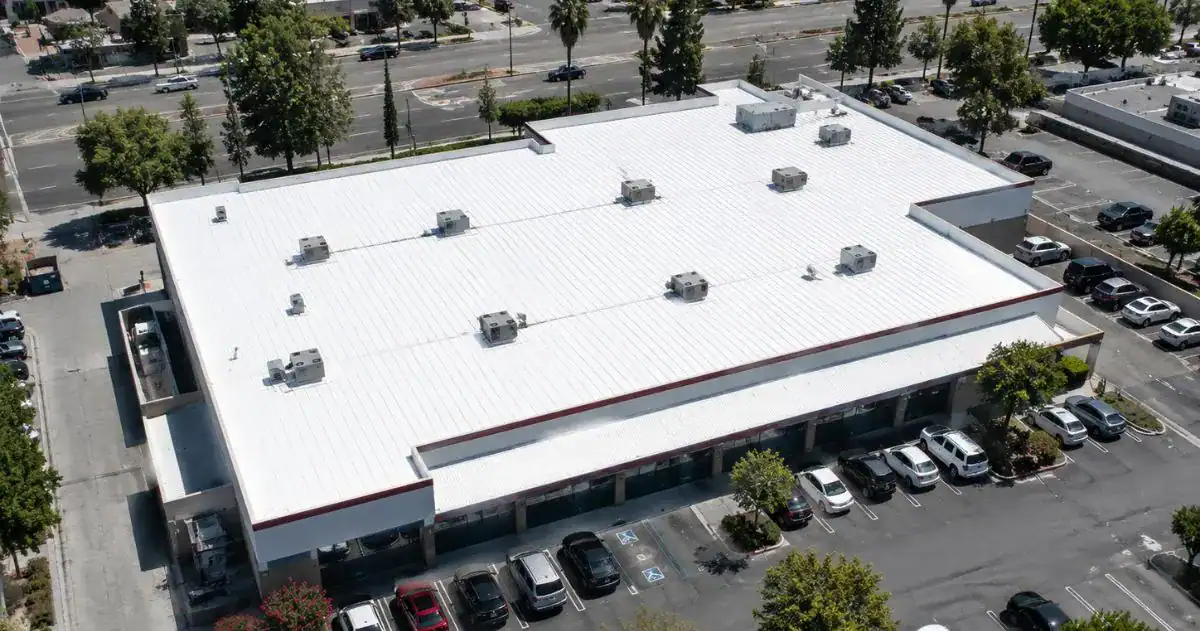
Quick answer: Repair is right when damage is localized (roughly under 25–30% of the roof) and the system is fundamentally sound. Replacement is right when damage is widespread, the deck is compromised, or the system is at end of life. Between them sits restoration — coating systems that add 10–20 years to an aging-but-intact roof at roughly one-third of replacement cost. In California, replacing more than 50% of your roof within 12 months triggers full code compliance, which changes the math.
Repair, Restore, or Replace: The Short Version
| Your situation | Usually the right call |
|---|---|
| Isolated leak, localized damage, roof mid-lifespan | Repair — targeted fix, documented against the whole system |
| Aging but structurally sound; widespread surface wear; moisture on the assembly, not in it | Restoration — coating system extends life 10–20 years at ~1/3 replacement cost |
| Recurring leaks in multiple zones, saturated insulation, deck damage, end of service life | Replacement — a full reset; anything less buys months, not years |
| Damage crosses ~50% of roof area within 12 months (CA) | Replacement to current code — the 50% rule triggers full Title 24 compliance |
THE METHOD MEMOS 01 & 02
Take this framework with you. Memos No. 01 & 02 — the decision table, five factors, and cost math on one printable page. Pick your roof type. No email required.
The Five Factors That Actually Decide It
1. Age versus actual condition. A 12-year-old roof with documented problems can be a better replacement candidate than a 20-year-old roof that was maintained. The calendar is a clue, not a verdict — condition data decides.
2. Where the moisture is. Water on the assembly is a repair or restoration conversation. Water in the assembly — saturated insulation, a wet deck — usually isn’t. This is why moisture readings belong in every inspection report, and why a quote without them is a guess.
3. How much of the roof is affected. Damage across roughly 25–30% or less of total roof area generally supports repair. Beyond that, per-repair economics collapse — and in California, crossing 50% within twelve months legally requires bringing the entire roof to current code (see the 50% rule below).
4. What’s under the surface. The deck is the foundation of every option. A sound deck keeps repair and restoration on the table; a compromised one takes them off, regardless of how the surface looks.
5. Whether anyone documented any of it. Most owners never see evidence — they see an estimate. Dated photos, moisture readings, and damage mapped against the whole roof are what let you compare recommendations instead of prices.
When Roof Repair Makes Sense
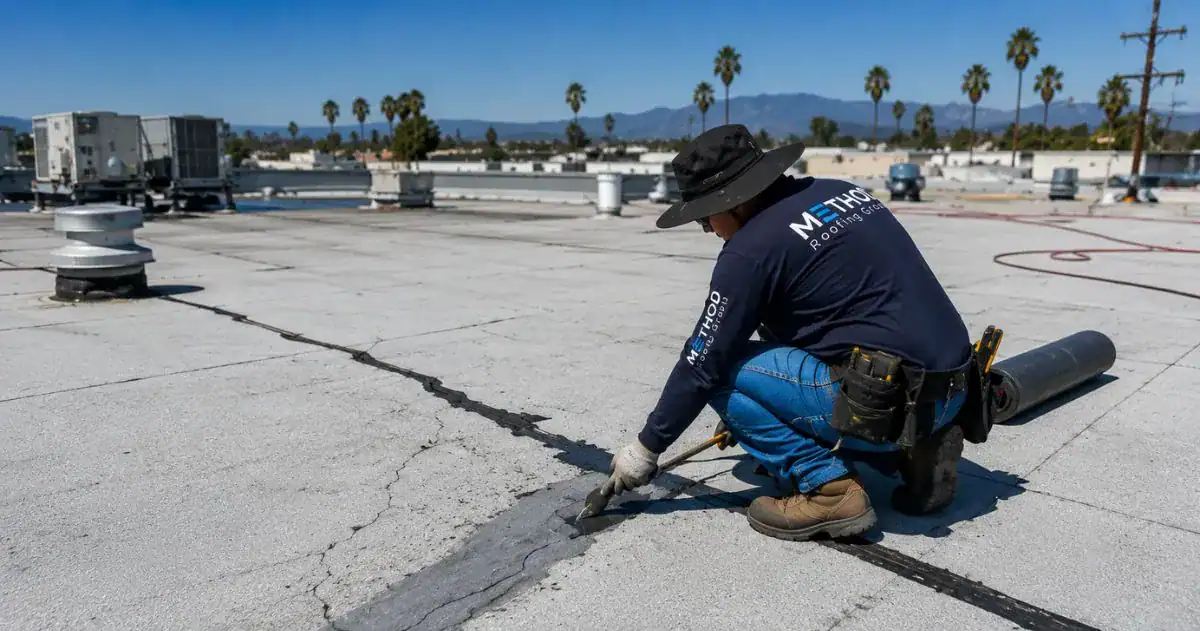
Repair is the right call more often than the roofing industry admits. If the leak is isolated, the damage is localized, and the system has service life left, a targeted repair — documented against the condition of the whole roof — protects the asset without spending money the roof doesn’t need.
What belongs in a repair decision: the leak’s actual source (often flashing or a penetration, not the membrane), the condition of the surrounding field, and a written record that establishes your baseline for insurance and future work. For homes, see our residential roof repair services; for commercial buildings, commercial roof repair.
Roof Restoration vs. Replacement: The Option Most Owners Never Hear About
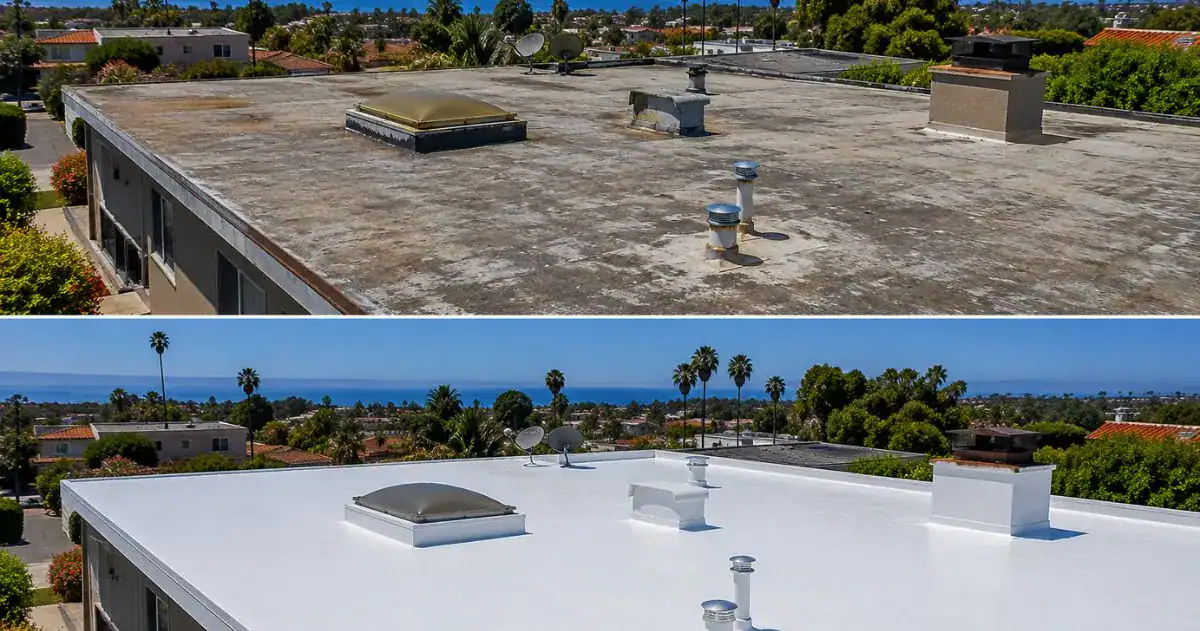
If your roof is aging but fundamentally intact, restoration is frequently the highest-return decision available — and the one least often presented, because it’s a fraction of a replacement invoice.
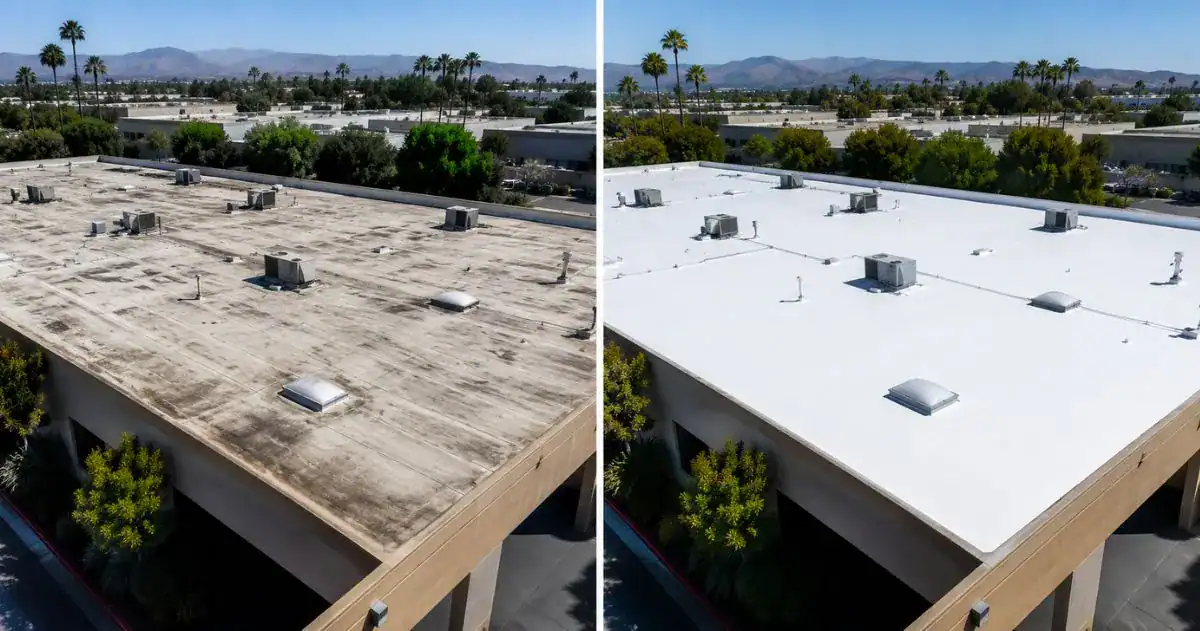
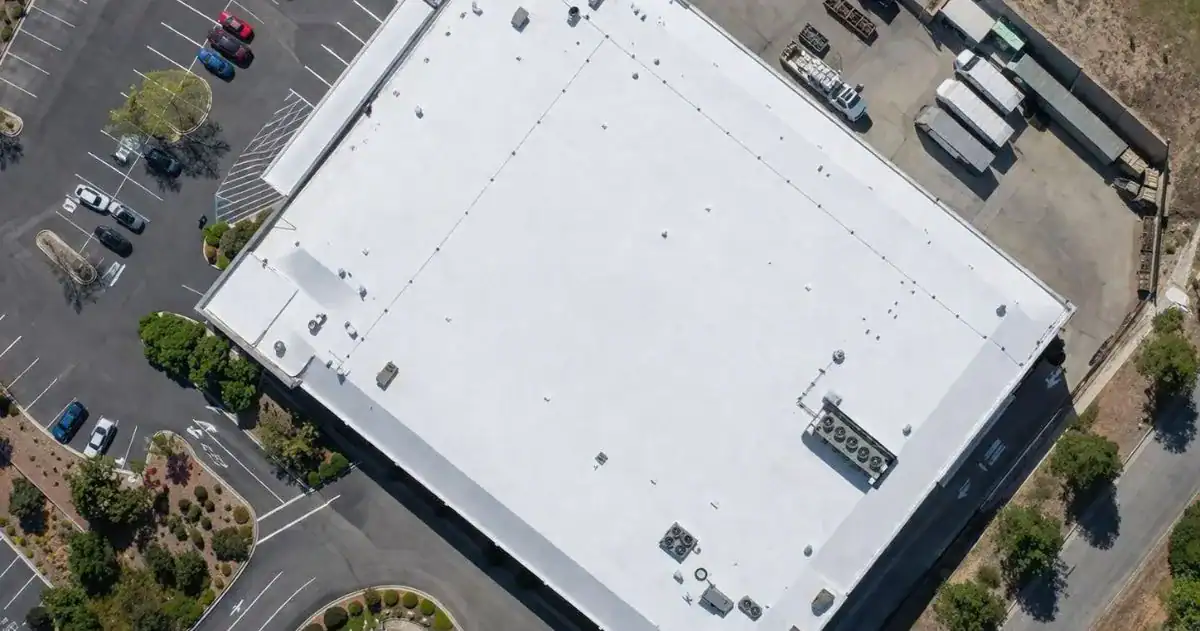
Restoration means a fluid-applied coating system — silicone, acrylic, or spray polyurethane foam — installed over a sound existing membrane. Done at the right time, it typically adds 10 to 20 years of service life at roughly one-third the cost of replacement, without tear-off, disposal, or business disruption.
In Southern California in 2026, that means $3 to $7 per square foot for restoration against $8 to $20 for replacement. The spread widens as the roof gets larger.
Restoration is a flat and low-slope solution. It applies to TPO, PVC, EPDM, modified bitumen, metal, and built-up roofs — not to tile or shingle.
| Restoration | Replacement | |
|---|---|---|
| Typical installed cost, 2026 SoCal | $3–$7 per sq ft | $8–$20 per sq ft |
| Added service life | 10–20 years | 20–30+ years |
| Warranty | Manufacturer NDL available to 20 years on qualifying systems | Full new-system warranties |
| Tax treatment | Often a maintenance expense — confirm with your tax advisor | Capital improvement |
| Title 24 | Reflective systems typically meet cool-roof requirements | Full current-code compliance required |
The qualifier is condition: restoration works on roofs where moisture hasn’t penetrated the assembly and the deck is sound. That’s a testable, documentable fact — not an opinion. It’s also why timing matters: wait too long and the restoration window closes, leaving replacement as the only option. See our commercial roof restoration guide and roof coating cost breakdown.
All Method Memos are free in the Method Memo Library — no email required.
When Roof Replacement Is the Right Answer
Sometimes the evidence says replace. Recurring leaks across multiple zones, saturated insulation, widespread membrane failure, a compromised deck, or a system genuinely at end of life — at that point, repairs buy months, not years, and restoration is off the table.
Two honest markers that it’s time: you’re repairing the same roof more than once a year, or the cumulative repair spend is approaching 25–30% of replacement cost. For current pricing, see our residential replacement cost guide for Orange County and commercial replacement cost by system for 2026.
Industry resources like the National Roofing Contractors Association offer additional guidance on roof system lifespans and maintenance standards.
The 50% Rule: When California Code Makes the Decision for You
In California, if more than 50 percent of your total roof area is replaced or recovered within a one-year period, the entire roof must be brought up to current code — including Class A fire-rated assembly requirements in mapped Fire Hazard Severity Zones and cool roof standards. Stacked repairs count cumulatively across the same twelve months.
This changes repair-vs-replace math in two ways: a series of “small” repairs can quietly become a full code event, and a partial re-roof proposal that ignores the threshold has a permitting problem before it has a pricing problem. Full details in our guide to Title 24 roofing requirements.
Why You Only Got Replacement Bids
Here’s the conversation that happens on Southern California roofs every week. An owner gets two bids to replace a 20-year-old roof. Then a third contractor walks the same roof, runs a moisture survey, and delivers different news: this roof doesn’t need replacing. It needs restoring — at a third of the price the other two quoted.
Nobody lied. The first two contractors just sell one product. Restoration requires a moisture survey to confirm the roof qualifies, and a crew that isn’t set up to run one has no way to offer it — so the option never comes up.
The framework is everything above this: what restoration is, what it costs, and the honest cases where replacement is still the right call.
How Method Roofing Group Makes This Call
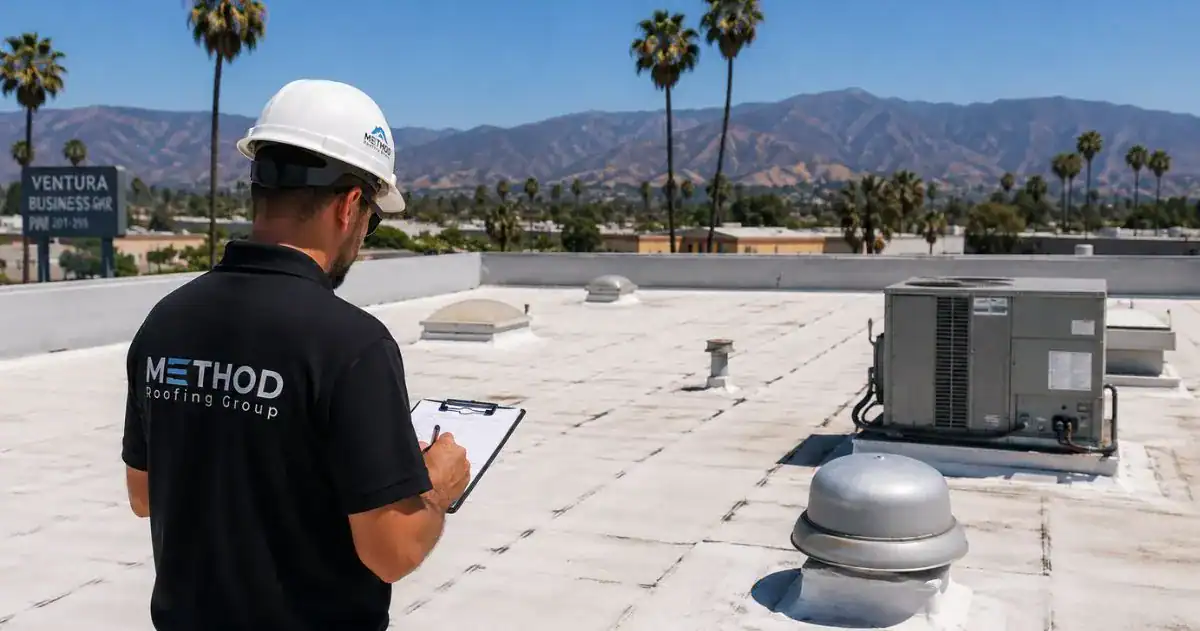
We don’t decide repair versus replacement — the evidence does. Every documented inspection produces a written condition report: dated photos of every notable finding, moisture readings, damage mapped as a percentage of total roof area, deck assessment, and code triggers checked. You keep the report whether you hire us or not.
Many roofs we inspect don’t need replacement. Some genuinely do. The difference between a diagnosis and a sales pitch is documentation — and a diagnosis is the only version you can take to your insurance carrier, your HOA board, or a second bidder.
A documented report also does double duty with your insurer — see what California insurance now requires from your roof.
Answers before estimates. That’s the method.
Repair vs. Replacement Inspections Across Southern California
The right answer depends on your roof’s documented condition — and in fire-mapped areas, on your parcel’s code obligations. Method Roofing Group provides free documented inspections with a written repair-restore-replace verdict across:
Roof Repair vs. Replacement FAQs
Should I repair or replace my roof?
Repair if damage is localized (roughly under 25–30% of roof area), the deck is sound, and the system has service life left. Replace if leaks recur across multiple zones, insulation is saturated, or the roof is at end of life. If it’s aging but intact, get a restoration assessment first — it’s often the best value of the three and the least frequently offered.
Can a roof be repaired instead of replaced?
Often, yes. Many roofs quoted for replacement have localized, repairable damage — the source is frequently flashing or a penetration rather than the membrane itself. The determining facts are the extent of damage, moisture location, and deck condition, all of which a documented inspection establishes with photos and readings rather than opinion.
What is roof restoration, and when is it better than replacement?
Roof restoration is a fluid-applied coating system — silicone, acrylic, or spray foam — installed over a structurally sound existing roof. It typically adds 10–20 years of service life at roughly one-third of replacement cost, with no tear-off. It’s better than replacement when moisture hasn’t entered the assembly and the deck is sound; it’s not an option once saturation or structural damage sets in.
Is it cheaper to repair or replace a roof?
Repair is almost always cheaper upfront; the real question is cost per year of service life gained. A repair that buys 8 more years is excellent economics. Repeated repairs on a failing system are the most expensive path of all — you pay for repairs and the replacement. As benchmarks: see current residential replacement costs in Orange County and commercial replacement costs by system.
Does a leaking roof mean I need a full replacement?
No — a leak means water found a path, not that the system failed. Most single leaks trace to flashings, penetrations, or seams and are repairable. The distinction that matters is whether moisture stayed on the assembly or got into it: wet insulation and deck damage move the conversation toward replacement. That’s determined by moisture readings, not by looking at the ceiling stain.
How many times should a roof be repaired before replacing it?
There’s no fixed number, but two markers signal the tipping point: repairing the same roof more than once a year, or cumulative repair costs approaching 25–30% of replacement cost. In California there’s also a legal marker — repairs or recovery crossing 50% of roof area within twelve months trigger full code compliance for the entire roof.
Does replacing part of my roof trigger California code requirements?
Yes, at the 50% threshold. Replace or recover more than half your total roof area within a one-year period — in one project or cumulatively — and the whole roof must meet current Title 24 standards, including Class A fire-rated assembly requirements in mapped fire zones. See our Title 24 roofing requirements guide for what that involves.
How do I get an honest answer on repair vs. replacement?
Require evidence. A trustworthy recommendation comes with dated photos of every cited condition, moisture readings, damage mapped as a percentage of total roof area, and a written report you keep regardless of who you hire. If a contractor quotes replacement without documentation, get a second opinion before signing — Method’s documented inspection is free and the report is yours either way.
How long does a roof restoration last?
A restoration adds 10 to 20 years of service life. On qualifying systems, manufacturer NDL warranties are available up to 20 years. At the end of that cycle many roofs can be recoated rather than replaced, which is what makes restoration a repeatable strategy instead of a one-time delay.
What disqualifies a roof from restoration?
Three things. Saturated insulation, because coating over trapped water seals the problem in. Membrane failure across the field rather than in isolated patches. And structural or deck problems, which no coating addresses. A moisture survey identifies all three before anyone quotes a price.
Does restoration meet California’s Title 24 requirements?
Usually, yes. High-reflectance restoration systems typically satisfy cool-roof requirements. Restoration also tends to keep the work under the 50% threshold that triggers full current-code compliance, which is a meaningful cost difference on an older building. Confirm the specific system against current Title 24 tables before you commit.
How much cheaper is restoration than replacement?
Roughly two-thirds cheaper. In Southern California in 2026, restoration runs $3 to $7 per square foot and replacement runs $8 to $20. The gap widens on large flat roofs, where tear-off, disposal, and downtime carry real cost. Restoration only pencils out if the roof actually qualifies.
Get a Written Repair-or-Replace Verdict for Your Roof
Request a free documented roof inspection: dated photos, moisture readings, damage mapped against your whole roof, and a written recommendation — repair, restore, or replace — you can hold any contractor to.
Schedule a roof inspection below — or call (949) 866-3011 to speak with our team directly.
Request a Roof InspectionMethod Roofing Group · 4940 Campus Dr., Suite C, Newport Beach, CA 92660 · (949) 866-3011 · CSLB #1157257

