How Long Does a Residential Roof Last in Southern California?
Residential roof lifespan in Southern California by material — and the factors that determine whether you reach the upper or lower end of the range.
Residential roof lifespan varies significantly by material, installation quality, ventilation, and exposure conditions. Southern California’s climate introduces specific factors — UV intensity, wildfire risk, Santa Ana winds, and coastal salt air — that affect how long a roof actually performs.
Residential Roof Lifespan by Material
Average service life for the most common residential roofing materials installed across Orange County and Southern California:
- Asphalt Shingle Roofing: typically 20–30 years
- Clay & Concrete Tile Roofing: 50+ years (underlayment typically 25–35 years)
- Standing Seam Metal Roofing: typically 40–70 years
- Stone-Coated Steel Roofing: typically 40–50 years
- Synthetic & Composite Systems: typically 40–50 years
- Wood Shake Roofing: typically 20–30 years (subject to California fire code restrictions)
These ranges assume professional installation, adequate ventilation, and routine maintenance — all of which directly affect residential roof lifespan in Southern California.
Roof Lifespan by Material Type
Asphalt Shingle Roofing — 20 to 30 Years
Asphalt shingles remain the most common residential roofing material in Southern California due to cost, availability, and aesthetic versatility. Three-tab shingles typically last 15–20 years. Architectural (dimensional) shingles last 20–30 years. Premium designer shingles can extend to 30–40 years under ideal conditions.
Southern California’s high UV exposure accelerates asphalt shingle aging compared to cooler climates. Granule loss, blistering, and surface cracking typically appear earlier than the manufacturer’s stated lifespan. Adequate attic ventilation is the single most important factor in achieving the upper end of the lifespan range.
Clay & Concrete Tile Roofing — 50+ Years
Clay and concrete tile are exceptionally durable and well-suited to Southern California’s climate and architectural styles. The tiles themselves can last 50–100 years.
The critical issue with tile roofs is the underlayment beneath the tiles, which typically reaches the end of its service life at 25–35 years. When underlayment fails, the tiles may appear intact while the actual roof system is no longer watertight. A tile roof at 30+ years should be inspected for underlayment condition — tiles can often be carefully removed, the underlayment replaced, and the original tiles reinstalled.
Standing Seam Metal Roofing — 40 to 70 Years
Standing seam metal roofs offer the longest service life among common residential materials, along with excellent fire resistance (Class A rated) — increasingly relevant in wildfire-prone areas of Southern California.
Properly installed standing seam systems require minimal maintenance and resist UV degradation, wind uplift, and thermal cycling. Sealants and fasteners at penetrations may require attention over time, but the panels themselves typically outlast the home’s other systems.
Standing Seam Metal Roofing — 40 to 70 Years
Standing seam metal roofs offer the longest service life among common residential materials, along with excellent fire resistance (Class A rated) — increasingly relevant in wildfire-prone areas of Southern California.
Properly installed standing seam systems require minimal maintenance and resist UV degradation, wind uplift, and thermal cycling. Sealants and fasteners at penetrations may require attention over time, but the panels themselves typically outlast the home’s other systems.
Stone-Coated Steel Roofing — 40 to 50 Years
Stone-coated steel combines the durability of metal with the appearance of traditional tile, shake, or shingle profiles. This system performs well in Southern California due to its fire resistance, lightweight construction (suitable for retrofits over existing roofs), and resistance to wind, hail, and UV.
Stone-coated steel is increasingly common in HOA-controlled neighborhoods where metal aesthetics are restricted but homeowners want metal performance.
Synthetic & Composite Systems — 40 to 50 Years
Synthetic slate, composite shake, and polymer roofing systems replicate the appearance of natural slate or wood shake without the weight, fire risk, or maintenance demands. These systems are well-suited to Southern California homes where natural materials are impractical due to fire code or structural considerations.
Lifespan ranges from 40 to 50+ years depending on manufacturer and specific product, with manufacturer warranties commonly matching or exceeding that range.
Wood Shake Roofing — 20 to 30 Years (Subject to Fire Code)
Wood shake roofing is increasingly restricted across California due to wildfire risk. Most jurisdictions require Class A fire-rated assemblies, which generally precludes traditional untreated wood shake.
Existing wood shake roofs typically last 20–30 years. Replacement is often required with a fire-rated material — common alternatives include synthetic shake (which replicates the look) or standing seam metal.
Roof Lifespan Comparison
| Roofing Material | Average Lifespan | Southern California Climate Impact |
| Asphalt Shingles | 20–30 years | Shortened by UV exposure |
| Clay & Concrete Tile | 50+ years | Ideal for hot, dry climates; underlayment limits system life |
| Standing Seam Metal | 40–70 years | Performs well in heat; Class A fire rated |
| Stone-Coated Steel | 40–50 years | Strong fire and UV resistance |
| Synthetic & Composite | 40–50 years | Class A fire-rated alternative to slate or shake |
| Wood Shake | 20–30 years | Restricted by California fire code |
Service life ranges are based on industry standards and assume professional installation, adequate ventilation, and routine maintenance. Actual performance depends on material quality, roof exposure, and ongoing maintenance.
What Affects Residential Roof Lifespan in Southern California
UV Exposure and Heat
Southern California receives among the highest annual UV exposure in the continental United States. UV degrades roofing materials over time — particularly asphalt shingles, sealants, flashings, and underlayments. Roofs with southern and western exposures age faster than northern exposures.
Thermal Cycling
Daily and seasonal temperature swings cause roofing materials to expand and contract. Repeated thermal cycling stresses fasteners, sealants, flashing details, and the bonds between materials. Quality installation accounts for thermal movement; poor installation does not.
Santa Ana Winds and Wind Events
Santa Ana winds regularly produce gusts of 50–80 mph across Southern California, with higher speeds in foothill canyons. Wind uplift is one of the most common causes of premature roof damage and shingle displacement.
Coastal Salt Air
Homes within several miles of the coast experience accelerated corrosion of metal flashings, fasteners, and metal roofing panels not specifically rated for coastal exposure. Material selection and detailing should account for proximity to the ocean.
Wildfire Risk
Wildfire exposure is a critical consideration for inland and foothill communities across Orange County, Los Angeles County, and Riverside County. Class A fire-rated roofing systems (tile, metal, stone-coated steel, fire-rated composite) provide the highest resistance. Building codes increasingly require Class A assemblies in designated fire hazard zones.
For detailed guidance on fire-resistant roofing materials, refer to CAL FIRE’s Firewise Roofing Materials Fact Sheet.
Attic Ventilation
Poor attic ventilation is the single most common cause of premature roof failure across all materials. Inadequate ventilation traps heat in the attic, accelerating shingle aging from the underside, raising cooling costs, and contributing to ice dam formation in higher-elevation areas. Ventilation is often overlooked during budget-driven roof replacements.
Installation Quality
A premium roofing material poorly installed will underperform a budget material installed correctly. Manufacturer warranties are typically conditional on installation by certified contractors following manufacturer specifications. Cut corners during installation — improper underlayment, missing flashing details, inadequate ventilation — directly reduce service life.
Signs Your Residential Roof May Need Attention
- Visible granule loss on asphalt shingles, often appearing as sediment in gutters
- Curling, cupping, or blistering of shingle edges
- Cracked, slipped, or missing tiles on tile roofs
- Visible underlayment where tiles or shingles have shifted
- Active leaks or water staining on interior ceilings or walls
- Sagging rooflines or visible structural deflection
- Loose, lifted, or rusting flashing at chimneys, skylights, walls, and vents
- Moss, algae, or organic growth on shaded slopes
- Roof approaching 20+ years with no recent inspection or maintenance
If any of these conditions are present, a documented roof inspection provides the information needed to determine whether repair, partial replacement, or full replacement is the appropriate response.
Not Sure Where Your Roof Stands?
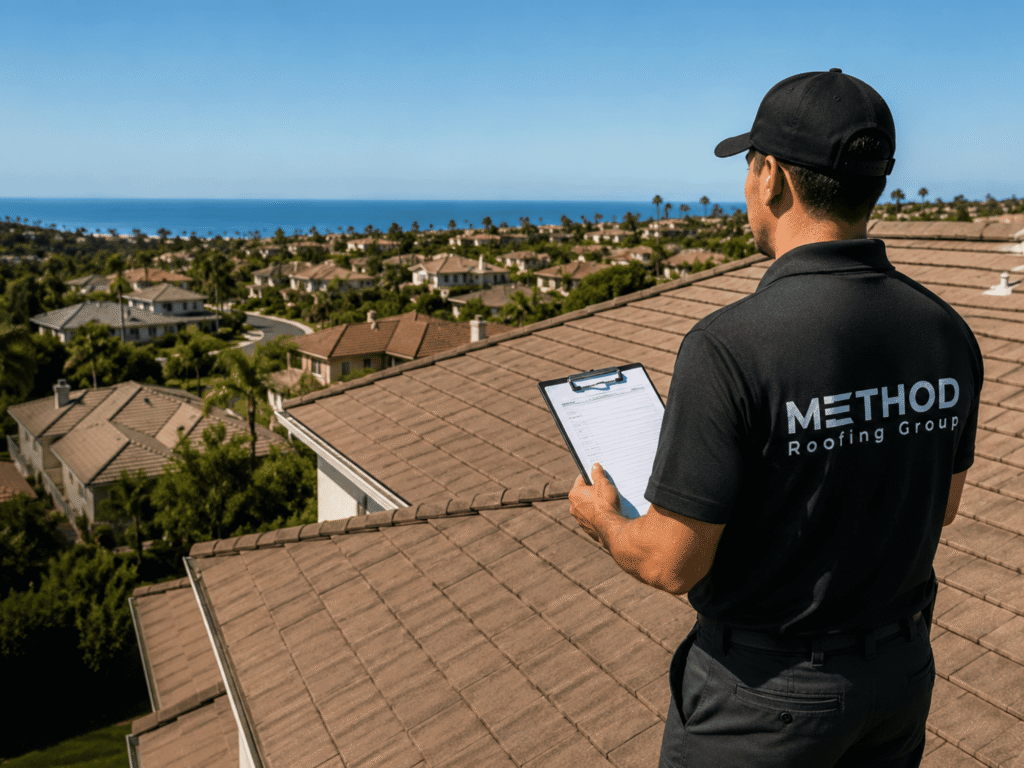
Method Roofing Group inspectors evaluate residential roofs across Southern California. Each inspection includes photographs, a written report, and prioritized recommendations — so you know exactly where your roof stands.
Extending Your Roof’s Service Life
Schedule Annual Inspections
Routine annual or biennial inspections identify small issues — failed sealants, lifted shingles, deteriorating flashing — before they become major repairs or replacement triggers. Most premature roof failures are preventable through early intervention.
Address Minor Repairs Promptly
A small leak or area of damage repaired in week one is significantly less expensive than the same issue repaired in year two after water has compromised decking, insulation, and interior finishes.
Maintain Adequate Attic Ventilation
Verify that attic ventilation meets current code requirements (typically 1 square foot of ventilation per 150 square feet of attic area, or 1:300 with proper distribution between intake and exhaust). Inadequate ventilation shortens roof life regardless of material.
Keep Gutters and Drainage Clear
Clogged gutters cause water to back up under shingles and behind flashing. Maintain gutter cleanliness and ensure downspouts direct water away from the foundation and roof line.
Trim Overhanging Branches
Branches that contact the roof abrade shingles and tiles, deposit organic debris, and create pathways for moisture retention. Maintain a clearance of several feet between trees and the roof surface.
When to Replace vs. When to Repair
The decision between roof repair and roof replacement depends on the age of the roof, the extent and location of damage, the condition of underlying components (deck, underlayment, ventilation), and the cost relationship between repair and replacement.
Repair is generally appropriate when damage is localized, the roof has substantial service life remaining, and underlying components are sound. Replacement is generally appropriate when the roof is approaching the end of its service life, when damage is widespread, or when underlying components — particularly underlayment beneath tile roofs — have reached end of life.
A documented inspection identifies which scenario applies to your roof and provides the information needed to make an informed decision.
Learn more in our guide: Roof Repair vs. Roof Replacement →
Residential Roof Lifespan FAQs
Asphalt Shingles & Common Roofing Questions
Architectural asphalt shingles typically last 20–30 years in Southern California. Three-tab shingles last 15–20 years. Premium designer shingles can extend to 30–40 years. Southern California’s high UV exposure tends to shorten asphalt shingle service life relative to cooler climates, making attic ventilation and routine maintenance especially important.
Darker shingles absorb more heat, which accelerates aging — particularly when attic ventilation is inadequate. Lighter-colored shingles and reflective (“cool roof”) systems reduce attic heat loads and can extend service life while lowering cooling costs.
Tile, Metal & Specialty Roofing
Clay and concrete tile can last 50+ years, with the tiles themselves often lasting 75–100 years. The underlayment beneath the tiles typically requires replacement at 25–35 years. A tile roof that is 30+ years old should be inspected for underlayment condition, even if the tiles appear intact.
Standing seam metal roofs typically last 40–70 years. Stone-coated steel systems last 40–50 years. Both perform well in Southern California due to fire resistance, UV durability, and resistance to wind uplift. Coastal exposure requires materials and fasteners rated for salt air.
Inspections, Replacements & Maintenance
A roof inspection is recommended annually for roofs older than 10 years, after any major wind or hail event, and prior to selling or purchasing a home. Inspections identify small issues before they become major repairs or replacement triggers.
In many cases, yes. Existing tiles can be carefully removed, the failed underlayment replaced, deck repaired as needed, new flashing installed, and the original tiles reinstalled. This approach preserves the existing tiles, maintains the home’s appearance, and reduces material cost — provided the tiles are in good condition and adequately inventoried for breakage during removal.
Routine inspections, prompt repair of minor issues, adequate attic ventilation, clean gutters and drainage, and trimmed overhanging vegetation are the most effective ways to extend roof service life. Most premature roof failures result from issues that could have been addressed years earlier.
Schedule a Residential Roof Inspection
A documented roof inspection provides clear information on your roof’s current condition, remaining service life, and any issues requiring attention. Method Roofing Group provides residential roof inspections across Orange County and Southern California with written reports, photographs, and prioritized recommendations.
Schedule a roof inspection below — or call (949) 966-3011 to speak with our team directly and book by phone.
Request a Roof Inspection
