How Long Does a Commercial Roof Last?
Want to Know How Long YOUR Commercial Roof Will Last?
The lifespan of a commercial roof depends on the system, installation quality, and ongoing maintenance. Understanding how long your roof is expected to last helps you plan ahead, reduce risk, and avoid costly surprises.
Average Commercial Roof Lifespan by System
Commercial roof life expectancy varies by material, roof design, maintenance history, and environmental exposure. Here’s a general guide to how long common commercial roofing systems typically last.
TPO & Single-Ply Roofing
Typically lasts 15–25 years
Durable, reflective, and commonly used on low-slope commercial roofs.
Silicone Roof Coatings
Can extend roof life 10–20+ years
Best for restoration when the existing roof is still structurally sound.
Spray Polyurethane Foam (SPF)
Typically lasts 20–30+ years
Seamless, insulating, and effective when properly maintained.
What Affects Commercial Roof Lifespan?
Even with the right system, how long a commercial roof lasts depends on how the roof is installed, maintained, and exposed to daily conditions.
Key Factors
- UV exposure and heat
- Ponding water or poor drainage
- Foot traffic and rooftop equipment
- Installation quality Maintenance history
Why It Matters
Small issues can shorten the roof life expectancy if they are ignored. Regular inspections help identify early wear before it turns into leaks, disruption, or larger repair needs.
Industry resources like the National Roofing Contractors Association provide additional guidance on roof lifespan and maintenance.
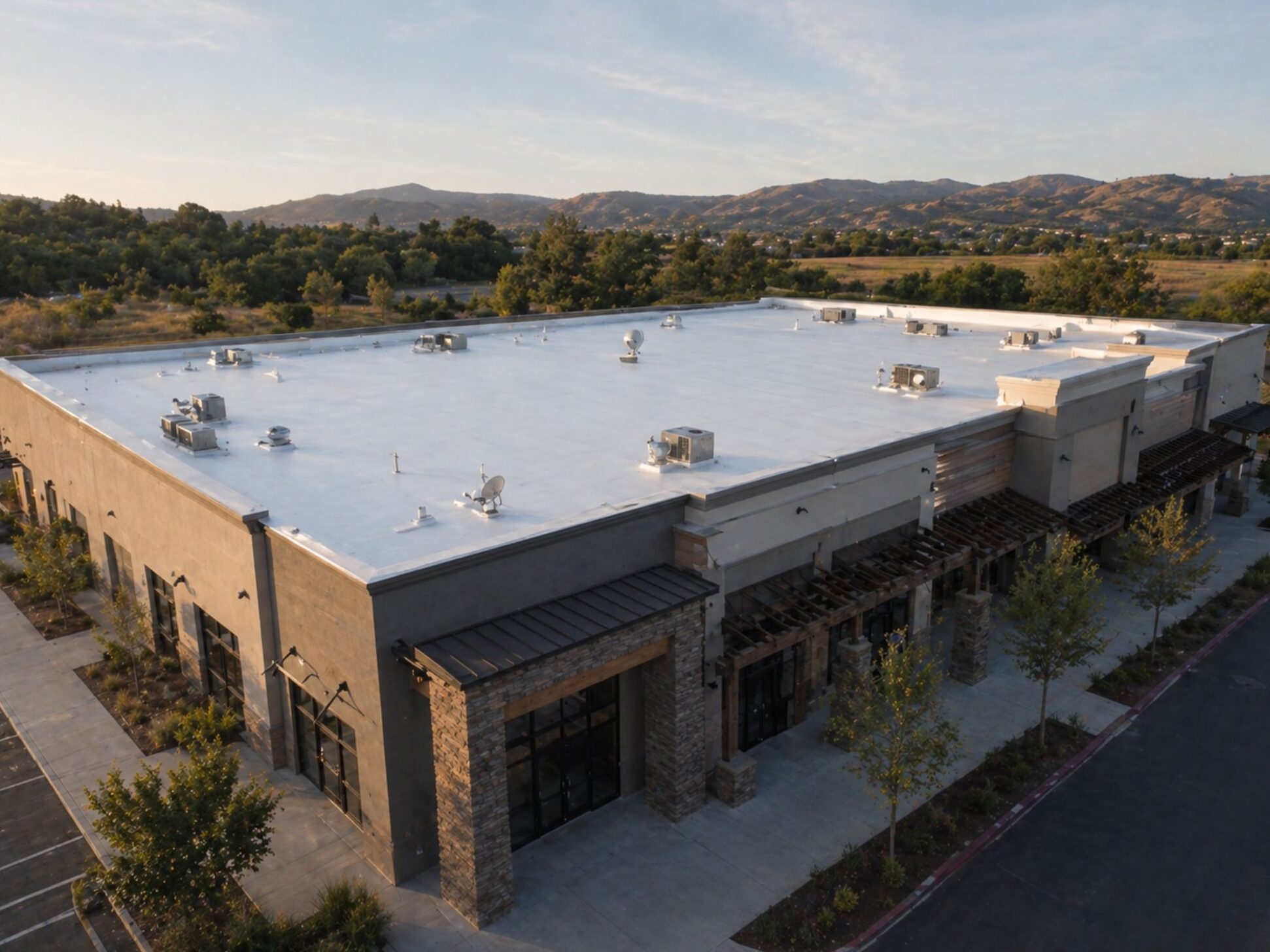
Signs Your Commercial Roof Is Near the End of Its Life
Even the best roofing systems show signs of wear over time. Knowing what to look for can help you act early and avoid costly disruptions.
Warning Signs
- Recurring leaks in the same or multiple areas
- Visible cracking, blistering, or membrane separation
- Ponding water that does not drain properly
- Soft spots or structural weakness Interior water stains or moisture intrusion
What These Signs Mean
When multiple issues appear at once, the roof may be nearing the end of its useful life. While isolated problems can often be repaired, widespread deterioration typically indicates a need for restoration or full replacement.
Roof Age vs Repair or Replacement
As a commercial roof ages, the right solution depends on more than just time. Condition, performance, and repair history all play a role in determining whether repair, restoration, or replacement is the best path forward.
- Newer roofs → targeted repairs are typically sufficient
- Mid-life roofs → restoration can extend performance and reduce cost
- Older roofs → replacement is often the most reliable long-term solution
For a more detailed comparison, review our breakdown of roof repair vs roof replacement.
Key Takeaways
- Commercial roofs typically last 15–30+ years depending on materials and maintenance.
- Regular inspections can identify early wear and extend roof life by 10–20+ years.
- Signs of deterioration include recurring leaks, visible cracking, and ponding water.
- You can often repair newer roofs, but older roofs may need full replacement for reliability.
- Industry resources, like the National Roofing Contractors Association, provide additional lifespan and maintenance guidance.
Commercial Roof Lifespan FAQ
Most commercial roofs last between 10 and 50 years depending on the material, installation quality, and maintenance. Systems like TPO typically last 15–25 years, while metal roofs can last significantly longer.
Key factors include UV exposure, drainage, installation quality, foot traffic, and regular maintenance. Even high-quality systems can fail early without proper inspections and upkeep.
Yes. Routine inspections and proactive maintenance can significantly extend the life of a commercial roof by identifying and addressing small issues before they become major problems.
Replacement is typically recommended when damage is widespread, recurring, or the roof is near the end of its expected lifespan. A professional inspection helps determine the most cost-effective solution.
In many cases, yes. If the roof is still structurally sound, restoration systems like silicone coatings can extend its lifespan without the cost and disruption of a full replacement.
Get a Documented Answer on How Long Your Commercial Roof Will Last
Method Roofing Group provides documented commercial roof lifespan assessments throughout Southern California. Whether you’re managing an aging single-ply membrane, a 15-year-old TPO system, or a multi-property commercial portfolio — we provide clear remaining-life estimates and replacement timing based on actual roof conditions, not assumptions.
Schedule a roof inspection below — or call (949) 866-3011 to speak with our team directly and book by phone.
Request a Roof Inspection
