Inland Empire Roofing Services
Residential, commercial, and industrial roofing services for property owners across Riverside and San Bernardino counties.
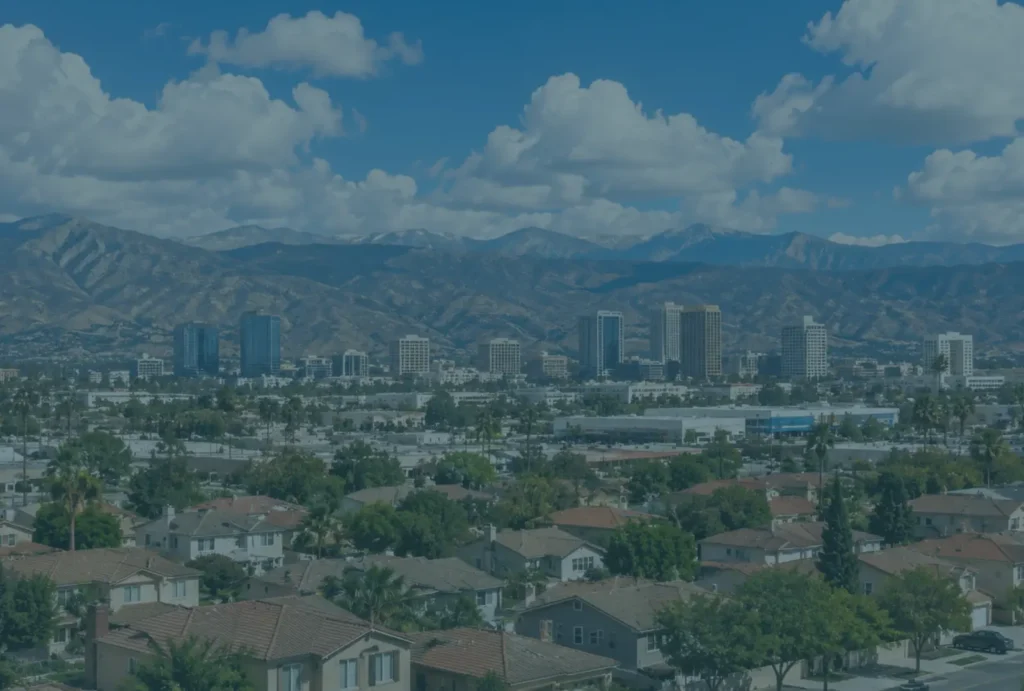
Roofing decisions in the Inland Empire involve a unique set of conditions — extreme summer heat, intense UV exposure, mountain snow loads, desert microclimates, Santa Ana wind events, and one of the largest concentrations of commercial and industrial inventory in California. From the Ontario logistics corridor to the Big Bear mountain communities, Coachella Valley resorts, and Temecula residential growth zones, the Inland Empire demands roofing decisions matched to the specific exposure of each property.
Local Roofing Expertise for the Inland Empire
The Inland Empire’s roofing environment is among the most demanding in California. Valley floor properties in Ontario, Riverside, Fontana, and San Bernardino face extreme summer heat — regularly exceeding 105°F — that accelerates roofing membrane and shingle degradation. Mountain communities in Big Bear, Lake Arrowhead, Wrightwood, and Idyllwild contend with heavy snow loads and freeze-thaw cycles. Desert properties in Palm Springs, Palm Desert, La Quinta, and Indio face some of the highest UV exposure in the continental United States. WUI fire zones span both counties extensively. And California Title 24 cool-roof requirements apply to most low-slope residential and commercial replacements throughout the region.
Method Roofing Group is structured to address all of it. Our methodology, manufacturer certifications, and field experience are matched to the specific roofing realities of Inland Empire properties — from the industrial corridor’s millions of square feet of warehouse and distribution inventory, to coastal-influenced western communities, mountain resort properties, and Coachella Valley resort and residential assets.
Residential Roofing
Roof repair, roof replacement, re-roofing, storm damage repair, and inspections for homeowners across the Inland Empire. Architectural shingles, clay and concrete tile, standing seam metal, stone-coated steel, and synthetic composite systems — matched to the home, climate, and HOA requirements.
Commercial Roofing
Commercial roof inspections, repairs, replacements, and restoration systems for property owners, facility managers, and multi-property portfolios. TPO, PVC, EPDM, modified bitumen, single-ply, and restoration coating systems for office, retail, industrial, and multifamily assets.
Industrial & Multi-Property Assets
The Inland Empire is one of the largest industrial and logistics markets in the United States. Method provides condition assessments, capital expenditure planning, and roofing solutions designed for warehouses, distribution centers, manufacturing facilities, and multi-property portfolios — minimizing operational disruption and extending asset life.
Inland Empire Cities We Serve
Method Roofing Group provides roofing services throughout the Inland Empire — Riverside and San Bernardino counties — including:
Riverside County:
- Banning
- Beaumont
- Calimesa
- Cathedral City
- Coachella
- Corona
- Desert Hot Springs
- Eastvale
- Hemet
- Indian Wells
- Indio
- Jurupa Valley
- La Quinta
- Lake Elsinore
- Menifee
- Moreno Valley
- Murrieta
- Norco
- Palm Desert
- Palm Springs
- Perris
- Rancho Mirage
- Riverside
- Temecula
- Wildomar
San Bernardino County:
- Adelanto
- Apple Valley
- Barstow
- Big Bear Lake
- Chino
- Chino Hills
- Colton
- Fontana
- Hesperia
- Highland
- Lake Arrowhead
- Loma Linda
- Montclair
- Ontario
- Rancho Cucamonga
- Redlands
- Rialto
- San Bernardino
- Twentynine Palms
- Upland
- Victorville
- Yucaipa
- Yucca Valley
Serving unincorporated areas, gated communities, mountain communities, desert resort communities, and HOA-controlled neighborhoods throughout both counties. Schedule a roof inspection — or call (949) 866-3011 to speak with our team directly and book by phone.
Roofing Considerations Specific to the Inland Empire
Extreme Heat and UV Intensity
Inland Empire valley floor and desert communities — including Ontario, Riverside, San Bernardino, Fontana, Moreno Valley, Palm Springs, Palm Desert, La Quinta, and Indio — experience some of the highest annual heat and UV exposure in the continental United States. Summer temperatures regularly exceed 105°F, and desert communities can reach 115°F+. UV degrades roofing materials over time — particularly asphalt shingles, sealants, flashings, and underlayments. Method specifies UV-stable systems, heat-rated underlayments, and cool-roof reflective coatings appropriate to each property’s exposure.
Wildfire Risk and Class A Fire-Rated Roofing
Mountain and foothill communities — including Lake Arrowhead, Big Bear Lake, Crestline, Wrightwood, Idyllwild, Yucaipa, Mentone, Redlands foothills, Rancho Cucamonga foothills, Yucca Valley, and rural areas across both counties — sit within California’s designated Wildland-Urban Interface (WUI) zones. Class A fire-rated roofing assemblies are required by building code in these areas. Method works exclusively with Class A–rated material systems (tile, metal, stone-coated steel, synthetic composite, and fire-rated asphalt) and follows current California fire code requirements.
For detailed fire-resistant roofing material guidance, refer to CAL FIRE’s Firewise Roofing Materials Fact Sheet.
Title 24 Cool Roof Compliance
California Title 24 (Building Energy Efficiency Standards) requires cool-roof-rated materials on most low-slope residential and commercial roof replacements, and certain steep-slope situations. Most Inland Empire properties fall within Climate Zones 10, 14, 15, or 16 — each with specific reflectance, emittance, and SRI requirements that vary significantly between valley, desert, and mountain communities. Method handles Title 24 specification and documentation as part of every applicable project.
For more on Title 24, see the California Energy Commission Building Energy Efficiency Standards.
Mountain Snow Loads and Freeze-Thaw
Mountain communities — Big Bear Lake, Lake Arrowhead, Running Springs, Crestline, Wrightwood, Idyllwild, and surrounding alpine areas — receive significant snowfall and experience freeze-thaw cycles that demand specific roofing assemblies. Snow load–rated structural support, ice-and-water shield underlayments, ventilation strategies that prevent ice dams, and steep-slope material selection are all critical. Method specifies systems engineered for mountain elevation and snow load conditions.
Santa Ana Winds and Mountain Pass Wind Events
Santa Ana winds regularly produce gusts of 60–90 mph across the Inland Empire, with higher speeds in mountain pass corridors — Cajon Pass, Banning Pass, and San Gorgonio Pass — that funnel and accelerate wind flow. Wind uplift is one of the most common causes of premature roof damage and shingle displacement in the region. Method specifies wind-rated materials, enhanced fastening patterns, and installation methods appropriate to the specific microclimate and elevation of each property.
HOA Architectural Requirements
Many Inland Empire neighborhoods — particularly across Temecula, Murrieta, Corona, Eastvale, Rancho Cucamonga, Chino Hills, and master-planned desert communities — are HOA-controlled, with specific roofing material, color, profile, and aesthetic requirements. Spanish and Mediterranean communities often require clay or concrete tile. Modern and contemporary communities may permit standing seam metal or specific shingle profiles. Method provides documentation suitable for HOA architectural review submissions and works directly with HOA committees when needed.
Industrial and Warehouse Roofing at Scale
Each Inland Empire city has distinct building permit requirements, fees, and inspection workflows. Riverside and San Bernardino counties — covering nearly 28,000 square miles combined and dozens of incorporated cities — require coordination with multiple jurisdictions, particularly for portfolio property owners with assets across the region. Method handles all required permitting and city inspections as part of every project.
Industrial and Warehouse Roofing at Scale
The Inland Empire houses one of the largest concentrations of distribution, logistics, and manufacturing facilities in the United States — with massive single-roof systems across Ontario, Mira Loma, Fontana, Riverside, Moreno Valley, San Bernardino, Rialto, and Redlands. Method provides condition assessments, restoration coating systems, and re-roofing solutions designed for warehouse and distribution properties — minimizing operational disruption to tenants and supply chain operations.
Why Inland Empire Property Owners Choose Method Roofing Group
Roofing decisions involve significant capital, warranty considerations, and operational impact. Method’s approach is built around three principles that protect property owners across the Inland Empire throughout every project.
Documented Process on Every Project
Every Method project — inspection, repair, restoration, or replacement — is photographed, documented, and reported in writing. Property owners receive complete records appropriate for warranty maintenance, insurance claims, capital planning, and pre-purchase due diligence. Documentation is built into our process, not an afterthought.
Manufacturer-Certified, Licensed Crews
Method maintains current manufacturer certification training across every major commercial and residential roofing system. Active California Contractor’s State License Board (CSLB License #1157257) credentials stay current. Every Inland Empire project is overseen by a licensed Method team member from inspection through completion — never subcontracted to third-party crews.
Founder-Led, Field-Tested Expertise
Method is led by a founder with decades of hands-on commercial and residential roofing experience across Southern California’s coastal, inland, mountain, and desert environments. Headquartered in Newport Beach, every Inland Empire project benefits from direct founder oversight — not a sales-driven model with disconnected execution teams.
Inland Empire Roofing FAQs
What cities in the Inland Empire does Method Roofing Group serve?
Method provides roofing services across all of Riverside and San Bernardino counties, including Riverside, San Bernardino, Ontario, Fontana, Rancho Cucamonga, Corona, Moreno Valley, Temecula, Murrieta, Hemet, Indio, La Quinta, Palm Desert, Palm Springs, Redlands, Yucaipa, Chino, Chino Hills, Upland, Victorville, Hesperia, Big Bear Lake, Lake Arrowhead, and surrounding cities. Method is headquartered in Newport Beach and serves the Inland Empire as part of our broader Southern California service area.
Does Method work on residential, commercial, and industrial properties in the Inland Empire?
Yes. Method serves single-family homes, multifamily properties, HOA-managed communities, office and retail buildings, distribution and logistics facilities, manufacturing buildings, and multi-property portfolios across the Inland Empire. The same methodology, documentation standards, and manufacturer certifications apply across every project type.
How much does a roof replacement cost in the Inland Empire?
Cost depends on roof size, material, complexity, and property location. For residential projects, ranges run from approximately $11,000 for architectural asphalt shingles to $50,000+ for premium tile, metal, or synthetic systems. Commercial and industrial pricing varies based on building size and roof system. Inland Empire pricing typically runs slightly below coastal Southern California averages due to logistics access, though desert and mountain projects carry premium pricing for material rating requirements and access challenges.
Does Method provide free roof inspections in the Inland Empire?
Yes. Method provides documented residential and commercial roof inspections throughout the Inland Empire with no obligation to proceed. Each inspection includes photographs, condition assessments, and written recommendations appropriate for capital planning, warranty maintenance, insurance, or pre-purchase due diligence.
Do I need a permit for a roof replacement in the Inland Empire?
Yes. Every Inland Empire city and unincorporated county area requires building permits for residential and commercial roof replacements. With dozens of jurisdictions across Riverside and San Bernardino counties — each with distinct permitting requirements, fees, and inspection workflows — coordination is critical for portfolio property owners. Method handles all required permitting and city inspections as part of every project.
Does my roof need to be Class A fire-rated in the Inland Empire?
If your property is located in a designated Wildland-Urban Interface (WUI) fire hazard zone — which includes mountain communities (Big Bear, Lake Arrowhead, Wrightwood, Idyllwild), foothill areas, and large portions of both counties — California building codes under the California Wildland-Urban Interface Code (Title 24, Part 7) require a Class A fire-rated roofing assembly. Method specifies Class A–compliant materials for all WUI-zone projects.
Does Method handle Title 24 cool roof compliance in the Inland Empire?
Yes. Method selects roofing products that meet or exceed California Title 24 Part 6 cool roof requirements for the relevant climate zone. Inland Empire properties fall within Climate Zones 10 (most valley areas), 14 (Coachella Valley desert), 15 (low desert), or 16 (mountain) — each with specific reflectance, emittance, and SRI requirements that Method’s specified products satisfy. Title 24 specification and documentation is included as part of every applicable project.
Does Method work on Inland Empire warehouse and distribution properties?
Yes. The Inland Empire houses one of the largest concentrations of distribution, logistics, and manufacturing facilities in the United States. Method provides condition assessments, restoration coating systems, repair, and re-roofing solutions designed for large-format warehouse and industrial properties — including phased work plans that minimize operational disruption to tenants and supply chain operations.
Schedule an Inland Empire Roof Inspection
Method Roofing Group provides documented roof inspections, repairs, replacements, and re-roofing services throughout the Inland Empire — from the Ontario logistics corridor to Temecula residential communities, Big Bear mountain properties, and Coachella Valley assets. Whether you’re managing a single property or a multi-property portfolio, we provide clear recommendations based on actual roof conditions, not assumptions.
Schedule a roof inspection below — or call (949) 866-3011 to speak with our team directly and book by phone.
Request a Roof Inspection
