Roofs and Homeowners Insurance in California: What Changed in 2026 and What Insurers Now Require
California’s insurance market is repricing wildfire risk in real time, and your roof is the first thing underwriters look at. Here’s what changed in 2026 — the new discounts, the new grant money, the new coverage rules — and how a documented, code-compliant roof became the strongest financial lever a homeowner controls.
Last updated: July 2026 · Reviewed by Jeff Moreno, Founder, Method Roofing Group · CSLB #1157257
Quick answer: California insurers now evaluate roofs on age, material, fire rating, and documentation. A Class A fire-rated roof is the anchor measure of the state’s Safer from Wildfires framework, which requires carriers to offer wildfire-mitigation discounts. As of July 1, 2026, replacement-cost policies must include building-code upgrade coverage of at least 10% of the dwelling limit. The AB 888 Safe Homes program now offers grants to income-qualified homeowners in high-risk zones for fire-safe roof replacement. And for FAIR Plan policyholders, a documented Class A roof is often the key to returning to the standard market — where premiums typically run far lower.
What Changed in 2026: The New Rules at a Glance
| Change | Effective | What it means for your roof |
|---|---|---|
| CAL FIRE’s expanded Fire Hazard Severity Zone maps + new WUI code (Title 24, Part 7) | Jan 1, 2026 | Re-roofs in mapped zones — now including High zones inside city limits — require Class A fire-rated assemblies. See our Title 24 guide |
| California Safe Homes grant program (AB 888) | Jan 2026 (applications opened spring 2026) | State grants — not loans — for income-qualified homeowners in high-risk zones to fund fire-safe roof replacement and home-hardening within 5 feet of the structure |
| Building-code upgrade coverage mandate | July 1, 2026 | Replacement-cost homeowners policies must include code-upgrade coverage of at least 10% of the dwelling limit — code-required improvements like Class A assemblies are better covered after a loss |
| Safer from Wildfires discounts (expanding carrier adoption) | Ongoing | Carriers must offer premium credits for verified hardening; a Class A roof is the anchor measure |
THE METHOD MEMO
Take this one with you. No. 04 — the 2026 rule changes, insurance discounts, grant programs, and the FAIR Plan exit checklist on one printable page. No email required.
What California Insurers Now Look At on Your Roof
Age. Many carriers tighten terms or decline as roofs pass 15–20 years — some request roof inspections or condition documentation at renewal. An older roof with documented condition often beats a younger roof with no records.
Material and fire rating. Class A fire-rated coverings — fiberglass asphalt shingle, concrete and clay tile, most metal systems — are the baseline in wildfire-rated zones and the anchor discount measure everywhere. Wood shake is prohibited in mapped WUI zones under the 2026 code and effectively uninsurable in much of Southern California.
The whole assembly. Underwriters increasingly follow the code’s lead: ember-resistant vents, edge and valley detailing, and defensible space within five feet of the structure (“Zone Zero”) — not just the surface material.
Documentation. This is the quiet one that decides claims and renewals. Dated photos, permits, product listings, and a written condition report are what turn “we replaced the roof” into a priced, provable underwriting fact. Compliance you can’t prove is compliance your carrier can’t price.
Will a New Roof Lower Your Insurance in California?
Often, yes — through the state’s Safer from Wildfires framework, which requires carriers to recognize verified hardening measures with premium credits. A Class A fire-rated roof is the anchor measure; credits vary by carrier and typically range from roughly 5% to 15%, with larger combined discounts when the roof is paired with community-level or whole-home hardening measures.
Two things determine whether you actually receive the discount: the work must meet the framework’s standards, and you must be able to prove it — permits, product listings, and photos submitted to your carrier. Ask your agent which specific documentation they require before the project starts; capturing it during the work is easy, reconstructing it afterward is not.
The Path Off the FAIR Plan
For homeowners pushed onto the California FAIR Plan — the state’s insurer of last resort — the roof is usually the decisive variable in getting back to the standard market. FAIR Plan coverage typically costs on the order of 1.5 to 3 times comparable voluntary-market premiums, and because it covers less, most households also carry a wraparound (DIC) policy on top — the true cost gap is larger than the base premium suggests.
The documented exit path: a Class A roof assembly, verified Zone Zero hardening, and — increasingly decisive — an IBHS Wildfire Prepared Home designation. Carriers re-entering high-risk ZIP codes are writing hardened, documented homes first. A written roof condition report with permits and photos is the package your broker takes to market.
If your home is in a mapped fire zone, start with the code side: our Title 24 roofing requirements guide covers what a compliant re-roof involves — and compliance and insurability are now the same project.
Help Paying for It: AB 888 Safe Homes Grants
The California Safe Homes program (AB 888), administered by the Department of Insurance, took effect January 2026 with applications opening in spring 2026. It provides grants — not loans — to income-qualified homeowners in high-risk fire zones for fire-safe roof replacement and home-hardening within five feet of the structure.
Even if you don’t qualify, the 2026 stack changes re-roof economics: Safer from Wildfires credits reduce premiums annually, the new 10% building-code upgrade coverage means a future claim funds more of the code-required work, and exiting the FAIR Plan can recover thousands per year. A re-roof decision in 2026 is an insurance decision — run both numbers together. For project pricing, see our residential replacement cost guide; if your roof is fundamentally sound, restoration may be the better play entirely.
The Documentation Your Insurer Actually Wants
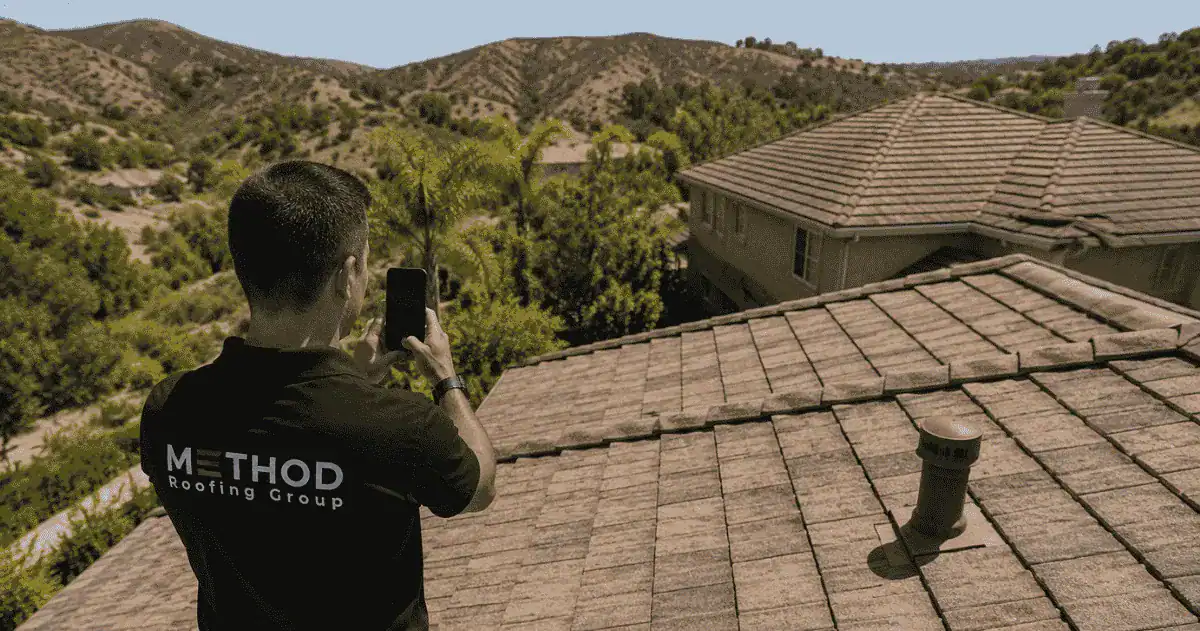
Every Method documented inspection produces the artifact this entire page keeps pointing at: a written condition report with dated photos, moisture readings, material and fire-rating identification, and code triggers checked against your parcel’s Fire Hazard Severity Zone. You keep it whether you hire us or not.
That report serves three insurance purposes at once: it’s your pre-storm condition baseline if you ever file a claim, it’s the documentation package for Safer from Wildfires credits, and it’s the evidence a broker uses to shop you back to the voluntary market.
Answers before estimates. That’s the method.
Insurance-Ready Roof Inspections Across Southern California
California Roof & Insurance FAQs
Will a new roof lower my homeowners insurance in California?
Often, yes. Under the state’s Safer from Wildfires framework, carriers must offer credits for verified hardening measures, and a Class A fire-rated roof is the anchor measure — discounts typically run 5–15% depending on carrier, more when combined with other hardening. The discount requires documentation: permits, product listings, and photos submitted to your carrier.
What roof do insurance companies require in California?
There’s no single statewide mandate from insurers, but the pattern is consistent: Class A fire-rated coverings, an assembly that meets current code (including ember-resistant vents in mapped fire zones), reasonable age or documented condition, and no wood shake. In mapped Fire Hazard Severity Zones, the 2026 building code makes Class A assemblies a legal requirement at re-roof — and insurability increasingly follows code.
What is the AB 888 roof grant and who qualifies?
The California Safe Homes program (AB 888) provides state grants to income-qualified homeowners in high-risk fire zones for fire-safe roof replacement and home-hardening within five feet of the home. It’s administered by the California Department of Insurance; applications opened in spring 2026 through the department’s portal.
How do I get off the California FAIR Plan?
Make the home writable again, then shop it. The core package is a documented Class A roof, Zone Zero hardening within five feet of the structure, and ideally an IBHS Wildfire Prepared Home designation — presented to a broker with permits, photos, and a written condition report. FAIR Plan coverage typically costs 1.5–3x voluntary-market premiums before the wraparound policy, so the savings usually justify the hardening investment.
Does my insurance cover a roof replacement required by code?
Partially, and better than before: as of July 1, 2026, replacement-cost homeowners policies in California must include building-code upgrade coverage of at least 10% of the dwelling limit. That coverage applies after a covered loss — it doesn’t fund a proactive re-roof, which is where AB 888 grants and Safer from Wildfires credits come in.
Will my insurance drop me because of my roof’s age?
Carriers can decline to renew based on roof condition, and many scrutinize roofs past 15–20 years. The strongest counter is documentation: a current written condition report showing the roof’s actual state — or a restoration that resets its service life — often changes the underwriting conversation. See repair vs. restore vs. replace for how that decision works.
Do insurers give discounts for metal roofs in California?
Class A-rated metal systems qualify for the same Safer from Wildfires roof credits as other Class A materials, and some carriers apply additional favorable treatment for metal’s fire, wind, and hail durability. The discount is carrier-specific — ask for the carrier’s mitigation credit schedule in writing.
What documentation does my insurer need after a re-roof?
The signed-off permit, the manufacturer’s product listing showing the Class A rating (assembly rating if applicable), dated photos of the completed work including vents and edge details, and ideally a contractor’s written report. Keep everything with your closing papers — you’ll use it at claims, renewals, and resale.
Make Your Roof an Insurance Asset
Request a free documented roof inspection: fire-rating identification, zone verification, condition report with dated photos — the documentation package your carrier, your broker, and the grant portal all ask for.
Schedule a roof inspection below — or call (949) 866-3011 to book by phone.
Request a Roof InspectionMethod Roofing Group · 4940 Campus Dr., Suite C, Newport Beach, CA 92660 · (949) 866-3011 · CSLB #1157257

