Can Your Insurance Company Drop You Over Your Roof? In California, Yes — Here’s What To Do
By Method Roofing Group | July 2026 | 8 min read
Key Takeaways
- Yes, your roof can cost you your policy — roof age, condition, and fire rating are now primary underwriting factors for California carriers, and non-renewals over roofs are routine.
- You’re owed notice — California generally requires carriers to give at least 75 days’ notice before non-renewing a homeowner policy, which is your window to act.
- Many roof non-renewals start with an aerial photo — carriers increasingly review roofs by satellite and aerial imagery, and a stained or patched-looking roof can get flagged without anyone setting foot on your property.
- Documentation is the counterweight — a dated, written condition report from a licensed contractor answers an aerial photo with ground truth, and it’s the core of any appeal or re-shop.
- A non-renewal is not the end — between repairs, documentation, the Safer from Wildfires framework, and the FAIR Plan as a bridge, there’s a path through this. It just has to be walked deliberately.
The letter usually arrives without warning: your policy will not be renewed, and somewhere in the paragraphs is the word “roof.” In California right now, this is one of the most common insurance events a homeowner can experience. It isn’t personal, and it often isn’t even based on an inspection — but it is answerable, and the answer is built from documentation.
Here’s how roof-driven non-renewals actually work, what your rights are, and the sequence that gets you re-covered.
Why is my insurance company looking at my roof at all?
Because the roof is the part of your house that fails first in the events carriers fear most — storms and wildfire. After years of catastrophic losses, California carriers now underwrite roofs specifically: age, material, condition, and fire rating. An aging roof means water claims; an untested fire rating in a hazard zone means total-loss exposure. Your roof stopped being a maintenance item and became a risk score. We covered the full 2026 landscape in our California insurance and roof requirements guide — this post is about what happens when that landscape lands in your mailbox.
A documented maintenance history is the difference between a renewal and a non-renewal. Our roof maintenance program produces a dated photographic condition report after every visit — the file you hand your carrier when they ask.
Can they really drop me, and what notice do I get?
At renewal, yes. Carriers generally can’t cancel a policy mid-term except for specific reasons (like non-payment), but they can decline to renew — and roof condition is a permitted reason. California law generally requires at least 75 days’ notice before a non-renewal takes effect, which exists precisely so you have time to respond, repair, or re-shop. One more protection worth knowing: after a declared wildfire disaster, state moratoriums can temporarily bar non-renewals in affected ZIP codes — if you’re near a recent fire area, check the California Department of Insurance’s current moratorium list before assuming the letter stands.
The aerial photo problem
A growing share of roof non-renewals begin with imagery: carriers review satellite and aerial photos at scale, and algorithms flag roofs that look old — stains, patched sections, debris, moss, lifted edges. The problem is that “looks old from 400 feet” and “is failing” are different facts. A tile roof with cosmetic staining can have 20 sound years left; a clean-looking roof can be one storm from a claim. The counterweight is ground truth: a dated, written condition report from a licensed contractor, with photos, that documents what the roof actually is.
The sequence: what to do the week the letter arrives
| Step | What to do | Why it matters |
|---|---|---|
| 1. Read the reason | Identify exactly what the carrier cited — age, condition, material, fire rating | The response has to answer the actual objection |
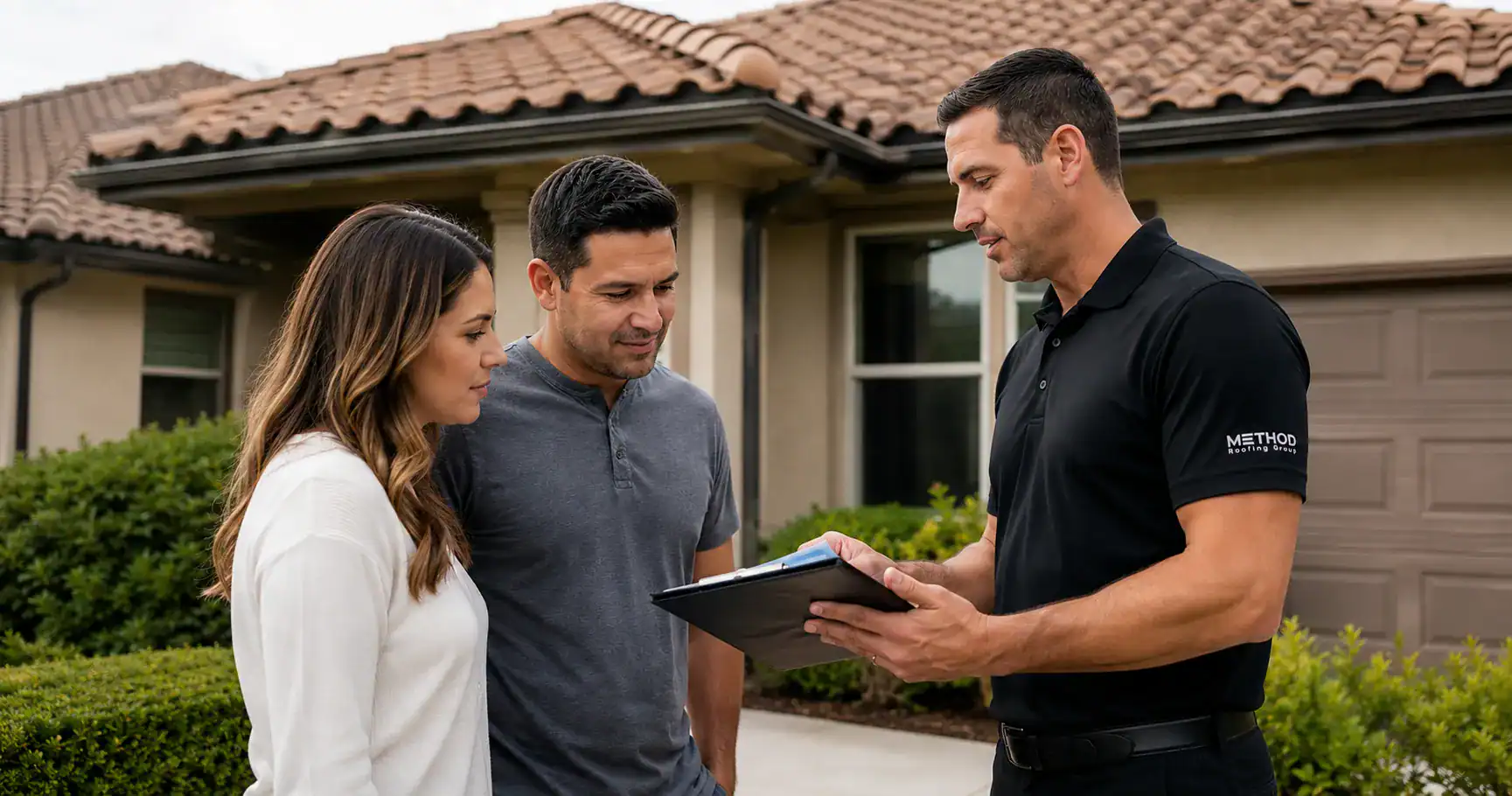
| 2. Get a documented inspection | Free, dated, written condition report with photos from a licensed contractor | Ground truth that answers an aerial flag; the core document for every next step |
| 3. Make the targeted repairs | Fix what the report finds — often flashing, edges, and details, not a whole roof | Many “roof condition” objections are repairable findings, not replacement verdicts |
| 4. Respond and re-shop | Send report + repair invoices to your carrier; give the same file to an independent broker | Carriers reverse non-renewals with documentation more often than homeowners expect — and other carriers will quote what one declined |
| 5. Bridge if needed | FAIR Plan + DIC policy while you work the path back | Coverage never lapses; the documented file is your exit ticket |
What if the roof really is at the end of its life?
Then the letter is early warning, not injustice — and you still have options with different price tags. On tile roofs, the tile often outlives the underlayment by decades: a lift and re-lay replaces the failed membrane at typically 40–60% of full replacement cost. On shingle roofs, targeted repair versus replacement is a documented decision, not a guess. And if replacement is the answer, a new documented Class A roof does double duty: it satisfies underwriting and can qualify for Safer from Wildfires discounts, typically 5 to 15 percent — while making you a candidate to leave the FAIR Plan, where premiums typically run 1.5 to 3 times the standard market.
With an El Niño winter in the 2026–27 outlook, there’s a second clock on all of this: carriers get stricter after loss seasons, not before. The documentation you build this summer is worth more than the same file next spring.Full preparation checklist: El Niño 2026–27 Roof Preparation Guide.
Frequently Asked Questions
Can my insurance company cancel my policy mid-term over my roof?
Generally no — mid-term cancellation is limited to specific causes like non-payment or fraud. Roof condition shows up at renewal as a non-renewal, with advance notice (generally at least 75 days in California).
How old is “too old” for insurance purposes?
There’s no single statewide number, but scrutiny commonly increases as asphalt shingle roofs pass 15–20 years and tile roofs pass the age of their original underlayment. Carriers differ, which is exactly why a condition report matters — it argues the roof’s actual state, not its birthday.
My roof was flagged from an aerial photo but it doesn’t leak. What now?
Get the ground-truth documentation: a licensed contractor’s dated condition report with photos. Cosmetic staining and healthy function look identical from the air; they’re distinguishable on a roof walk, in writing.
Will the carrier really reverse a non-renewal?
Sometimes, with documentation and completed repairs — and when they don’t, the same file makes you quotable to other carriers through an independent broker. Either way, the report is the move; the addressee just changes.
Does a new roof lower my premium?
It can, in two ways: standard rating improvements for a new roof, and Safer from Wildfires credits (typically 5 to 15 percent) for a documented Class A roof with qualifying hardening measures.
What is the FAIR Plan and is it really that bad?
It’s California’s insurer of last resort — restricted coverage at premiums typically 1.5 to 3 times the standard market, usually paired with a DIC policy to fill the gaps. It works as a bridge. The documented path back to a voluntary carrier usually runs across the roof.
Do insurance companies accept contractor condition reports?
Yes — a dated, written report from a licensed contractor is standard supporting documentation for underwriting reviews, appeals, and re-shopping. Ours are written for exactly that use, and the report is yours whether or not you hire us.
Should I wait until I get a non-renewal letter to do any of this?
No — the same report costs nothing now and works harder before there’s an objection to answer. A documented roof file is the cheapest insurance strategy in California, and it’s the one part of the process entirely in your control.
About This Article
This article was written by the Method Roofing Group team, drawing on founder Jeff Moreno’s combined manufacturer and contractor operations experience across the industry’s largest commercial and residential roofing names. Method Roofing Group provides documented commercial, residential, and industrial roofing services across Southern California — including pre-storm roof inspections, tile repair and lift-and-relay underlayment replacement, asphalt shingle repair and replacement, and flat and low-slope roof restoration. Learn more about Method Roofing Group.
Cost relationships cited (such as lift and re-lay at 40–60% of full replacement) reflect typical 2026 Southern California residential pricing and vary by roof condition, access, and scope. Verify with a project-specific estimate. Method Roofing Group operates under CSLB License #1157257.CSLB License #1157257.
Answer the Letter With a Document, Not a Phone Call
Free inspection, dated photos, written condition report built for insurance use — yours to keep, whoever you send it to.
Or call (949) 866-3011 · Serving Orange County, Los Angeles, the Inland Empire, San Diego, and Ventura

