Is a Roof Coating Worth It? An Honest Answer From People Who Sell Them
By Method Roofing Group | July 2026 | 7 min read
Key Takeaways
- On the right roof, a coating is the best money in commercial roofing — restoration typically adds 10 to 20 years of service life at roughly one-third of replacement cost, with NDL warranties to 20 years on qualifying systems.
- On the wrong roof, a coating is an expensive way to hide a problem for one winter — it’s a weathering surface, not a repair.
- Five conditions decide which one you’re buying: dry insulation, a sound membrane, proper prep, the right chemistry for the roof, and a warranty that’s real.
- A moisture survey is the whole ballgame — anyone who quotes a coating without one is selling you an opinion.
- Coating prices that look too good usually are — the cost difference is almost always in prep and moisture work, which is the part that makes the coating last.
Roof coatings have a strange reputation. Half the industry sells them as miracle products. The other half calls them a scam. Both halves are describing real projects — the difference was never the product. It was the roof underneath, and whether anyone checked it first.
We install coating systems every week, so consider this an honest answer from people who sell them: sometimes the correct answer to “should I coat my roof” is no. Here’s how to know before you pay, not after.
When a coating is the best money in commercial roofing
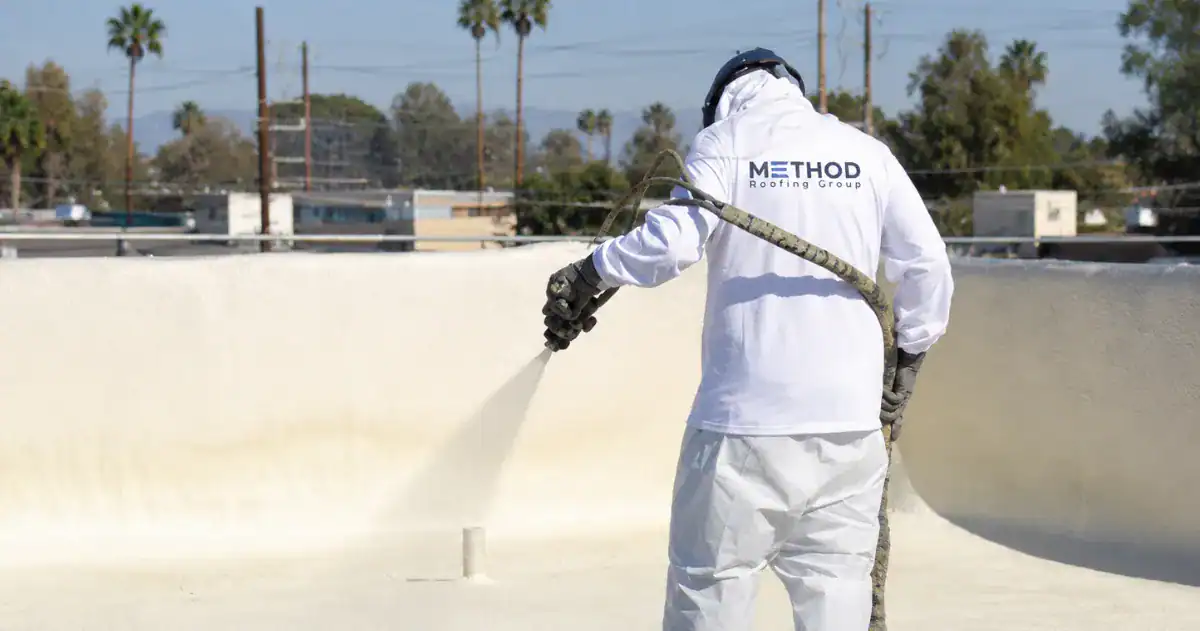
The economics are hard to argue with. On a structurally sound flat or low-slope roof — TPO, PVC, EPDM, modified bitumen, metal, or built-up — a fluid-applied restoration system typically runs about one-third of replacement cost and adds 10 to 20 years of service life. There’s no tear-off, so the building stays open. Manufacturer NDL warranties reach 20 years on qualifying systems. And because restoration usually counts as maintenance rather than capital improvement, the tax timing often works in your favor too — confirm specifics with your tax advisor.
Run the cost-per-year math and a qualifying roof almost always says restore, not replace. The full decision framework is in our repair, restore, or replace guide.
The key word is qualifying. That’s where the other half of the reputation comes from.
The five conditions that decide it
1. The insulation is dry
This is the deal-breaker. If water has gotten into the system and saturated the insulation beneath the membrane, a coating seals the moisture in — where it keeps destroying the roof from the inside. A moisture survey settles the question with instruments instead of opinions. No survey, no coating. It’s that simple.
2. The membrane is sound
A coating needs a stable substrate. Isolated damage gets repaired before coating — that’s normal prep. But when seams, laps, and field splits are opening across the whole roof, the membrane is done as a substrate, and coating it is painting a failing structure.
3. The prep is real
Coating adhesion lives or dies on preparation: cleaning, priming where required, seam reinforcement, repairs completed first. Most “coating failures” you hear about were prep failures wearing a coating costume. It’s also where cheap bids get cheap — the material is the same; the missing money is in the work under it.
4. The chemistry matches the roof
Silicone and acrylic are different tools. Silicone shrugs off ponding water, which matters on Southern California’s flat roofs with imperfect drainage. Acrylic is economical and highly reflective but doesn’t want to live underwater. The roof’s drainage, traffic, and existing surface pick the product — not the contractor’s favorite drum.
5. The warranty is real
A qualifying restoration carries a manufacturer warranty — NDL coverage to 20 years on eligible systems, backed by an inspection at completion. If the only warranty on offer is the installer’s handshake, you’re buying a different product than you think you are.
The quick version
| The Roof | The Verdict |
|---|---|
| Sound membrane, dry insulation, real prep and warranty | Coating is the best cost-per-year move in roofing |
| Isolated damage, otherwise sound | Repair first, then coat — standard restoration |
| Saturated insulation (failed moisture survey) | Do not coat — address the wet system first |
| Membrane failing across the roof | Replacement conversation, not a coating one |
| Bid with no moisture survey and a too-good price | Walk away — you’re buying one dry winter |
That table is the short version — for the full restoration-versus-replacement framework, including real costs and what disqualifies a roof, see our complete breakdown.
Frequently Asked Questions
Is a roof coating worth it?
On a structurally sound roof with dry insulation, usually yes — restoration typically adds 10 to 20 years at roughly one-third of replacement cost, which wins the cost-per-year math almost every time. On a roof with trapped moisture or a failing membrane, no — it hides the problem while it compounds.
How long does a roof coating last?
A properly prepped and installed restoration system typically delivers 10 to 20 years, with manufacturer NDL warranties available to 20 years on qualifying systems. Recoating at the end of that window can extend the cycle again.
What is a moisture survey and do I really need one?
It’s instrument-based detection of water trapped inside the roof system, and yes — it’s the test that decides whether your roof qualifies for a coating at all. A coating quote without one is an opinion with a price tag.
Silicone or acrylic — which is better?
Neither is “better” — they’re matched to conditions. Silicone handles ponding water and Southern California UV; acrylic is economical and reflective but shouldn’t live under standing water. Our acrylic vs. silicone comparison covers the decision in detail.
Can a coated roof still qualify for Title 24?
Yes — reflective coatings are one of the cleanest paths to Title 24 cool roof compliance on re-roof work, since high-reflectance white systems typically exceed the SRI thresholds.
Why are coating quotes so different in price?
Because the coating is the same and the preparation isn’t. Moisture work, repairs, cleaning, priming, and seam reinforcement are where the real cost lives — and where cheap bids quietly cut. Compare scope, not just the number.
Can you coat a residential flat roof?
Yes — the same logic applies to flat and low-slope sections on homes, which are common on Southern California mid-century houses and additions. Same rule too: dry and sound first, coating second.
Does a coating fix leaks?
No — repairs fix leaks, and they’re completed as part of proper prep before coating. A coating applied over an active leak seals water in, not out.
About This Article
This article was written by the Method Roofing Group team, drawing on founder Jeff Moreno’s combined manufacturer and contractor operations experience across the industry’s largest commercial and residential roofing names. Method Roofing Group installs fluid-applied restoration systems across Southern California — and declines to install them on roofs that don’t qualify. Services include documented inspections with moisture surveys, silicone and acrylic restoration, flat and low-slope repair, and full replacement. Learn more about Method Roofing Group.
Cost relationships cited (such as restoration at roughly one-third of replacement) reflect typical 2026 Southern California commercial pricing and vary by system, condition, and scope. Verify with a project-specific assessment. Method Roofing Group operates under CSLB License #1157257.
Get the Survey Before the Sales Pitch
Find out whether your roof is a restoration candidate — with instruments, not opinions. Free documented inspection: moisture readings, dated photos, written recommendation. Yours to keep either way.
Schedule a pre-storm inspection below — or call (949) 866-3011 to book by phone.
Or call (949) 866-3011 · Serving Orange County, Los Angeles, the Inland Empire, San Diego, and Ventura

