Common Roof Problems in Southern California: Where Tile, Shingle, and Flat Roofs Fail First
By Method Roofing Group | July 2026 | 11 min read
Key Takeaways
- The most common roof problems in Southern California are roof-type specific — tile, shingle, and flat roofs each fail at a different, predictable weak point, and all three announce themselves months before the first real storm.
- Tile roofs leak through aged underlayment, not the tiles — tiles last 50+ years, but the waterproof layer beneath them typically lasts 20–30, and most SoCal “tile failures” are expired underlayment under healthy tile.
- Shingle roofs fail at wind-lifted edges and flashing — Santa Ana events break adhesive seals months before winter, creating entry points that only show up when wind-driven rain arrives.
- Flat and low-slope roofs fail at ponding water and blocked drains — debris that collects all summer with no consequence clogs drains in the first heavy storm.
- Pre-storm documentation decides insurance claims — a dated inspection report from before the first atmospheric river is the strongest single document in a winter claim file.
- The practical repair deadline is October — with NOAA’s outlook pointing to an El Niño 2026–27 winter, contractor capacity and material lead times compress fast once forecasts firm up.
Southern California’s dry season hides roof problems. A cracked tile, a lifted shingle edge, or a slow drain costs nothing in August — there’s no water to find the opening. Then the first atmospheric river arrives, and the same defect becomes a ceiling stain, saturated insulation, or an insurance claim. With NOAA’s outlook pointing to an El Niño winter for 2026–27, this is the year to find your roof’s weak point before the rain does.
Here’s where each roof type fails first, what the early warnings look like from the ground, and what to do about them now.
Where Do Tile Roofs Leak First?
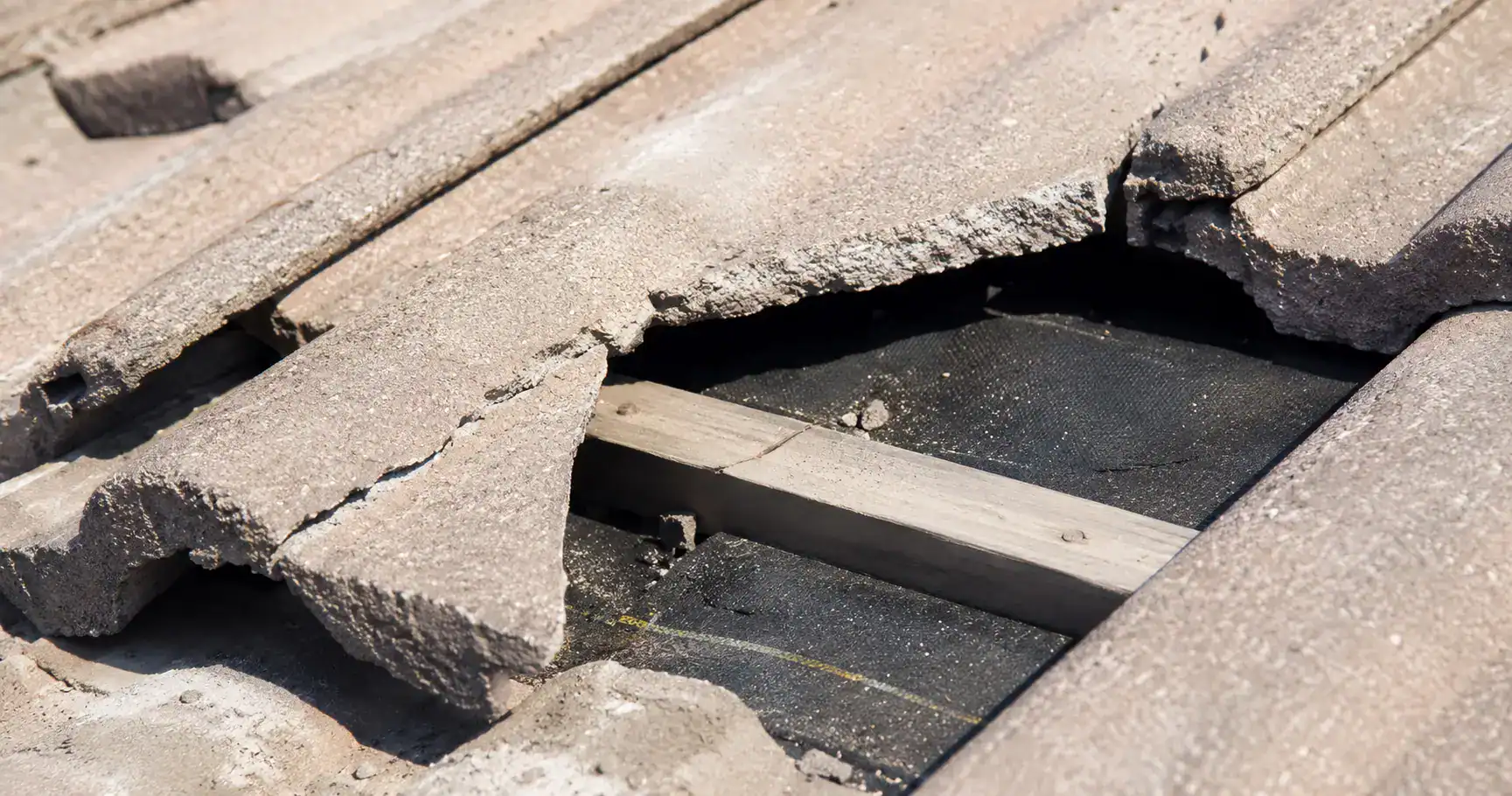
Not through the tiles. Clay and concrete tiles routinely last 50 years or more in Southern California — but the tiles are not the waterproof layer. The underlayment beneath them is, and underlayment installed in the 1990s and 2000s was typically rated for 20–30 years. Across Orange County and the Inland Empire, there are entire neighborhoods of tile roofs with healthy tiles sitting on expired underlayment.
The failure sequence is predictable: UV and heat make the underlayment brittle, a slipped or cracked tile exposes it, and the first sustained rain finds the gap. Because tile hides the damage, most owners learn about it from a ceiling stain.
Early warnings you can spot from the ground: slipped, cracked, or missing tiles; tile fragments in the yard or gutters after wind; mortar debris at ridges and hips; any interior stain after even light rain.
The fix most owners aren’t offered: if the tiles are sound but the underlayment is done, a lift and re-lay — salvaging your existing tile and replacing the underlayment beneath it — typically runs 40–60% of full replacement cost. Full breakdown in our repair vs. replacement guide.
What Fails on a Shingle Roof Before the Rain?
Wind, not water, sets up most shingle failures — Southern California’s Santa Ana events lift shingle edges and break adhesive seals months before winter. A lifted shingle can look fine from the street and still let wind-driven rain travel under the course above it.
Add summer UV, which dries the asphalt and sheds protective granules, and by November a 15-year-old shingle roof can have hundreds of small entry points concentrated in the usual places: ridges, eaves, valleys, and around penetrations like vents and skylights.
Early warnings: granules accumulating in gutters and downspout splash zones; shingle tabs that flutter in wind; curled or cupped edges visible from the ground; exposed nail heads; cracked pipe-boot flashing (a five-dollar part responsible for a remarkable share of interior leaks).
The fix: targeted residential roof repair is usually enough if the field of the roof is sound — re-securing lifted courses, replacing flashing and boots, resealing penetrations. If you’re comparing materials because the roof is near end of life, start with our residential roofing materials guide.
Why Do Flat and Low-Slope Roofs Fail in Winter?
Two words: standing water. Flat roofs are engineered to drain, not to hold water — and the industry’s working definition of trouble is any water still on the roof 48 hours after rain. Ponding concentrates weight, accelerates membrane breakdown, and finds every seam and penetration flaw.
The dry season sets the trap. Leaves, jacaranda blooms, and debris collect in drains and scuppers all summer with no consequence. The first heavy storm arrives, drains clog, and a roof designed to shed thousands of gallons starts holding them instead.
Early warnings: water rings or dirt halos marking old ponds; debris at drains and scuppers; soft or spongy spots underfoot; open seams or blistering membrane; rusted or split seams on older metal-edged systems.
The fix: drain clearing and seam repair now are maintenance-priced. The same defects found in January are emergency-priced — and often accompanied by interior damage. For aging membranes that are structurally sound, restoration can add 10–20 years without tear-off; see the repair, restore, or replace framework.
Roof-by-Roof: What Fails, What It Looks Like, What To Do
| Roof type | Fails first at | Early warning | Pre-season fix |
|---|---|---|---|
| Tile (clay/concrete) | Underlayment beneath the tiles | Slipped/cracked tiles, debris in gutters | Tile repair; lift & re-lay if underlayment is expired (40–60% of replacement cost) |
| Asphalt shingle | Wind-lifted edges, ridges, flashing | Granule loss, fluttering tabs, curled edges | Re-secure courses, replace boots and flashing |
| Flat / low-slope | Ponding water, blocked drains, seams | Water rings, debris at drains, soft spots | Clear drains, repair seams; restoration if membrane is aging |
What Does This Have to Do With Your Insurance?
More than most homeowners realize. California carriers increasingly distinguish between storm damage (covered) and neglected maintenance (denied) — and the difference is usually decided by documentation that predates the storm. A dated inspection report showing your roof’s condition before the first atmospheric river is the strongest single document in a winter claim file.
There’s a second reason to act before fire season peaks: if you’re pursuing insurance discounts or trying to move off the FAIR Plan, your roof’s condition and fire rating are central to that conversation. The full picture — what carriers now require, what changed in 2026, and the exact documentation they ask for — is in our California homeowners insurance roof requirements guide.
One code note: if storm damage or deferred repairs push you into replacing more than 50% of your roof area within 12 months, California requires the entire roof to meet current code — including Title 24 requirements. Knowing your roof’s condition now lets you plan around that threshold instead of discovering it mid-project.
⛈ The 2026–27 timing window (time-sensitive callout — style as box) NOAA’s outlook points to El Niño conditions for the 2026–27 winter, and Southern California’s first significant storms typically arrive between late November and January. Roofing calendars fill fast once forecasts firm up — the practical deadline for completing repairs is October. Full preparation checklist: El Niño 2026–27 Roof Preparation Guide.
When to Schedule Your Orange County Roof Inspection
Therefore, Method recommends the following scheduling framework by Orange County property type:
Active Leaks or Visible Damage: Same-day response during business hours. Active leaks during pre-storm season indicate accelerating failure — immediate evaluation prevents catastrophic storm-season damage.
Coastal OC Homes in HOA Communities: Schedule by July 15, 2026. Accounts for 30-45 day HOA approval cycles plus contractor scheduling.
Coastal OC Homes Without HOA: Schedule by August 15, 2026. Coastal salt air, older tile systems, and complex configurations require earlier evaluation.
Inland OC Homes in HOA Communities: Schedule by August 15, 2026. HOA approval timelines still apply, but weather stress patterns are somewhat lower.
Inland OC Homes Without HOA: Schedule by September 1, 2026. Standard suburban configurations with simpler evaluation and permit paths.
Across all categories, Method’s documented advisory report is designed to support the decision — not pressure it. Most residential pre-storm evaluations result in repair or targeted maintenance recommendations rather than full replacement. The work that follows is whatever the property actually needs.
Frequently Asked Questions
How do I know if my roof will leak this winter?
You usually can’t know from the ground alone — but you can spot the precursors: slipped or cracked tiles, granules in gutters, curled shingle edges, debris-blocked drains, and any stain from last season that was never traced to its source. A professional inspection identifies the failure points you can’t see, particularly underlayment condition on tile roofs.
How long does a tile roof last in California?
The tiles themselves commonly last 50 years or more. The underlayment beneath them — the actual waterproof layer — typically lasts 20–30 years depending on the product and installation era. Most “tile roof failures” in Southern California are underlayment failures under healthy tile. Lifespan ranges for every residential material are in our residential roof lifespan guide.
Should I replace my tile roof with shingles?
Usually not, if the tiles are sound. A lift and re-lay preserves the tile you already own, replaces the failed underlayment, and typically costs 40–60% of full replacement — while keeping tile’s longevity, fire performance, and appearance. Switching to shingles makes sense mainly when the structure needs weight reduction or the existing tile is discontinued and heavily damaged.
What is the most common cause of roof leaks in Southern California?
Failed flashing and penetrations lead the list across all roof types — pipe boots, skylight perimeters, chimney flashing, and wall transitions. On tile roofs specifically, aged underlayment is the dominant cause. True field-of-roof failures are rarer than most homeowners expect.
Can Santa Ana winds damage a roof without rain?
Yes — wind damage is often invisible until rain follows. Santa Ana events lift shingle edges, break adhesive seals, crack and displace tiles, and drive debris into drains. Documenting your roof after a significant wind event protects both the roof and any later insurance claim.
What about metal roofs in a wet winter?
Metal performs well in rain, but it isn’t maintenance-free: fasteners back out over years of thermal cycling, sealants at penetrations age, and coastal salt air corrodes cut edges and hardware. If your metal roof is 15+ years old, have the fastener lines and penetrations checked before storm season.
When should I schedule roof repairs before an El Niño winter?
Aim to complete repairs by October. Inspection demand rises sharply once storm forecasts hit the news, and material lead times stretch in late fall. Summer and early fall repairs are scheduled work at scheduled prices; December repairs are emergency work.
Does homeowners insurance cover roof leaks in California?
It depends on the cause. Sudden storm damage is generally covered; gradual leaks attributed to wear or deferred maintenance are generally not. Pre-storm documentation of your roof’s condition is what moves a borderline claim into the covered column. Details in our insurance and roof requirements guide.
About This Article
This article was written by the Method Roofing Group team, drawing on founder Jeff Moreno’s combined manufacturer and contractor operations experience across the industry’s largest commercial and residential roofing names. Method Roofing Group provides documented commercial, residential, and industrial roofing services across Southern California — including pre-storm roof inspections, tile repair and lift-and-relay underlayment replacement, asphalt shingle repair and replacement, and flat and low-slope roof restoration. Learn more about Method Roofing Group.
Cost relationships cited (such as lift and re-lay at 40–60% of full replacement) reflect typical 2026 Southern California residential pricing and vary by roof condition, access, and scope. Verify with a project-specific estimate. Method Roofing Group operates under CSLB License #1157257.CSLB License #1157257.
Find Your Roof’s Weak Point Before the Rain Does
Every roof in Southern California has one. A Method inspection tells you what it is, whether it needs attention this year, and gives you the dated condition report your insurance file should have before the first storm.
Schedule a pre-storm inspection below — or call (949) 866-3011 to book by phone.
Same-day response for active leaks during business hours. HOA-savvy scheduling for Orange County communities.

