Commercial Roof Restoration in Southern California
Extend the life of your commercial roof with engineered coating systems — without the cost, downtime, or disposal expense of full replacement.
Method Roofing Group provides commercial roof restoration across Southern California, applying silicone, acrylic, and spray polyurethane foam (SPF) coating systems to TPO, PVC, EPDM, modified bitumen, built-up roofing, and metal substrates. Restoration adds 10 to 20 years of service life, qualifies for tax treatment as maintenance, and avoids the operational disruption of tear-off and replacement.
What Is Commercial Roof Restoration?
On eligible substrates, the process costs 50 to 70 percent less than full replacement. It requires no tear-off and generates no landfill waste. Manufacturer warranty coverage renews for 10, 15, or 20-year terms based on coating thickness and substrate condition.
In commercial applications, restoration is appropriate when the roof substrate retains structural integrity, moisture intrusion is contained, and the building owner wants to extend the useful life of an asset that is otherwise nearing end-of-life. It is not appropriate when the substrate is saturated, fasteners have failed, or insulation has been compromised. Method’s commercial roofing team evaluates eligibility through visual inspection, infrared moisture scanning, and roof core sampling before recommending restoration as a path forward.
This page covers what commercial roof restoration is, which roof systems qualify, the coating systems Method installs, the restoration process from inspection to warranty registration, and the financial case for restoration over replacement, including ROI analysis and tax treatment.
What Commercial Roof Restoration Includes
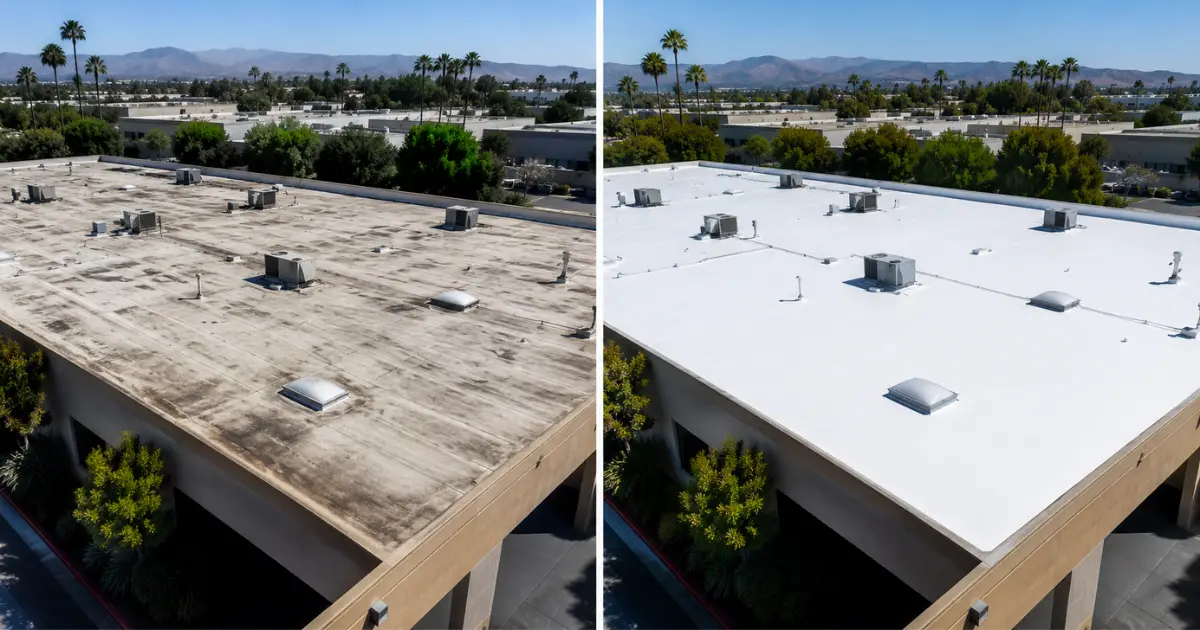
A complete commercial roof restoration project includes substrate evaluation, surface preparation, repair of defects, application of base and topcoat layers, and warranty registration with the coating manufacturer. Method completes all work to manufacturer specification — a non-negotiable requirement for warranty coverage.
Substrate Evaluation and Eligibility Inspection
The inspection team will be onsite to perform a comprehensive inspection of the existing roof, looking for structural integrity, moisture intrusion, seam integrity, fastener condition, and substrate compatibility with coating systems. Eligibility is verified through visual inspection, infrared moisture scanning where appropriate, and core sampling on suspect areas. Roofs that fail substrate eligibility require partial repair or full replacement before restoration becomes viable.
Many of these conditions are visible before we arrive. Our ten-point commercial roof checklist covers the same drains, seams, flashings, and terminations we verify on site — download the commercial and industrial edition and walk it yourself.
Surface Preparation
Surface preparation is the largest single determinant of restoration warranty performance. Method power-washes the substrate, removes contaminants, treats biological growth, and addresses seams, penetrations, and flashings with primer or reinforcing fabric depending on the coating system. Cleaning, drying, and surface neutralization meet or exceed manufacturer specifications for each coating type.
Coating Application
The crew on-site applies coatings in the layer count, mil thickness, and application method specified by the manufacturer for the warranty term selected — typically 10, 15, or 20 years. Application uses airless spray, roller, or brush methods depending on substrate, coating chemistry, and project conditions. Cure time, recoat windows, and weather restrictions follow manufacturer requirements.
Quality Control and Warranty Registration
Final inspection verifies coating thickness via wet-mil and dry-mil readings, confirms adhesion testing where required, and documents the project for warranty registration with the manufacturer. Method registers each project with the coating manufacturer to activate full warranty coverage, which is typically only valid when installed by authorized applicators.
Roof Systems Eligible for Restoration
Most commercial roof system types can be restored when the substrate retains structural integrity. Eligibility depends on substrate condition, age, prior repairs, and coating chemistry compatibility. Method works across all major commercial roof systems in service across Southern California.
TPO Roof Restoration
Thermoplastic polyolefin (TPO) roofs typically qualify for restoration when membrane oxidation, seam separation, and surface chalking are present but the substrate remains sound. Restoration with silicone or acrylic coatings reseals seams, restores reflectivity (a significant California Title 24 consideration), and extends service life 10 to 15 years past expected replacement.
PVC Roof Restoration
Polyvinyl chloride (PVC) roofs are excellent candidates for restoration as they age past the 20-year mark. Silicone coating systems bond well to weathered PVC after appropriate priming, restore the membrane’s reflectivity, and address seam fatigue without requiring full removal.
EPDM Roof Restoration
Ethylene propylene diene monomer (EPDM) — known industry-wide as “rubber” roofs — is one of the most common substrates for restoration in Southern California’s commercial inventory. Acrylic and silicone systems restore weathered EPDM, address seam aging, and significantly improve solar reflectance over the dark substrate.
Modified Bitumen and Built-Up Roofing (BUR) Restoration
Modified bitumen and BUR roofs benefit substantially from restoration because the underlying substrate often outlasts the surface ply or cap sheet. Coating systems seal surface alligatoring, restore reflectivity, eliminate the need for aggregate replacement, and add 10 to 15 years of service life.
Metal Roof Restoration
Standing seam, R-panel, and corrugated metal roofs are highly restoration-eligible. Coating systems address fastener leaks, seal seams, prevent rust progression, restore reflectivity, and qualify for Title 24 cool roof compliance when applicable.
Substrates That Do Not Qualify
Roofs with saturated insulation, structural deck damage, failed fastener systems, severe substrate delamination, or active fungal/biological compromise are not candidates for restoration. Method documents these conditions during inspection and recommends repair, partial replacement, or full re-roof as appropriate.
Coating Systems Method Installs
Method installs the major commercial coating systems used across Southern California — silicone, acrylic, and spray polyurethane foam (SPF). Each chemistry has appropriate applications, performance trade-offs, warranty options, and cost positioning. Selection depends on substrate, climate exposure, performance priorities, and budget.
Silicone Roof Coatings
Silicone is the most weather-resistant coating chemistry available for commercial roof restoration. These coatings handle prolonged ponding water — a common condition on flat commercial roofs — without the performance degradation that affects acrylic coatings. Reflectivity remains high over time, UV resistance is excellent, and warranty terms run up to 20 years. Cost is higher than acrylic but lower than replacement. For low-slope and flat roofs with drainage challenges, coastal exposure, or properties requiring maximum warranty term, Method recommends silicone.
Learn more: Silicone Roof Coatings →
Acrylic Roof Coatings
Acrylic is the most cost-effective restoration coating for substrates without standing water issues. These coatings offer strong UV protection, high solar reflectance, easy maintenance, and warranty terms typically running 10 to 15 years. The chemistry is water-based, making it appropriate for properties with strict environmental requirements. Method recommends acrylic for sloped commercial roofs, well-drained low-slope roofs, and budget-sensitive restoration projects.
Learn more: Acrylic Roof Coatings →
Spray Polyurethane Foam (SPF)
Spray polyurethane foam is both an insulation system and a restoration solution. SPF expands on application, fills voids, seals seams, and creates a seamless monolithic roof surface over the existing substrate. SPF adds insulation R-value while restoring waterproofing — a unique combination among coating systems. Topcoats (typically silicone or acrylic) protect the foam from UV exposure. Method recommends SPF for properties seeking insulation upgrades alongside roof restoration, or substrates with significant surface irregularities.
Learn more: Spray Polyurethane Foam Roofing →
The Financial Case for Roof Restoration
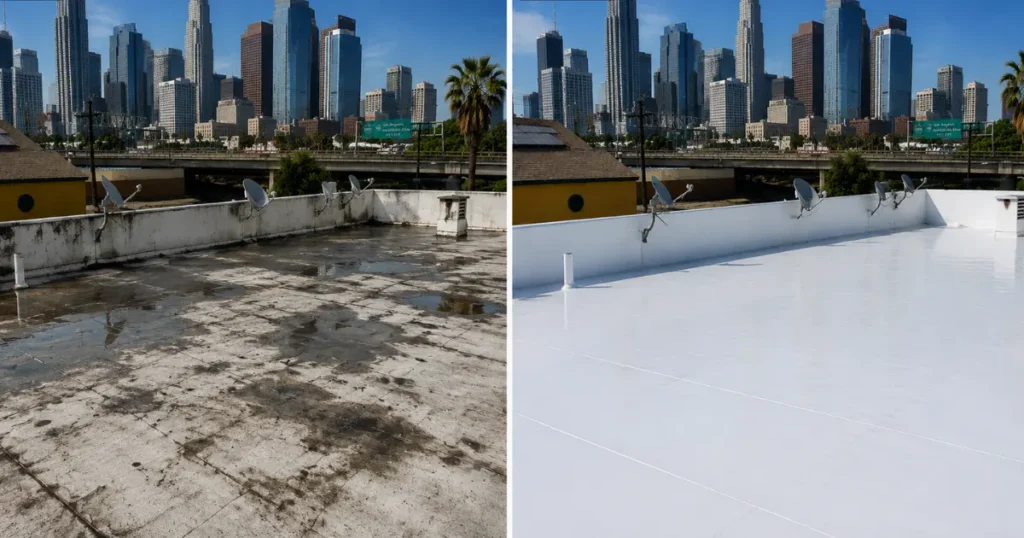
A successful restoration project provides better financial outcomes than tear-off and replacement in most eligible scenarios. The combination of lower direct cost, deferred capital expense, tax treatment advantages, and operational continuity makes restoration the dominant choice when substrate eligibility is confirmed.
Direct Cost Comparison
Typically restoration costs 50 to 70 percent less per square foot than full tear-off and replacement on equivalent commercial roof systems. The savings come from elimination of tear-off labor, disposal fees, decking work, insulation replacement, and the extended schedule of full re-roof projects.
Tax Treatment Difference
Commonly classified as roof maintenance rather than capital improvement under current IRS treatment, restoration means the expense can often be deducted in the year incurred rather than depreciated over 39 years (commercial real estate).
Furthermore, this treatment significantly improves cash flow vs. capitalized replacement. Method’s restoration projects include the documentation property owners need for proper tax treatment, though Method does not provide tax advice — consult your CPA or tax advisor.
Operational Continuity
A major incentive for building owners is operational continuity. These projects do not require tenants to vacate, and operations continue uninterrupted in most configurations. The schedule contingencies that come with tear-off and replacement are eliminated.
Capital Expense Deferral
When selecting restoration, property owners can extend the roof asset life by 10 to 20 years, deferring the capital expense of full replacement. For property owners managing multi-property portfolios, this defers the largest single roof-related capital expense in their planning horizon, freeing capital for other priorities.
When Restoration Does Not Make Financial Sense
All these benefits aside, restoration is not always the right answer. When substrate moisture is widespread, when insulation has been compromised, or when the existing roof is at or near the end of its structural service life, restoration math no longer favors restoration. Method’s inspection determines eligibility honestly. The next section explains how we walk through that decision with property owners.
For granular per-square-foot coating pricing, see our roof coating cost guide for Southern California.
Roof Restoration vs Roof Replacement: How to Decide
The most common question commercial property owners ask is whether to restore their existing roof or replace it entirely. The honest answer depends on substrate condition, age, moisture status, structural integrity, and operational priorities. Restoration is the better financial and operational choice when substrate eligibility is confirmed. Replacement is the better choice when substrate condition has been compromised beyond what coatings can address. The five questions below frame the decision.
How old is the existing roof and what is its remaining structural life?
Roofs nearing end of useful life but still structurally sound are excellent restoration candidates. Roofs at or past structural end of life typically require replacement. For typical service life expectations by system type — TPO, PVC, EPDM, modified bitumen, BUR, and metal — see our reference on how long a commercial roof lasts in Southern California. Method’s inspection assesses both calendar age and condition-based remaining life on your specific roof.
Is moisture intrusion contained or widespread?
Localized leaks with dry substrate around them are typically restoration-eligible. Widespread saturation of insulation or substrate is not restoration-eligible — coating over saturated material traps moisture and accelerates failure. Infrared moisture scanning identifies the difference.
Is the existing roof system structurally compatible with coating restoration?
Most commercial roof systems (TPO, PVC, EPDM, modified bitumen, BUR, metal) accept coating restoration when other conditions are met. Substrates with failed fasteners, severe delamination, or structural deck damage are not restoration-eligible regardless of age.
What does the warranty math favor?
In commercial applications, restoration warranties run 10 to 20 years at 50 to 70 percent of replacement cost. Replacement warranties run 20 to 30 years at full cost. On a cost-per-year-of-warranty basis, restoration is almost always favorable when the existing roof qualifies.
What are the operational consequences of each path?
This approach is non-invasive to building interior — no tear-off, no disposal, no schedule disruption. Replacement requires tear-off, decking work potentially, disposal logistics, and longer project timelines. For occupied commercial properties, restoration’s operational continuity often decides the path independent of cost.
For the full decision framework including detailed eligibility criteria, ROI modeling, warranty comparison across coating systems vs replacement systems, and tax treatment analysis, see our Commercial Roof Replacement Cost guide for Southern California.
Method’s Commercial Roof Restoration Process
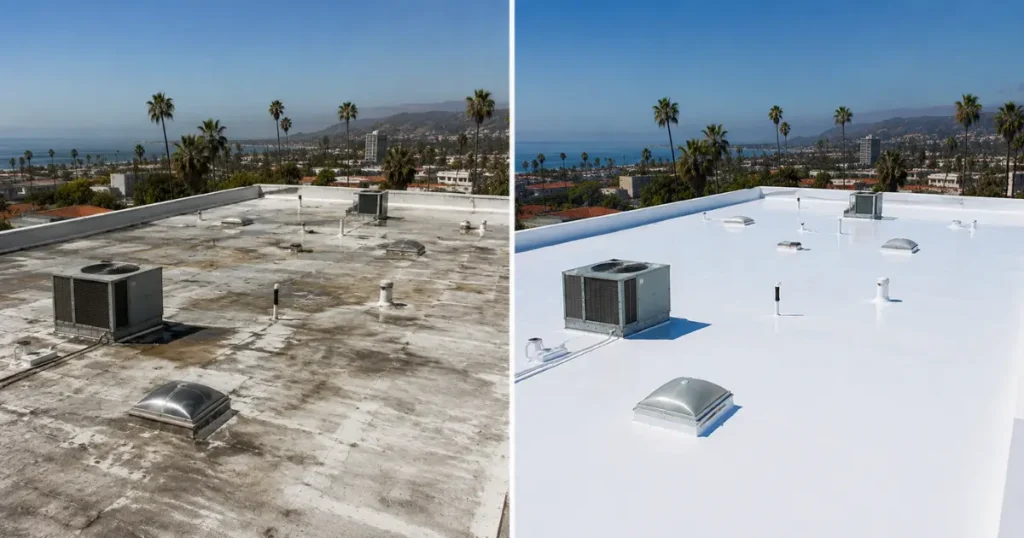
Method’s licensed crew follows a documented sequence from initial inspection to warranty registration. Every step of the restoration process is verified, documented, and aligned to manufacturer specifications.
Download our free ten-point roof inspection checklist we walk before storm season across Orange County, Los Angeles County, San Diego County, the Inland Empire, and Ventura County.
Step 1 — Inspection and Eligibility Assessment
Our experienced commercial roofing team conducts an on-site inspection including visual assessment, moisture scanning where appropriate, seam evaluation, fastener checks, and substrate sampling. Inspection findings are documented and shared with the property owner along with a written restoration recommendation, alternative replacement scenarios if applicable, and a transparent scope and budget.
Step 2 — Scope, Specification, and Warranty Selection
Once restoration is approved, Method develops a detailed project specification including coating chemistry selection, layer count, mil thickness, manufacturer warranty term, surface preparation protocol, and project schedule. Warranty terms (10, 15, or 20 years) are aligned to substrate condition and property owner objectives.
Step 3 — Project Scheduling and Communication
Your designated team will schedule the restoration around the property’s operational requirements. For occupied commercial properties, this typically means coordination with property managers, tenants, and on-site operations staff. Weather windows are scheduled around forecast data to ensure cure conditions meet manufacturer requirements.
Step 4 — Surface Preparation and Repairs
The crew completes surface preparation in full, including cleaning, drying, neutralization, seam reinforcement, flashing detail work, and primer application where required. This is the highest-impact step in determining warranty performance.
Step 5 — Coating Application and Inspection
Coatings are applied to the specified thickness, with wet-mil and dry-mil readings documented throughout. Cure windows are observed before recoat passes. Final inspection confirms coverage, adhesion where applicable, and detail completion.
Step 6 — Warranty Registration and Documentation
The completed project is registered with the coating manufacturer to activate the full warranty. Property owners receive the manufacturer warranty certificate, installation photos, project documentation for capital records, and ongoing maintenance recommendations to preserve warranty coverage.
Why Property Owners Choose Method for Commercial Roof Restoration
Compared to replacement, the restoration is only as good as the contractor who installs it. Coating systems perform when surface preparation is correct, application meets specification, and the project is documented for warranty registration. Cutting corners on any of those steps voids warranty coverage and shortens the restoration’s useful life.
We maintain current manufacturer certification training, follows continuing industry education on coating system advances, holds active California Contractor’s State License Board (CSLB) credentials, and documents every restoration project for warranty registration and property owner records. Every restoration project is overseen by a licensed Method team member from inspection through warranty registration.
Every restoration project is overseen by a licensed Method team member from inspection through warranty registration. The Method team maintains current manufacturer certification training, follows continuing industry education on coating system advances, holds active California Contractor’s State License Board (CSLB) credentials, and documents every restoration project for warranty registration and property owner records.
California Contractor’s License • CSLB Verified • Fully Insured • Manufacturer-Authorized Applicator
Commercial Roof Restoration Service Areas
We provide commercial roof restoration across Southern California, with active project teams covering Orange County, Los Angeles, the Inland Empire, Ventura, and San Diego counties. For region-specific information, visit the relevant county service area page.
- Orange County Commercial Roofing →
- Los Angeles County Commercial Roofing
- Inland Empire Commercial Roofing
- San Diego County Commercial Roofing
- Ventura County Commercial Roofing
At completion our team registers the completed project with the coating manufacturer to activate the full warranty. Property owners receive the manufacturer warranty certificate, installation photos, project documentation for capital records, and ongoing maintenance recommendations to preserve warranty coverage.
Common Questions About Commercial Roof Restoration
How long does commercial roof restoration last?
Warranty terms for restoration typically run 10, 15, or 20 years depending on the coating system, the number of coats applied, the mil thickness, and the substrate condition at time of application. Actual service life often exceeds the warranty term when substrate preparation is correct and routine maintenance is performed. Method registers each restoration project with the coating manufacturer to ensure warranty coverage is active from the day the project completes.
How much does commercial roof restoration cost in Southern California?
Specific pricing depends on substrate type, current condition, coating chemistry selected, warranty term, square footage, access conditions, and project complexity. Commercial roof restoration in Southern California typically costs 50 to 70 percent less per square foot than full tear-off and replacement on equivalent roof systems. Method provides written cost estimates as part of the free restoration inspection — no obligation to proceed.
Is restoration as good as full replacement?
When the substrate qualifies, restoration is the better decision. Restoration delivers comparable waterproofing performance, comparable or better reflectivity, comparable warranty terms, and significantly better financial outcomes — direct cost, tax treatment, capital deferral, and operational continuity all favor restoration. Restoration is not better than replacement when substrate eligibility is compromised. Method’s inspection determines which path is appropriate for your specific roof.
Will my building need to close during restoration?
In nearly all configurations, no. Commercial roof restoration is non-invasive from the building interior. Restoration crews work on the roof surface only — there is no tear-off, no interior penetration, no demolition, and no required vacate. Restoration projects are typically completed without disruption to tenants or daily operations.
Does restoration qualify for California Title 24 compliance?
Most silicone and acrylic restoration coatings carry CRRC-listed reflectance and emittance values that meet or exceed current California Title 24 Part 6 cool roof requirements for the relevant climate zone. Method selects coating products appropriate to the project’s compliance requirements. For full details, see our Title 24 Cool Roof Compliance Guide.
What roof systems cannot be restored?
Some legacy substrates require partial repair before restoration becomes viable. Roofs with saturated insulation, structural deck damage, failed fastener systems across significant areas, severe substrate delamination, or compromised structural integrity are not restoration candidates. Method’s inspection determines eligibility honestly and recommends replacement when restoration is not the appropriate path forward.
Request a Free Commercial Roof Restoration Inspection
The first step is determining whether your commercial roof is eligible for restoration. Method provides written restoration assessments at no cost, including substrate evaluation, moisture scanning where appropriate, coating system recommendations, transparent scope and budget, and an honest answer on whether restoration or replacement is the right path forward.
Schedule a roof inspection below — or call (949) 866-3011 to speak with our team directly and book by phone.
Request a Roof Inspection
