Residential Roofing Materials & Roof Types in Southern California
Selecting the right roofing system for your home, climate, and architectural style.
Most Southern California homes use one of eight roofing materials: asphalt shingle, clay or concrete tile, standing seam metal, stone-coated steel, synthetic composite, single-ply membrane, or modified bitumen. The right one depends on fire rating requirements, roof pitch, structural capacity, and HOA rules — usually in that order.
Residential roofing material selection affects performance, service life, fire resistance, energy efficiency, and home value. Southern California homeowners weigh additional factors — wildfire risk, HOA requirements, Mediterranean and Spanish architectural traditions, coastal exposure, and California Title 24 energy code compliance — that shape the right choice for each home.
Choosing the Right Roofing System for Your Home
The right roofing material depends on five things: your home’s architecture, the structural capacity of your roof framing, HOA and fire code requirements, your climate exposure, and your budget. In Southern California, fire rating and Title 24 compliance narrow the field before personal preference does.
The right residential roofing material depends on your home’s architecture, your performance priorities, your local climate exposure, any HOA or fire code requirements, and your budget. Each system has measurable differences in lifespan, fire rating, weight, maintenance demand, and cost.
Method Roofing Group installs the full range of residential roofing systems used across Orange County and Southern California. The information below provides an overview of each system — its characteristics, where it performs best, and the factors specific to Southern California homes.
For a deeper breakdown of how long each system actually lasts in Southern California conditions, see our guide to residential roof lifespan.
Residential Roofing Materials Compared
Eight roofing materials are common on Southern California homes: asphalt shingle, clay tile, concrete tile, standing seam metal, stone-coated steel, synthetic composite, single-ply membrane, and modified bitumen. Asphalt is the most common and least expensive. Tile lasts longest. Metal and stone-coated steel perform best in wildfire zones.
Asphalt Shingle Roofing
- Lifespan: 50–100 years for the tiles; underlayment typically 25–35 years
- Fire rating: Class A
- Best for: Spanish, Mediterranean, and Tuscan-style homes; HOAs requiring tile aesthetics; long-term ownership
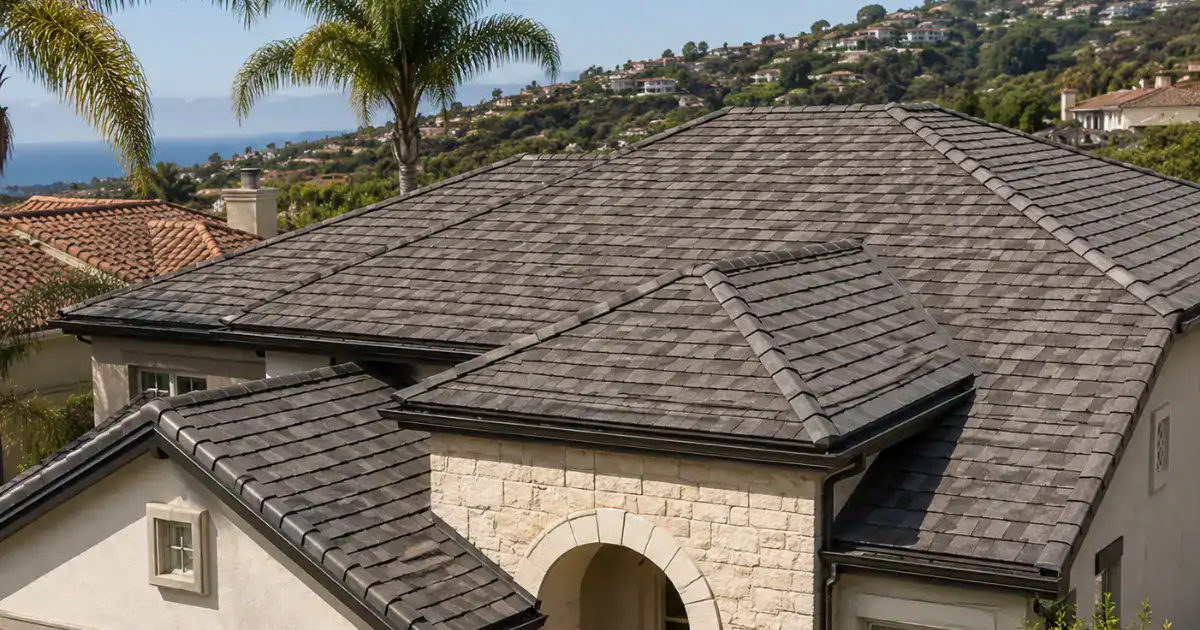
Clay tile is the traditional roofing material for Spanish and Mediterranean architecture and remains widely used across Southern California’s older neighborhoods and custom homes. The tiles themselves are exceptionally durable and often outlast the structure beneath them.
The performance-defining component of a clay tile roof is the underlayment beneath the tiles, which typically requires replacement at 25–35 years even when the tiles are intact. Clay tile is heavier than most alternatives and requires a structure rated to support the load. Reroofing without addressing underlayment failure is a common and costly mistake.
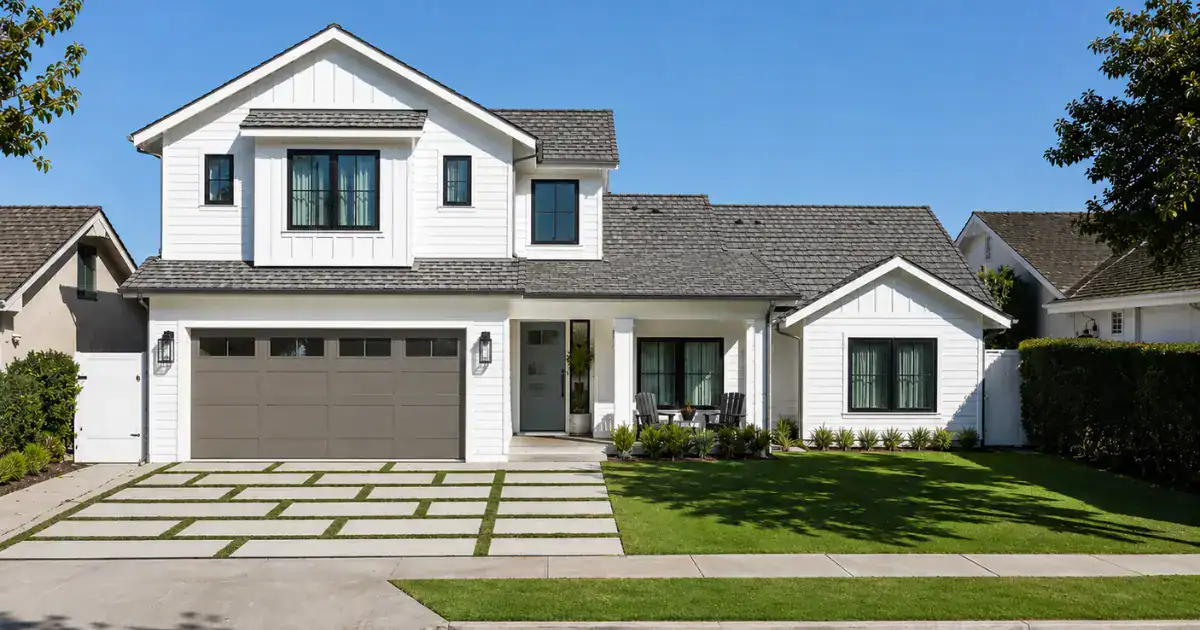
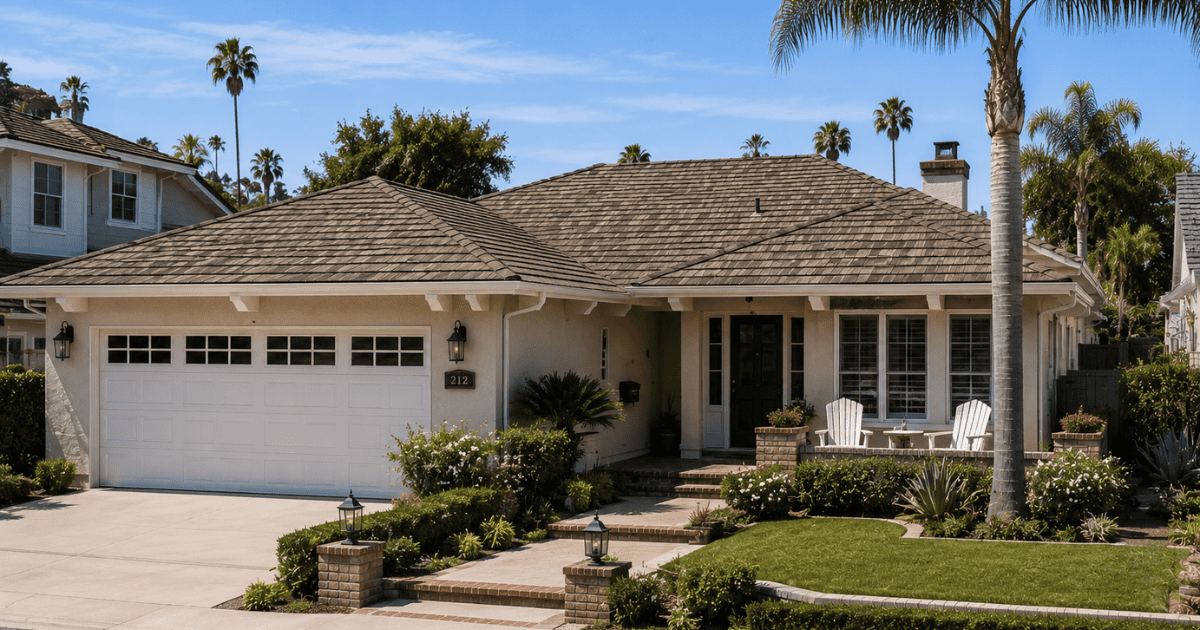
Clay Tile Roofing
- Lifespan: 20–30 years (architectural shingles); 15–20 years (three-tab); 30–40 years (designer/premium)
- Fire rating: Class A (when installed as part of rated assembly)
- Best for: Traditional and contemporary homes across all Southern California climates; cost-conscious replacements; HOAs that permit shingle aesthetics
Asphalt shingles are the most common residential roofing material in the United States and remain widely used across Orange County and Southern California. Architectural (dimensional) shingles offer significantly longer service life and improved aesthetics over older three-tab shingles, while remaining cost-effective.
Premium designer shingles replicate the appearance of slate, shake, or other high-end materials at a fraction of the cost and weight. Southern California’s UV exposure shortens asphalt shingle life relative to cooler climates, making attic ventilation and routine maintenance critical to achieving manufacturer-rated lifespan.
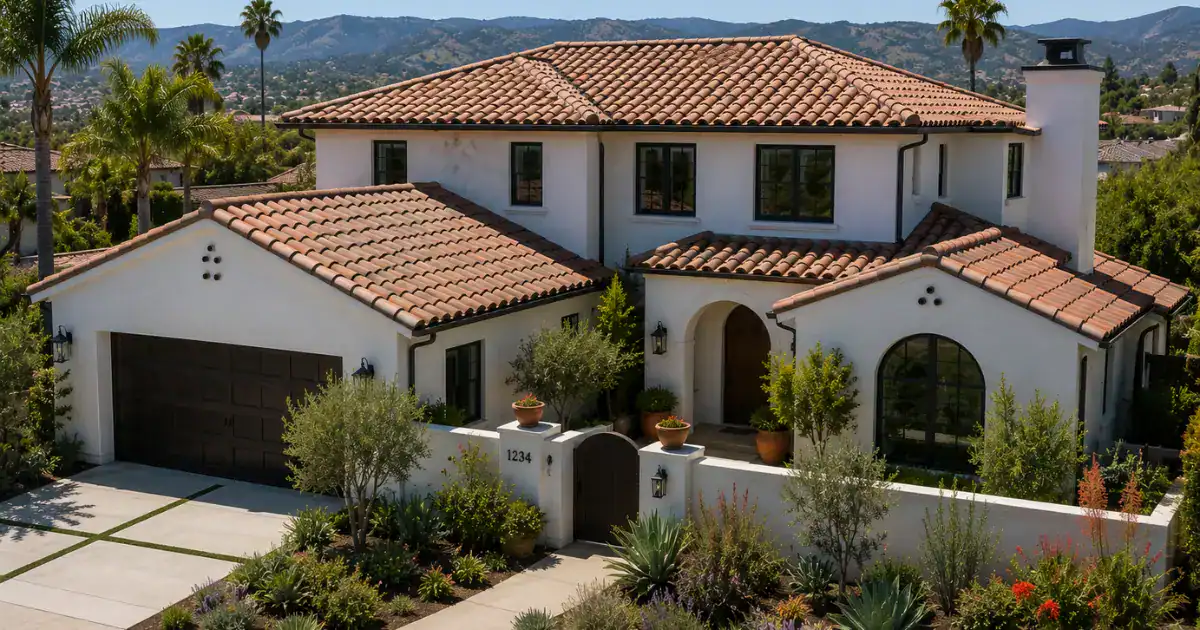
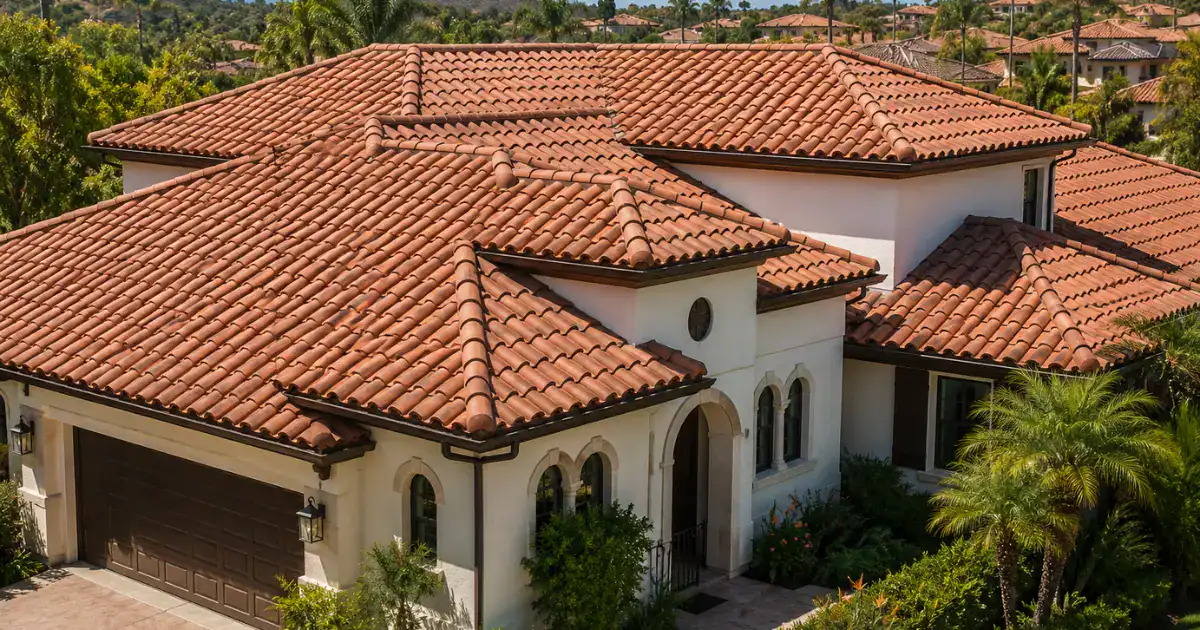
Concrete Tile Roofing
- Lifespan: 40–50 years for the tiles; underlayment typically 25–35 years
- Fire rating: Class A (when installed as part of rated assembly)
- Best for: Mediterranean, Spanish, and contemporary homes; new construction; areas with HOA tile requirements
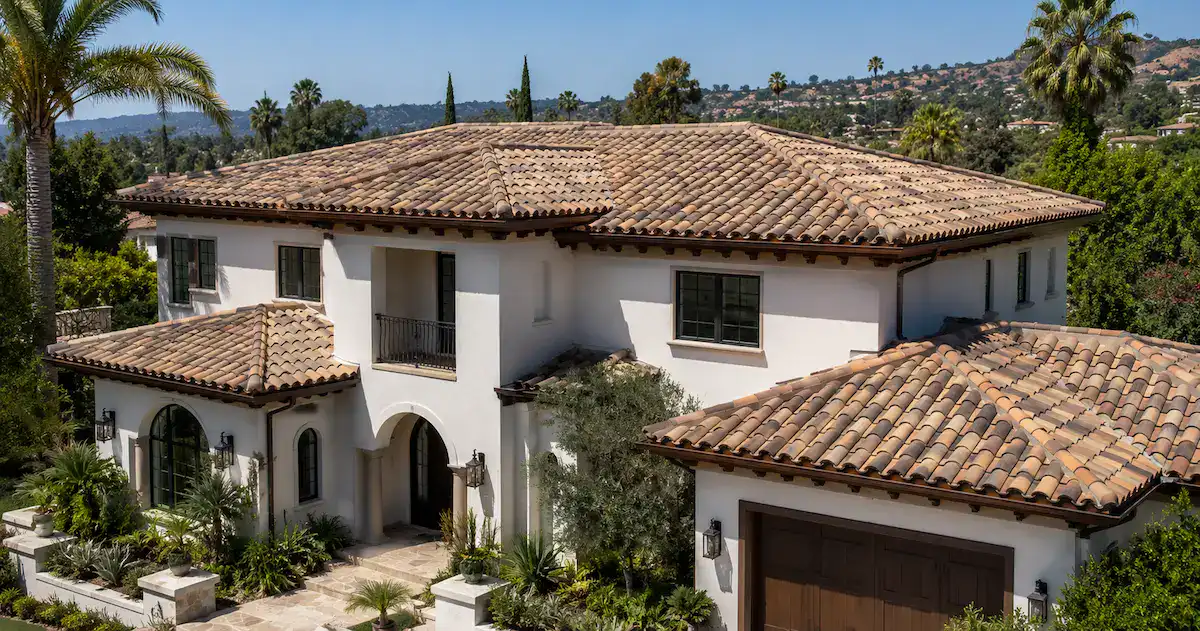
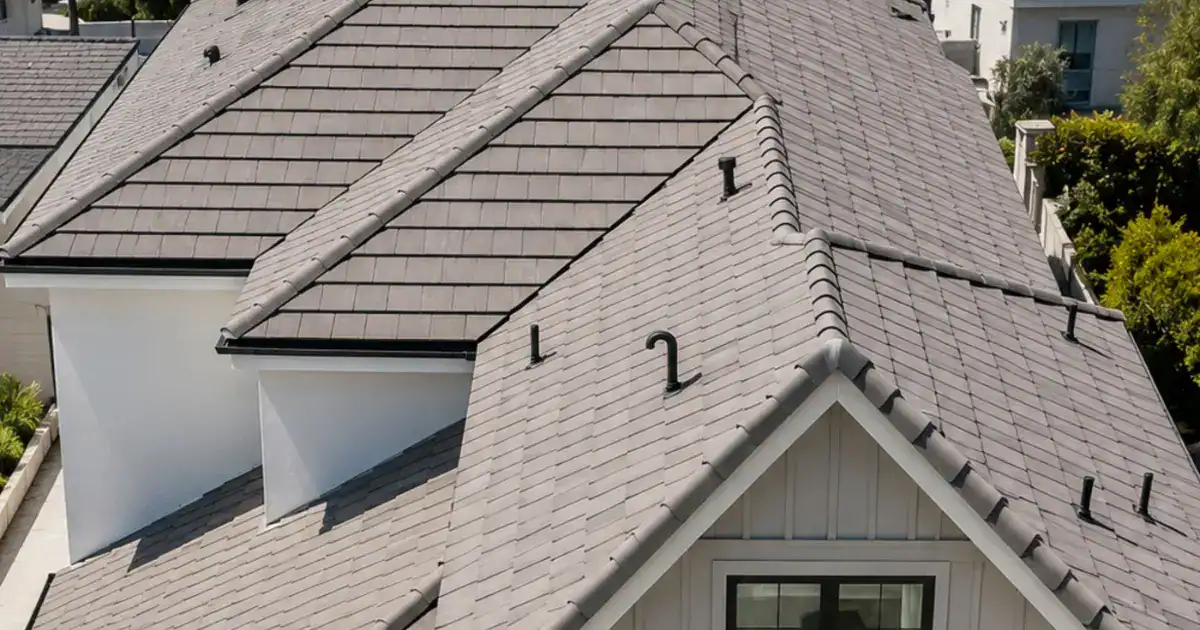
Concrete tile offers the appearance and performance of clay tile at a lower cost. Available profiles replicate clay barrel tile, flat slate, shake, and other architectural styles.
As with clay tile, the underlayment is the limiting factor in service life. Concrete tile is heavy, requires structural capacity to support, and benefits from periodic inspection of the underlayment, flashing, and fastener condition. Color is integral to the tile during manufacture but can fade over decades of UV exposure.
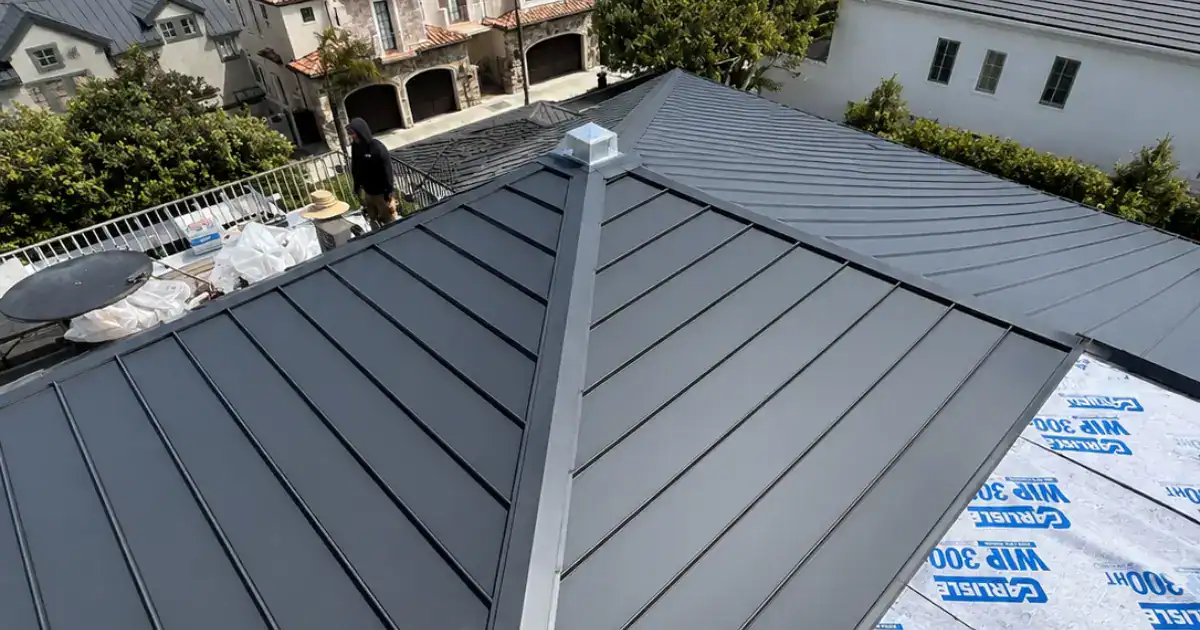
Standing Seam Metal Roofing
- Lifespan: 40–70 years
- Fire rating: Class A (when installed as part of rated assembly)
- Best for: Contemporary and modern architecture; wildfire-prone areas; long-term ownership; energy-efficient homes
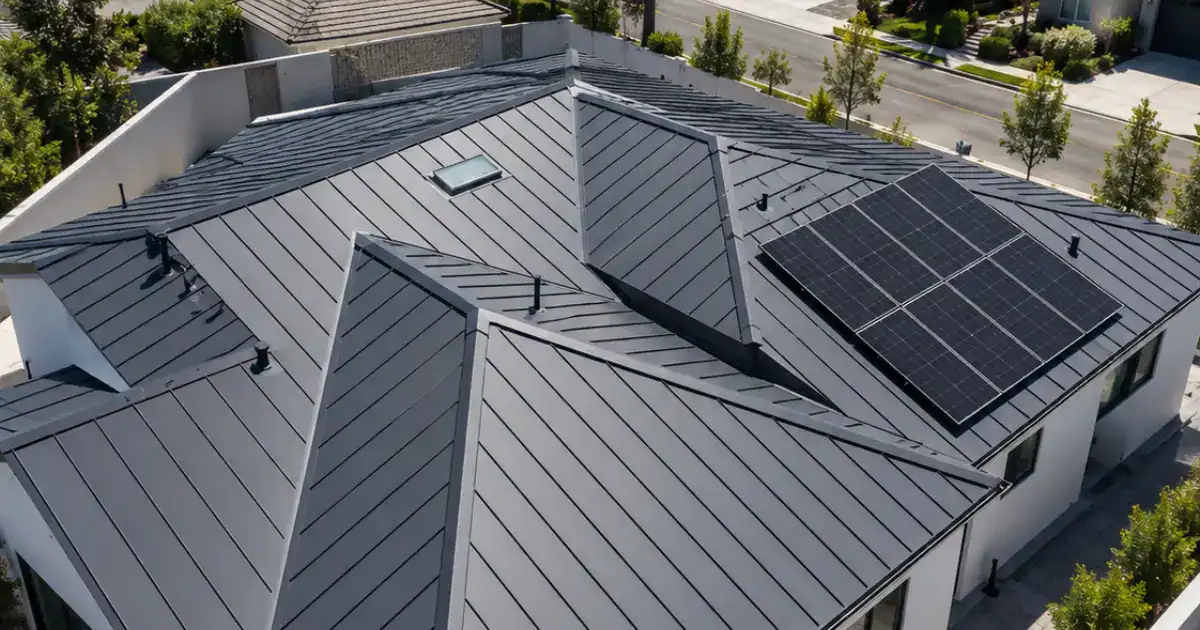
Standing seam metal roofs offer the longest service life among common residential systems along with excellent fire resistance — a significant advantage in wildfire-prone areas of Orange County, Los Angeles County, and Riverside County. The clean vertical lines suit modern, contemporary, and mid-century architecture.
Standing seam systems resist UV degradation, wind uplift, and thermal cycling, and reflective coatings significantly reduce attic heat loads and cooling costs (relevant under California Title 24). Material and installation costs are higher than asphalt shingles but lifecycle cost is often favorable due to longer service life and reduced maintenance.
Stone-Coated Steel Roofing
- Lifespan: 40–50 years
- Fire rating: Class A (when installed as part of rated assembly)
- Best for: Homes where metal performance is desired but traditional aesthetics are required (HOAs, Mediterranean and Spanish styles); retrofit applications over existing roofs
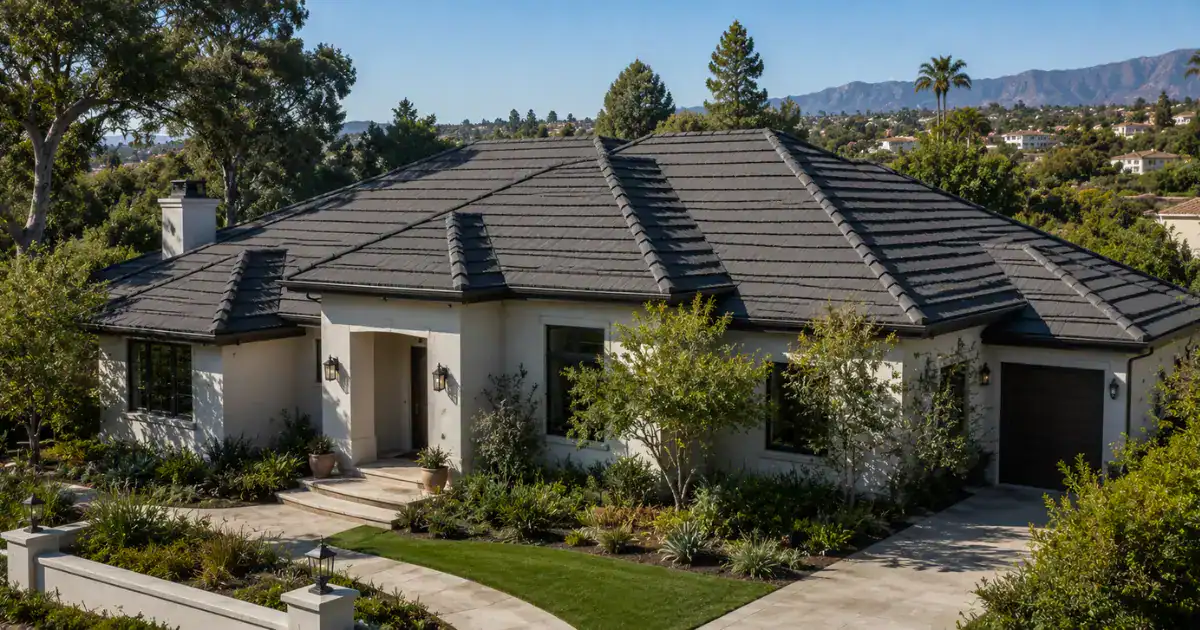
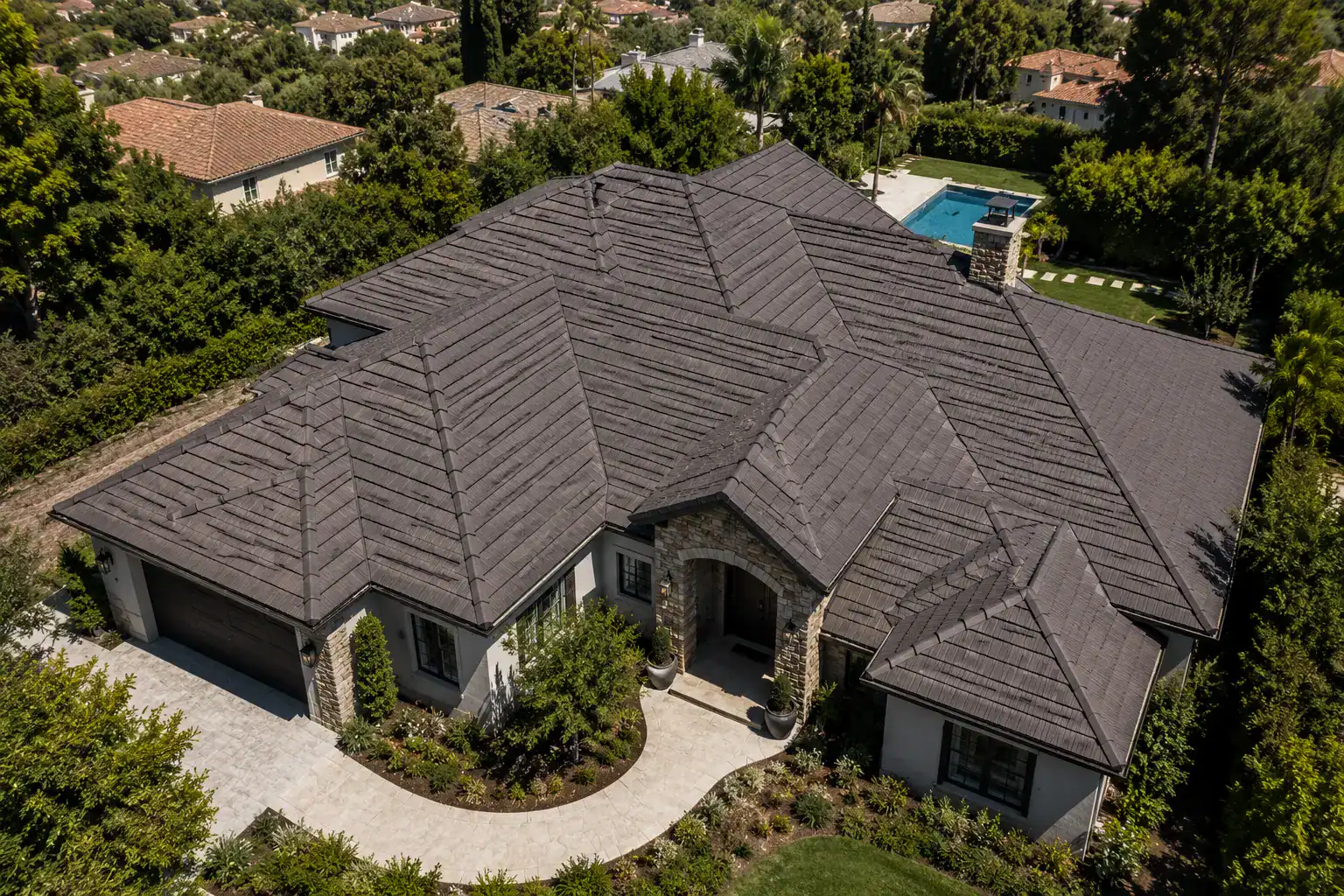
Stone-coated steel combines the durability and fire resistance of metal with the visual profile of tile, shake, or shingle. Common applications include HOA-controlled neighborhoods that restrict standard metal aesthetics, wildfire-zone retrofits where homeowners want to upgrade from wood shake without losing the original appearance, and tile retrofits where structural capacity for traditional tile is limited.
Stone-coated steel is lightweight (suitable for installation over existing roofs in many cases, subject to code), wind-resistant, and resistant to UV, hail, and corrosion when properly specified.
Synthetic & Composite Roofing
- Lifespan: 40–50+ years
- Fire rating: Class A (when installed as part of rated assembly)
- Best for: Homes where natural slate or wood shake aesthetics are desired without weight, fire risk, or maintenance demands
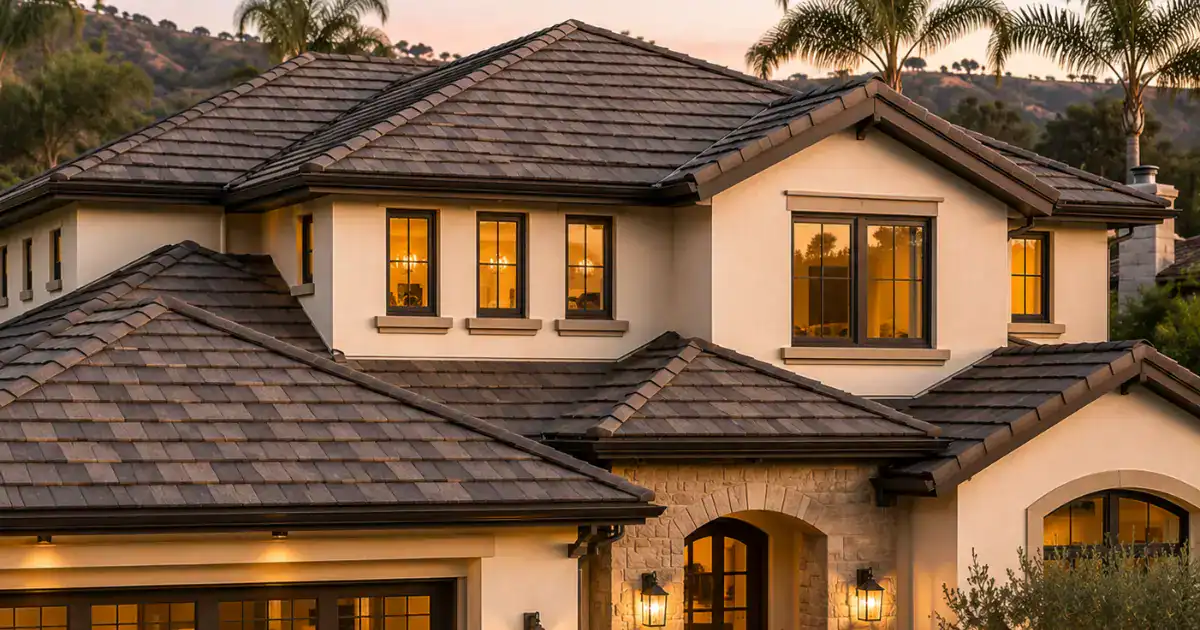
Synthetic and composite roofing systems replicate the appearance of natural slate, wood shake, or other high-end materials using polymer or rubber-based compounds. Common manufacturers include DaVinci, Brava, Euroshield, and CertainTeed.
These systems are significantly lighter than natural slate (which often requires structural reinforcement), Class A fire-rated, and resistant to impact, UV, and moisture. Synthetic systems are increasingly common in custom homes and high-end neighborhoods where natural materials are impractical due to fire code, weight, or maintenance considerations.
Single-Ply Membrane Roofing (TPO, PVC)
- Lifespan: 20–30 years
- Fire rating: Class A (when installed as part of rated assembly)
- Best for: Flat or low-slope residential roofs; modern and contemporary architecture; mid-century homes; rooftop deck applications
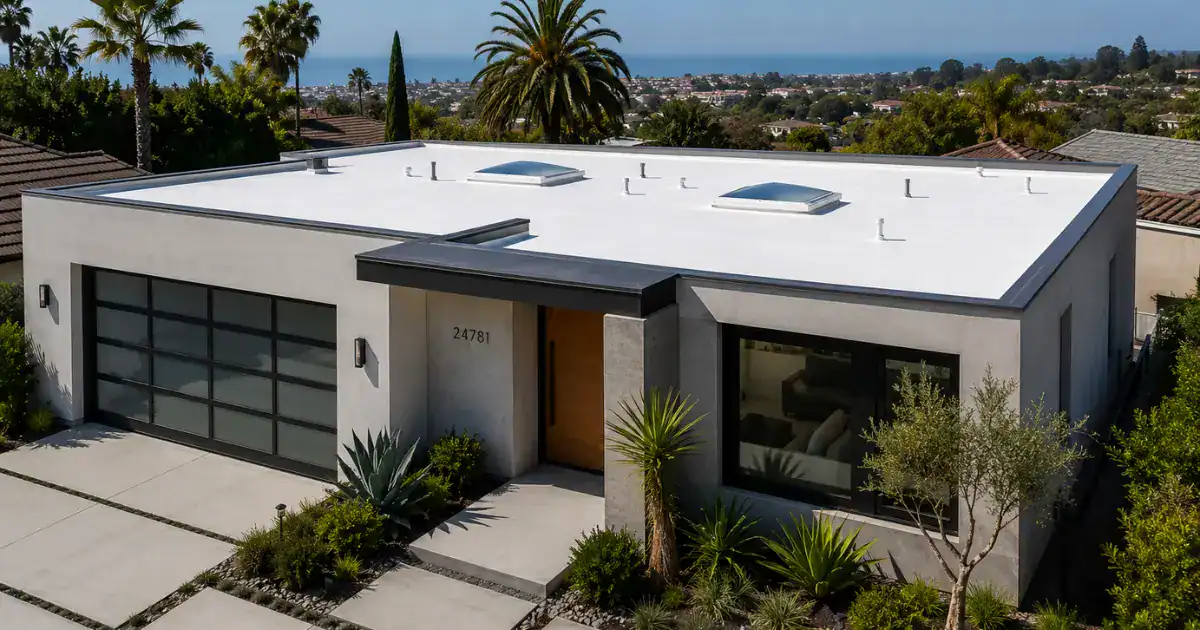
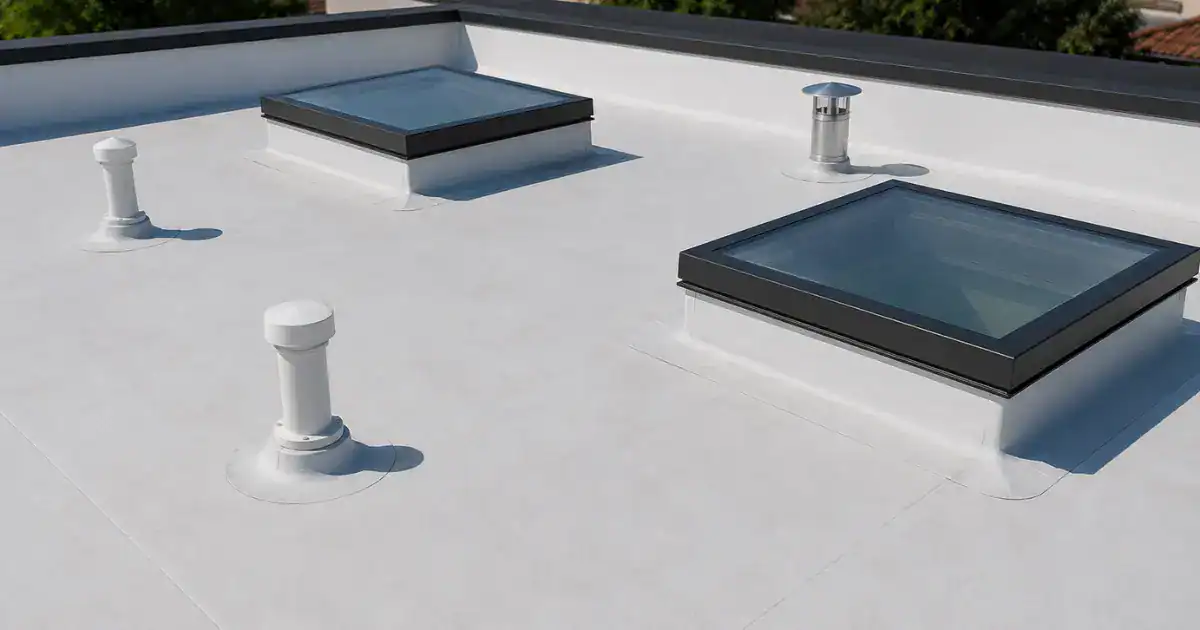
Single-ply membrane systems — primarily TPO (thermoplastic polyolefin) and PVC — are used on flat and low-slope residential roofs common in modern, contemporary, and mid-century Southern California architecture. These systems are also used on flat-roofed additions over otherwise pitched homes.
TPO and PVC membranes are lightweight, energy-efficient (highly reflective surfaces that satisfy Title 24 cool roof requirements), and resistant to UV and chemical exposure. Installation quality at seams and penetrations is the primary determinant of long-term performance.
Modified Bitumen Roofing
- Lifespan: 20–25 years
- Fire rating: Class A (with appropriate underlayment assembly)
- Best for: Flat or low-slope residential roofs; budget-conscious flat roof replacements; transitional applicationsons
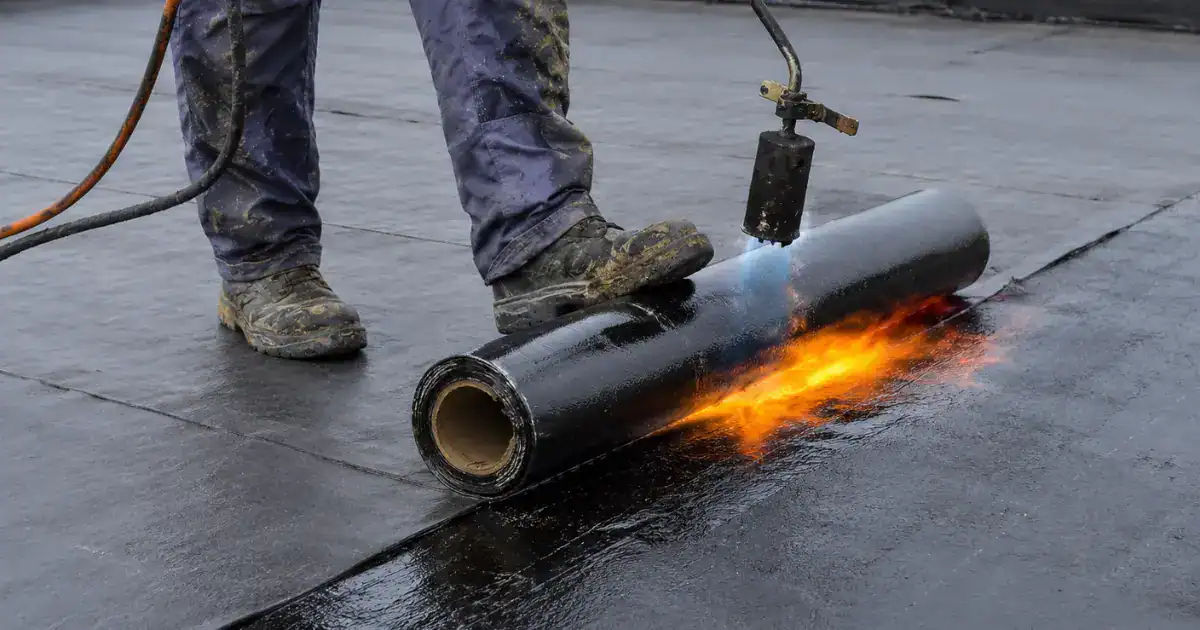
Modified bitumen is a torch-down or self-adhering membrane system used on flat and low-slope residential roofs. It offers proven performance, redundancy through multi-ply application, and lower cost than single-ply membranes.
Modified bitumen is most often specified on smaller flat residential roof sections, additions, or budget-driven replacements. Cool-roof-rated cap sheets are available to meet Title 24 requirements.
For repair, replacement, and cost guidance on your existing roof, see our guides to residential roof repair and residential roof replacement cost in Orange County.
Residential Roof Types in Southern California
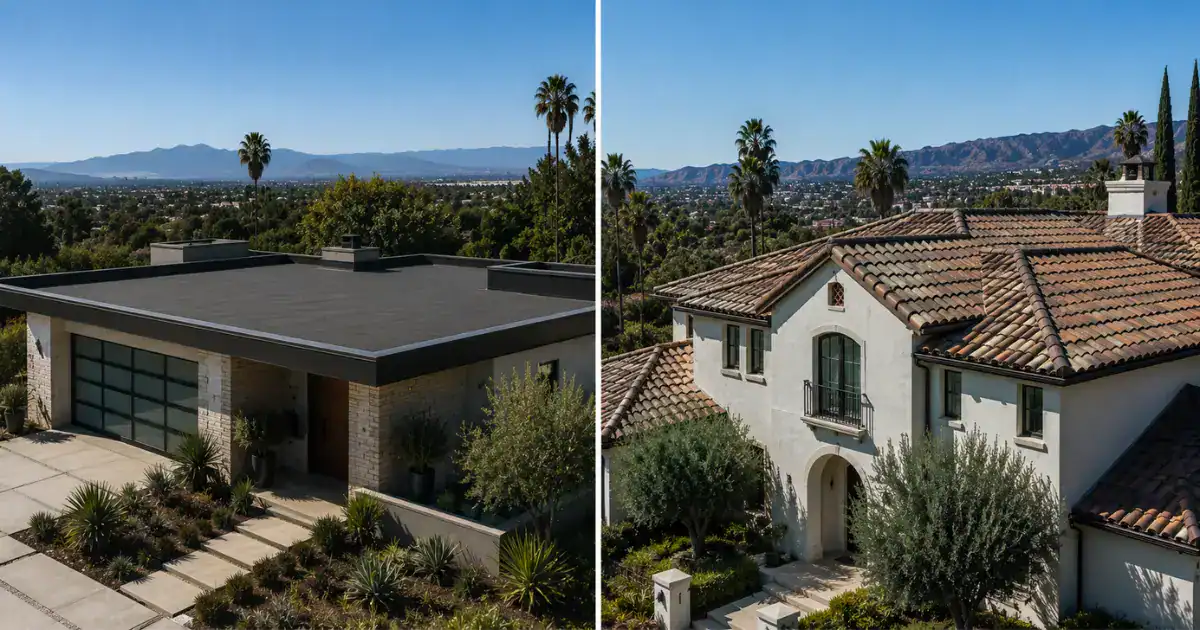
Southern California homes use three roof configurations: steep-slope or pitched, low-slope and flat, and mixed systems combining both. Pitch determines which materials are viable — tile and shingle need slope to shed water, while flat sections require membrane systems. Many homes here use mixed systems.
Roofing material selection depends partly on the roof type — specifically its pitch and configuration. Southern California homes use a wide range of roof types, often combined on a single home.
Steep-Slope Roofs (Pitched Roofs)
Steep-slope roofs have a pitch of 3:12 or greater (rising 3 or more inches per 12 inches of horizontal run). These roofs shed water and debris through gravity and are the most common residential roof type across Orange County.
Common materials: Asphalt shingles, clay and concrete tile, standing seam metal, stone-coated steel, synthetic composite, wood shake (restricted by fire code).
Common roof shapes:
- Gable — two sloped sides meeting at a ridge; common in traditional and contemporary homes
- Hip — four sloped sides meeting at a central ridge or point; common in Mediterranean and ranch-style homes
- Mansard — four sides with a steep lower slope and a flatter upper slope; less common
- Gambrel — two slopes per side; primarily seen in farmhouse and barn architecture
- Combination — multiple roof types on a single home, common in custom and modern architecture
Low-Slope and Flat Roofs
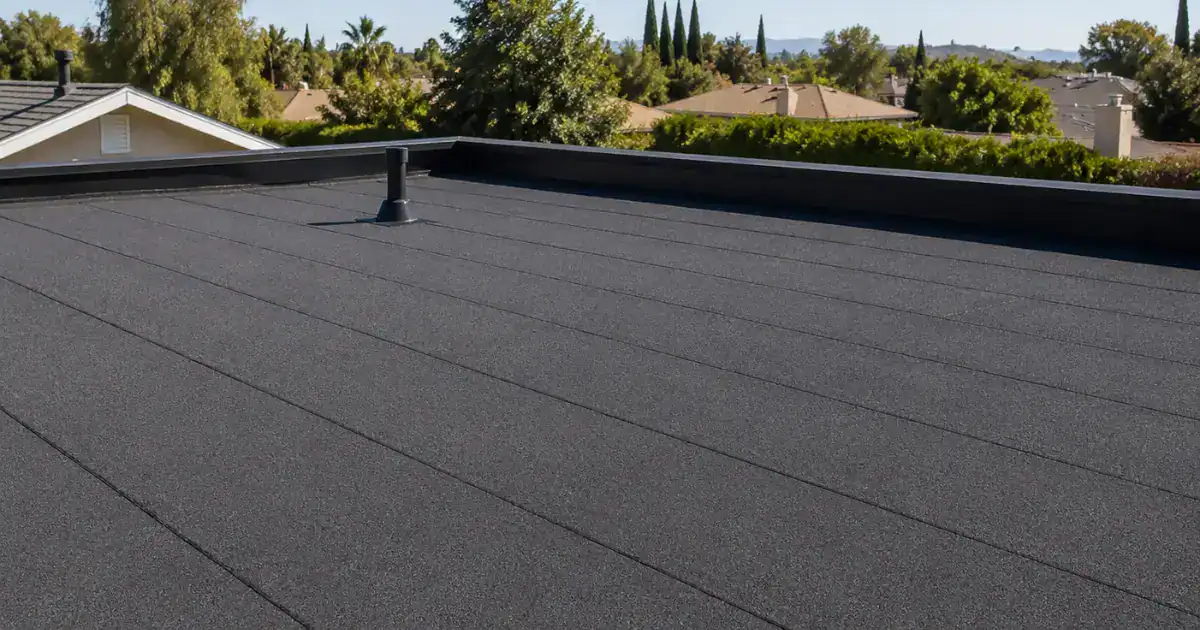
Low-slope roofs have a pitch of less than 3:12 and require a continuous waterproof membrane rather than overlapping shingles or tiles. Flat roofs are common on modern, contemporary, and mid-century Southern California homes, as well as on additions and rooftop deck applications.
Common materials: TPO, PVC, modified bitumen, occasionally standing seam metal in transitional applications. fire code).
Considerations: Drainage design is critical — low-slope roofs require carefully planned slopes, drains, and overflows to prevent ponding water. California Title 24 cool roof requirements apply to most low-slope residential roof replacements.
Mixed Roof Systems
Many Southern California homes — particularly modern and custom builds — combine steep-slope and low-slope sections on the same roof. Each section is detailed and waterproofed appropriately for its slope, with careful attention to transitions where materials meet.
Mixed roofs require contractors experienced in multiple roofing systems and the detailing required at transitions.
Roofing Considerations Specific to Southern California
Five regional factors shape material choice here: wildfire exposure and Class A fire ratings, California Title 24 cool roof requirements, HOA architectural standards, coastal salt air corrosion, and structural weight limits that determine whether tile is an option at all. Any one of them can eliminate a material outright.
Wildfire Risk and Class A Fire Ratings
Wildfire exposure is a critical factor across inland Orange County, Los Angeles County, Riverside County, and San Diego County. California’s Wildland-Urban Interface (WUI) building codes require Class A fire-rated roofing assemblies in designated fire hazard severity zones.
Class A is the highest fire rating. Materials that meet Class A include clay and concrete tile, standing seam metal, stone-coated steel, synthetic composite (verify manufacturer rating), and asphalt shingles installed as part of a rated assembly. Untreated wood shake does not qualify.
California Title 24 Cool Roof Requirements
California Title 24 (Building Energy Efficiency Standards) sets minimum solar reflectance and thermal emittance values for certain roof replacements — primarily low-slope residential roofs and some steep-slope applications. Cool roof requirements reduce attic heat loads, lower cooling costs, and reduce urban heat island effect.
Compliance is achieved through cool-roof-rated materials (most modern TPO, PVC, and reflective metal coatings; cool-roof-rated cap sheets for modified bitumen; certain reflective asphalt shingle products). Method Roofing Group specifies Title 24–compliant systems where required and confirms compliance during permitting.
HOA Requirements and Architectural Standards
Many Orange County and Southern California neighborhoods are HOA-controlled with specific roofing material, color, and profile requirements. Spanish and Mediterranean communities typically require clay or concrete tile; modern communities often permit standing seam metal or specific shingle profiles; older traditional neighborhoods may allow a broader range.
Verify HOA requirements before proceeding with any roof replacement. Method Roofing Group provides documentation suitable for HOA architectural review submissions.
Coastal Salt Air Exposure
Homes within several miles of the coast experience accelerated corrosion of metal flashings, fasteners, and any metal roofing not specifically rated for coastal exposure. Material selection should account for proximity to the ocean — including specifying coastal-rated coatings on metal panels, stainless steel fasteners, and corrosion-resistant flashing details.
Weight and Structural Capacity
Clay tile, concrete tile, and natural slate are significantly heavier than asphalt shingles, metal, or synthetic composite systems. Older homes originally roofed with lighter materials may not have the structural capacity to support a tile retrofit without reinforcement. Conversely, stone-coated steel and synthetic systems are designed as lightweight alternatives suitable for retrofit over existing roofs in many cases.
A structural assessment is recommended before any material change involving a significant weight difference.
How to Choose the Right Roofing Material for Your Home
Work in this order: confirm what your HOA and local fire code allow, verify your roof framing can carry the material’s weight, then compare lifespan against how long you plan to own the home. Cost comes last — it only matters among the materials that pass the first three tests.
The most cost-effective choice over a 30-year horizon is often not the lowest first cost. A premium material with a 50-year service life can outperform a budget material that requires replacement at year 20, particularly when factoring in disruption, financing, and the embedded cost of tearing off and disposing of the older system.
Method Roofing Group evaluates each home individually and provides material recommendations matched to the specific roof, architecture, exposure, and ownership goals.
Residential Roofing Materials FAQs
Best Materials & Selection
There is no single best material. The right choice depends on architecture, fire zone, HOA requirements, structural capacity, budget, and ownership horizon. Standing seam metal and stone-coated steel offer the longest lifespan and best fire performance. Clay and concrete tile suit Mediterranean and Spanish architecture and offer 50+ year lifespans. Architectural asphalt shingles offer the best balance of cost and performance for many traditional homes. A material recommendation specific to your home requires an on-site evaluation.
Tile excels in longevity, fire performance, and traditional Southern California aesthetics — but requires structural capacity and underlayment replacement at 25–35 years. Standing seam metal offers the longest service life, best fire performance, and modern aesthetics, at higher cost. Architectural asphalt shingles offer the best initial cost and broadest architectural compatibility, with 20–30 year service life. An inspection identifies which is appropriate for your specific home.
Fire Ratings & California Requirements
Class A is the highest fire rating issued for roofing assemblies, indicating the best resistance to severe fire exposure. Class A materials include clay and concrete tile, standing seam metal, stone-coated steel, synthetic composite (per manufacturer rating), and asphalt shingles installed as part of a rated assembly. California’s WUI building codes require Class A roofs in designated fire hazard zones.
California Title 24 requires cool-roof-rated materials on most low-slope residential roof replacements and certain steep-slope situations. Compliance varies by climate zone, slope, and existing roof condition. Method Roofing Group confirms Title 24 compliance during the permitting process and specifies compliant materials where required.
HOAs, Weight & Structural Considerations
Possibly — but only if the existing roof structure has sufficient capacity to support the additional weight of tile, which is typically 600–900+ pounds per square (100 square feet) compared to 200–300 pounds per square for asphalt shingles. A structural assessment by a qualified contractor is required before specifying a tile retrofit. Stone-coated steel and synthetic composite systems provide tile aesthetics at lighter weights when structural reinforcement isn’t feasible.
Yes. Concrete tile is significantly less expensive than clay tile while offering similar aesthetics and Class A fire rating. Stone-coated steel and synthetic composite systems also replicate tile profiles at varying price points and are often approved by HOAs that specify “tile aesthetic” rather than tile material specifically. Verify approval with your HOA architectural committee before specifying.
Schedule a Roofing Materials Consultation
Method Roofing Group provides on-site consultations and inspections to evaluate your roof, identify the appropriate material options for your home, and explain the performance, cost, and timeline trade-offs of each. Inspections are documented with photographs, written reports, and prioritized recommendations.
Schedule a roof inspection below — or call (949) 966-3011 to speak with our team directly and book by phone.
Request a Roof InspectionLast updated: August 4, 2026 · Reviewed by Method Roofing Group, CSLB #1157257 (C-39 Roofing)

