Acrylic vs Silicone Roof Coating: Which Is Better for Southern California Roofs?
The short answer for Southern California commercial roofs
For sloped or well-drained roofs, acrylic is usually the better value — it delivers strong UV protection and Title 24 reflectivity for roughly 20–40% less than silicone. For flat or low-slope roofs that hold ponding water after rain, silicone is the better choice because it does not break down under standing water. In Southern California’s dry, high-UV climate, drainage — not chemistry preference — is the deciding factor more often than any other variable.
Method Roofing Group is a Newport Beach–based commercial roofing contractor that installs both acrylic and silicone restoration systems across Orange County, Los Angeles, the Inland Empire, Ventura, and San Diego counties. Because we install both, our recommendation is driven by your roof’s actual condition — not by the product we’d prefer to sell.
Acrylic vs Silicone at a Glance
| Factor | Acrylic Coating | Silicone Coating |
|---|---|---|
| Chemistry | Water-based (~50–55% solids) | Solvent-based, high-solids (~90%+ solids) |
| Best for | Sloped / well-drained roofs | Flat / low-slope roofs, ponding water |
| Ponding water | Degrades under standing water | Excellent — built for ponding |
| UV stability | Strong; reflectivity holds well | Superior long-term UV stability |
| Reflectivity (Title 24) | High initial; resists dirt pickup | High; can collect dirt within 6–12 months |
| Coats required | Typically 2–3 coats | Often 1 coat |
| Typical warranty | 10, 12, or 15 years | Up to 20 years |
| Relative cost | Lowest of the coating chemistries | ~20–40% more than acrylic |
| Recoat / maintenance | Easy to recoat with acrylic | Can only be recoated with more silicone |
| Foot traffic | Better traction | Slippery when wet |
How the Two Coatings Differ
Acrylic roof coatings
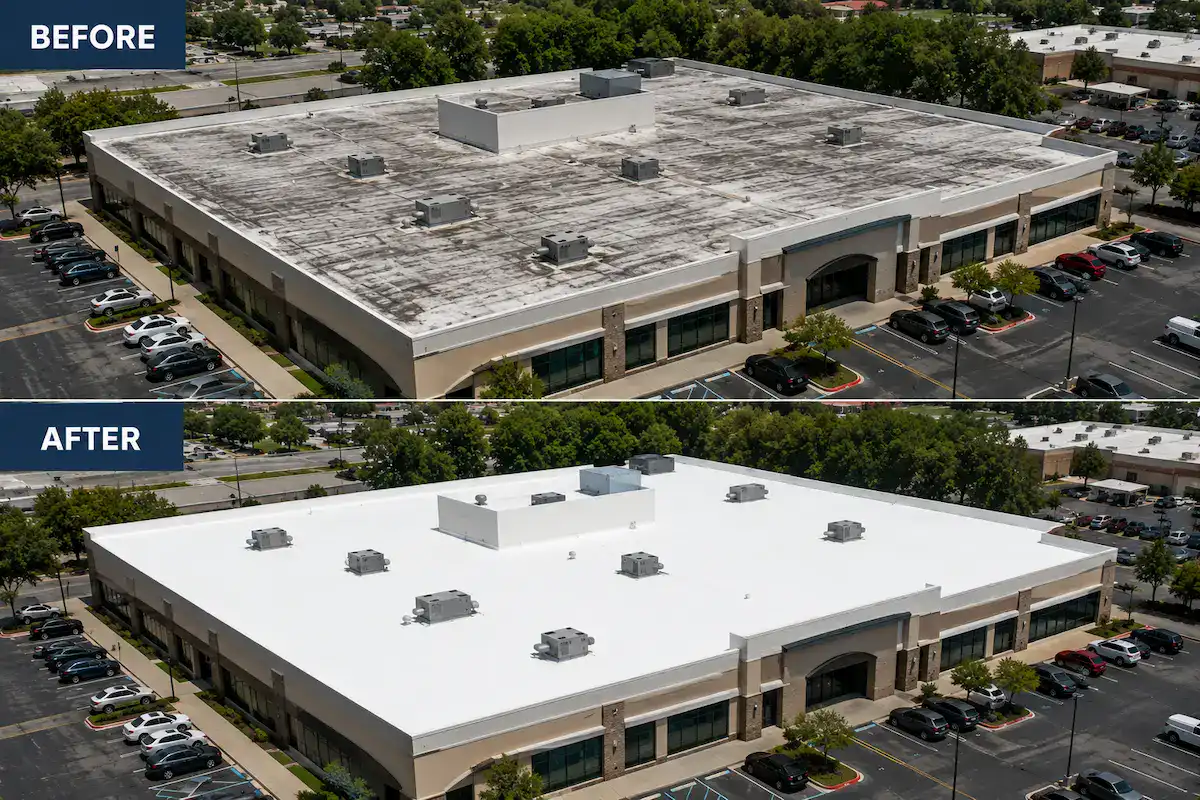
Acrylic is a water-based, fluid-applied coating that cures into a flexible, reflective membrane. It is the most cost-effective of the major coating chemistries and bonds well to TPO, PVC, EPDM, modified bitumen, built-up roofing, and metal after proper prep. Acrylic’s strengths are cost, high initial solar reflectance, easy recoating, and low-VOC chemistry. Its main limitation is water: acrylic softens and loses adhesion under prolonged ponding, so it belongs on sloped or well-drained roofs.
Silicone roof coatings
Silicone is a solvent-based, high-solids coating — modern formulations are often 90%+ solids, meaning nearly everything applied stays on the roof. Silicone is the most UV-stable coating in commercial roofing and is uniquely resistant to ponding water, which makes it the default choice for flat roofs with drainage limitations. Its trade-offs: it costs more, it tends to collect dirt within the first year (reducing reflectivity until it’s cleaned), it’s slippery when wet, and once a roof is silicone-coated it can only be recoated with more silicone.
The Deciding Factors in Southern California
1. Drainage and ponding water
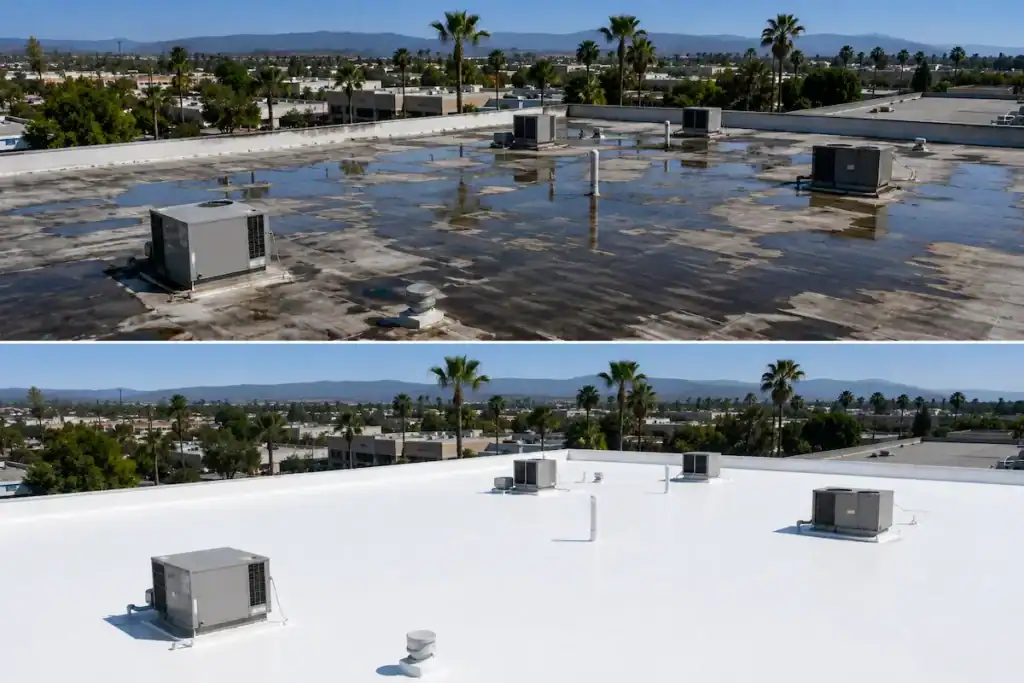
This is the single most important question. If water sits on your roof for more than 48 hours after rain, silicone is the safer long-term investment. If your roof is sloped or drains cleanly, acrylic delivers comparable performance at a lower cost. Many flat commercial roofs across Orange County and the Inland Empire develop ponding at drains and low spots as they age — which is why a drainage assessment, not a product brochure, should drive the decision.
2. UV exposure and Title 24 compliance
Southern California UV is among the most intense in the country. Both coatings are highly reflective and most products carry CRRC-listed values that meet California Title 24 Part 6 cool roof requirements for the applicable climate zone (Zones 9, 10, and 15 cover most of the region). Acrylic tends to keep its reflectivity longer because it sheds dirt; silicone holds its reflectivity once cleaned but attracts dirt early.
3. Cost and warranty term
Acrylic typically costs 20–40% less per square foot than silicone on an equivalent project, and acrylic warranties run 10–15 years. Silicone costs more but can reach a 20-year warranty position — which matters for owners planning a long hold, a refinance, or an asset sale where warranty term affects valuation.
4. Recoat strategy
Acrylic recoats easily with more acrylic and accepts minor repair patches without compatibility issues. Silicone locks you in — future recoats must be silicone. If you expect to maintain and recoat the roof across multiple cycles, acrylic offers more flexibility.
When Each Coating Wins
Acrylic is the right choice when: the roof is sloped or well-drained, the budget is a priority, you want low-VOC chemistry for an occupied or environmentally sensitive site, or you plan to recoat over time.
Silicone is the better option when: you’re dealing with a flat or low-slope roof that holds ponding water, you need the longest warranty term available, or the roof sees little foot traffic and dirt-driven reflectivity loss is acceptable with periodic cleaning.
Choose neither — yet — when: the deck is structurally compromised, insulation is widely saturated, or fasteners have failed. These conditions require repair or replacement before any coating is viable. When a roof needs spray polyurethane foam for added insulation, that’s a separate conversation. See our Commercial Roof Restoration overview for the full decision framework.
Why Property Owners Choose Method for Roof Coatings
We are a founder-owned, commercially experienced roofing contractor headquartered in Newport Beach, California, with active project teams across Orange County, Los Angeles, Riverside, San Bernardino, Ventura, and San Diego counties. We are a manufacturer-authorized applicator for both acrylic and silicone systems, fully licensed by the California Contractors State License Board (CSLB), bonded, and insured. Because a coating performs only as well as the preparation beneath it, every project is documented, registered with the manufacturer, and overseen by a licensed Method team member from inspection through warranty registration.
Our objective was extending roof life while avoiding unnecessary capital replacement. Method Roofing Group walked us through the differences between acrylic and silicone coatings, documented the condition of the roof, and recommended the system that made the most sense for our facility. The process was transparent, well-documented, and delivered the performance we were looking for. — Facilities Manager, Industrial Distribution Facility, Orange County
Explore the individual systems: Acrylic Roof Coatings · Silicone Roof Coatings
Acrylic & Silicone Roof Coating Service Areas
Our team of roofing professionals installs both acrylic and silicone roof coating systems across Southern California, with active project teams covering Orange County, Los Angeles, the Inland Empire, Ventura, and San Diego counties. For region-specific information, visit the relevant county service area page.
- Orange County Commercial Roofing →
- Los Angeles County Commercial Roofing →
- Inland Empire Commercial Roofing →
- San Diego County Commercial Roofing
- San Bernardino County Commercial Roofing
- Ventura County Commercial Roofing
Frequently Asked Questions
Is silicone or acrylic better for a flat commercial roof?
Silicone is better for flat or low-slope roofs, especially where water ponds after rain. Acrylic is water-based and degrades under prolonged standing water, so it’s best reserved for sloped or well-drained roofs. In Southern California, where many aging commercial roofs develop ponding at drains, silicone is often the safer long-term choice for truly flat assemblies.
Which roof coating lasts longer, acrylic or silicone?
Mil for mil, silicone generally lasts longer because of its superior UV and moisture resistance, and it can reach a 20-year warranty position. Acrylic warranties run 10 to 15 years but recoat easily, so an acrylic system can be refreshed and extended over multiple cycles.
Is acrylic or silicone cheaper?
Acrylic is the more affordable option, typically costing 20 to 40 percent less per square foot than silicone on an equivalent project. Silicone costs more upfront but needs fewer coats and offers a longer warranty term.
Can you put silicone over acrylic, or acrylic over silicone?
Acrylic recoats cleanly with more acrylic. Silicone, however, can generally only be recoated with more silicone — most other chemistries will not adhere to a cured silicone surface. This is an important long-term consideration when choosing your first coating system.
Do acrylic and silicone coatings meet California Title 24 requirements?
Most acrylic and silicone roof coatings carry CRRC-listed reflectance and emittance values that meet or exceed California Title 24 Part 6 cool roof requirements for the relevant climate zone. Method selects products appropriate to each project’s compliance needs.
How do I know which coating my roof needs?
The deciding factor is usually drainage, not chemistry. A professional inspection that evaluates slope, ponding, substrate condition, and warranty objectives is the only reliable way to choose. Method provides free written assessments across Southern California with no obligation.
Not sure which coating your roof needs?
Start with a free inspection. Method evaluates slope, drainage, substrate condition, and warranty goals, then recommends the right system in writing — acrylic, silicone, or neither.
Schedule a roof inspection below — or call (949) 866-3011 to speak with our team directly and book by phone.
Request a Roof Inspection
