Residential Roof Replacement Cost in Orange County
Cost ranges by material, what drives pricing, and what to expect from a professional residential roof replacement.
Roof replacement is one of the most significant investments a homeowner will make. The price depends on roof size, pitch, material, condition of the underlying deck, ventilation, flashing details, and removal of the existing roof. The information below provides realistic cost ranges for residential roof replacements in Orange County and explains the factors that affect the final number.
Roof Replacement Cost in Orange County by Material
Approximate cost ranges for residential roof replacements in Orange County, based on average-size homes (1,500–2,500 square feet of roof area), professional installation, and standard removal of the existing roof.
Most Orange County homeowners spend between $12,000 and $42,000 on a roof replacement in 2026, depending on material, roof size, and deck condition. Clay tile and large or steep roofs run higher.
| Roofing Material | Average cost in Orange County |
| Architectural Asphalt Shingle | $12,000 – $25,000 ($5.50 – $8.50 per square foot installed) |
| Designer / Premium Asphalt Shingle | $18,000 – $32,000 ($7 – $12 per square foot installed) |
| Concrete Tile Roofing | $22,000 – $42,000 ($10 – $18 per square foot installed) |
| Clay Tile Roofing (Spanish, Mediterranean) | 30,000 – $55,000+ ($15 – $25 per square foot installed) |
| Standing Seam Metal Roofing | $25,000 – $50,000 ($10 – $20 per square foot installed) |
| Stone-Coated Steel Roofing | $20,000 – $40,000 ($8 – $14 per square foot installed) |
| Synthetic & Composite Roofing (DaVinci, Brava, etc.) | $22,000 – $45,000 ($9 – $16 per square foot installed) |
| Flat / Low-Slope (TPO, PVC, Modified Bitumen) | $8,000 – $22,000 ($4 – $12 per square foot installed) |
These ranges reflect typical residential projects in Orange County as of May 2026, based on average roof sizes between 1,800 and 2,500 square feet and standard complexity. Final pricing depends on roof size, pitch, layers to remove, deck condition, ventilation upgrades, and any structural reinforcement required. Orange County and Southern California pricing typically runs 15–25% higher than the national average due to higher labor rates, strict building codes, Title 24 cool-roof requirements, and California Wildland-Urban Interface (WUI) fire-rated assembly requirements.
Cost data compiled from current Orange County roofing industry sources, May 2026. Tile roofs may require an additional $2,000–$5,000 for structural reinforcement if upgrading from a lighter material.
What Drives the Cost of a Residential Roof Replacement
Roof Size
The total square footage of roof surface is the largest single cost driver. Larger roofs require more material, more labor, and more disposal volume for the removed roof. Roof size is measured in “squares” — one square equals 100 square feet.
Roof Pitch (Slope)
Steeper roofs are more time-consuming and dangerous to work on, which increases labor cost. Roofs with a pitch above 6:12 typically require additional safety equipment and reduce installation speed. Very low-slope roofs may also add cost due to the membrane systems and detailing required.
Material Selected
Residential roofing material cost varies significantly between systems. Asphalt shingles are the most affordable option per square. Clay and concrete tile, standing seam metal, stone-coated steel, and synthetic composite systems carry higher material costs but offer longer service lives — often lowering the lifetime cost per year of service.
Tear-Off and Disposal
Removing the existing roof — including transporting and disposing of the old material — is a meaningful portion of any replacement cost. Roofs with multiple layers of shingles, asbestos-containing components, or heavy tile underlayment add to removal cost and time.
Deck and Structural Condition
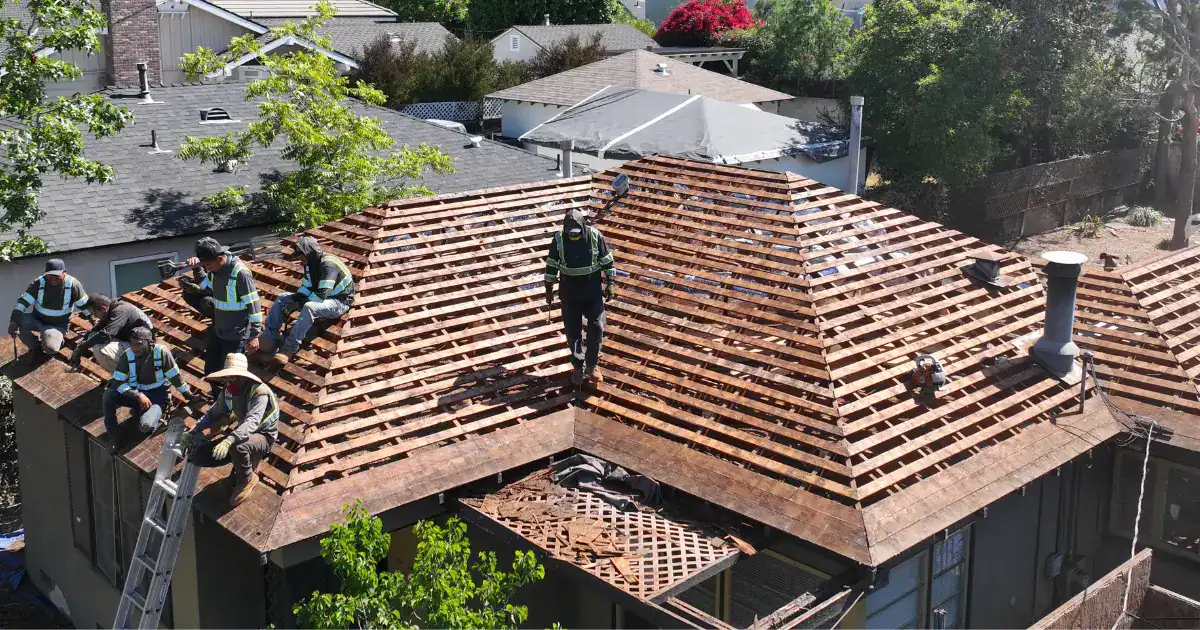
Once the existing roof is removed, the wood deck beneath is inspected. Damaged, rotted, or weakened deck sections must be replaced before the new roof is installed. Tile roofs may require structural reinforcement if upgrading from a lighter material. These costs are not visible until the existing roof is removed and inspected.
Ventilation and Underlayment
A roof replacement is the right time to address attic ventilation and underlayment quality — both critical factors in long-term performance. Upgrading from minimum-code felt to synthetic or self-adhering underlayment, adding ridge vents or attic fans, and installing ice and water shield in critical areas all add cost but extend roof life.
Flashing, Skylights, and Penetrations
Every penetration through the roof — chimneys, skylights, vents, plumbing stacks, satellite mounts — requires proper flashing. Flashing details are the most common failure point on cheap installations. Quality flashing materials and installation add cost but prevent leaks that lead to expensive interior damage.
Permits and Inspections
Orange County cities require building permits for residential roof replacements. Permit fees vary by city and project value. Method Roofing Group handles all permitting and required inspections as part of every residential project.
What’s Included in a Method Roofing Group Roof Replacement
- Documented pre-inspection with photographs and condition assessment
- Detailed, itemized proposal explaining materials, components, and pricing
- Complete tear-off of the existing roof system down to the deck
- Deck inspection and repair for any damaged sheathing
- Premium underlayment appropriate for the selected roof system
- Proper attic ventilation verification and upgrades where needed
- New flashing at all penetrations, valleys, walls, chimneys, and skylights
- Manufacturer-specified installation by trained, supervised crews
- Permits and inspections handled by Method Roofing Group
- Daily site cleanup with magnetic sweeping for nails
- Final walkthrough and documented installation report
- Manufacturer warranty registration on your behalf
- Workmanship warranty in writing
Roof Replacement Cost vs. Long-Term Value
The lowest-cost roof replacement is rarely the best financial decision over a 25–30 year ownership horizon. A budget asphalt shingle roof installed by an under-qualified contractor may need significant repairs or premature replacement within 10–15 years. A properly installed roof — whether asphalt, tile, or metal — typically reaches or exceeds its manufacturer-rated service life, often outlasting the homeowner’s tenure in the home.
Consider three financial factors beyond first cost:
- Service life — 30-year asphalt roof replaced at year 12 effectively costs more per year of service than a properly installed 50-year tile roof.
- Repair frequency — Quality installation reduces the number of mid-life repairs required.
- Resale impact — A documented, premium roof installation adds appraised value and reduces friction during a future sale. Roof age and condition are among the most-reviewed items in home inspections.
For detailed service life expectations by material, see How Long Does a Residential Roof Last in Southern California? →
Common Hidden Costs in Roof Replacement Proposals
Schedule Annual Inspections
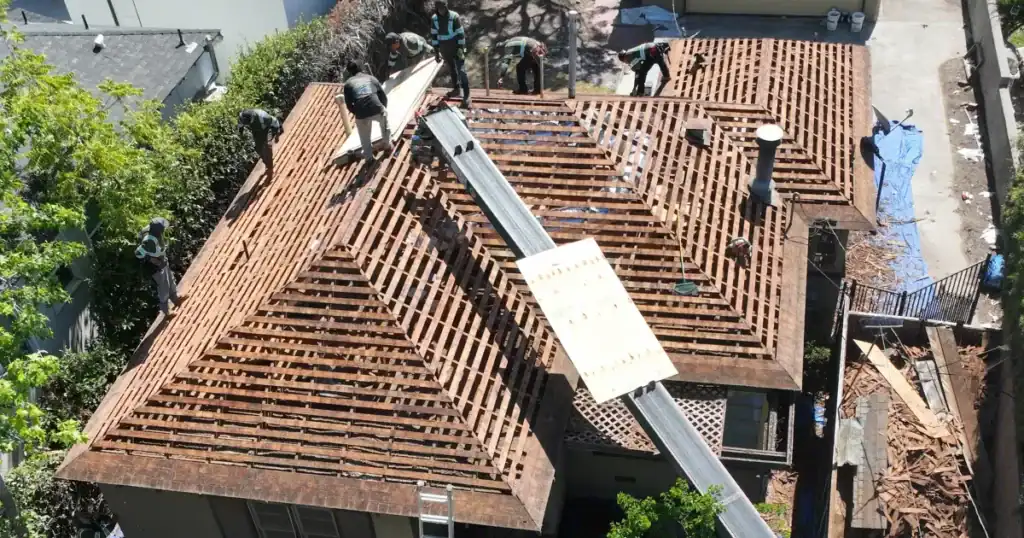
- Deck repair not included — Some contractors quote the visible work only and charge extra for deck repairs discovered during tear-off. Method Roofing Group includes a per-square allowance for deck repair in every proposal.
- Cheap underlayment substitution — Lower-cost felt paper is often substituted for premium synthetic underlayment without disclosure. Always confirm underlayment specifications in writing.
- Inadequate flashing replacement — Reusing existing flashing instead of installing new flashing is a common shortcut that causes leaks within a few years.
- Ventilation issues left unaddressed — Inadequate attic ventilation cuts roof life dramatically. A quality replacement addresses ventilation as part of the scope.
- Disposal and dump fees — Some proposals exclude disposal and add it as a surprise on the final invoice. Confirm disposal is included.
- Permit fees — Always confirm whether permits are included in the quoted price.
- Deductible waivers — Any contractor offering to “waive your insurance deductible” is acting unlawfully under California law. This is not a discount — it is fraud, and it puts homeowners at risk.
Financing Options for Roof Replacement
Roof replacement is a significant investment, and most homeowners use one of several common financing approaches:
- Cash or savings — Most cost-effective when available
- Home equity line of credit (HELOC) — Often the lowest interest financing for major home improvements
- Insurance claim — When storm damage triggers replacement, insurance may cover all or most of the cost
- Manufacturer-affiliated financing — Available through select roofing manufacturer programs
- Third-party home improvement financing — Available through banks and home-improvement lenders
To discuss financing options specific to your project, call us at (949) 866-3011 or email info@methodroofinggroup.com — every project is different, and we’ll talk through what makes the most sense for your situation.
Residential Roof Replacement Cost FAQs
How much does a roof replacement cost in Orange County?
Cost depends on roof size, material, and complexity. For an average-size Orange County home (1,800–2,500 square feet of roof area), residential roof replacements in May 2026 typically range from $12,000 for architectural asphalt shingles to $55,000+ for premium clay tile, standing seam metal, or synthetic systems. Orange County pricing runs 15–25% higher than the national average due to higher labor rates, strict building codes, and California-specific fire and energy compliance requirements. An on-site inspection produces an itemized proposal with exact pricing.cially important.
Why do residential roof replacement quotes vary so much between contractors?
Quote variance usually reflects differences in scope. Lower quotes often exclude deck repair, use lower-grade underlayment, reuse existing flashing, skip ventilation improvements, or omit permit fees. License status matters too: under California Business & Professions Code section 7125(b)(2), a C-39 roofing contractor cannot claim a workers’ compensation exemption, so a bid far below the others may mean someone isn’t carrying a cost everyone else is. Always compare quotes line by line, not just by total price.
Will insurance cover my roof replacement?
Insurance typically covers roof replacement when damage results from a covered event — most commonly wind, hail, or storm-related damage. Age-related deterioration is not covered. A documented inspection identifies whether your roof has insurable damage and provides the photographic and written documentation needed for a claim.
Should I trust a contractor who offers to waive my insurance deductible?
No. Waiving, rebating, or absorbing insurance deductibles is unlawful for contractors in California. Any roofer who offers to do so is acting unlawfully and may be involved in insurance fraud — which can expose homeowners to claim denial or legal liability.
How long does a residential roof replacement take?
Most residential replacements are completed in 1–3 working days. Tile roofs, larger homes, and roofs requiring significant deck repair may take longer. The proposal provided before work begins includes an estimated timeline.
Do I need to be home during the roof replacement?
No. Most homeowners go about their normal routine during installation. The work is performed from outside, with property protection in place around the perimeter. We coordinate with you on access and any specific considerations before work begins.
What time of year is best for a roof replacement in Orange County?
Southern California’s mild climate allows roof replacements year-round, though most homeowners prefer to schedule during dry months (May through October) to avoid weather delays. Scheduling demand typically increases ahead of winter storm season.
How much does a new roof cost in California?
A new roof in California typically costs $9,000 to $45,000, or roughly $5 to $25 per square foot installed. Asphalt shingle sits at the low end, concrete and clay tile at the high end. California pricing runs above the national average because of labor rates, disposal fees, and Title 24 energy code requirements.
How does Orange County roof replacement cost compare to the rest of California?
Orange County roof replacement costs run 15% to 25% above the national average, putting it at the top end of California pricing alongside Los Angeles and San Diego. Inland and Central Valley markets run lower. Coastal labor rates, the prevalence of tile roofs, and stricter local permitting drive the gap.
Get an Accurate Roof Replacement Estimate
ccurate pricing requires an on-site inspection. Roof condition, deck integrity, ventilation, flashing details, and complexity vary by home — and these factors significantly affect the final cost. Method Roofing Group provides documented inspections with detailed, itemized proposals so homeowners know exactly what is included, what each component costs, and why., photographs, and prioritized recommendations.
Schedule a roof inspection below — or call (949) 866-3011 to speak with our team directly and book by phone.
Request a Roof Inspection
